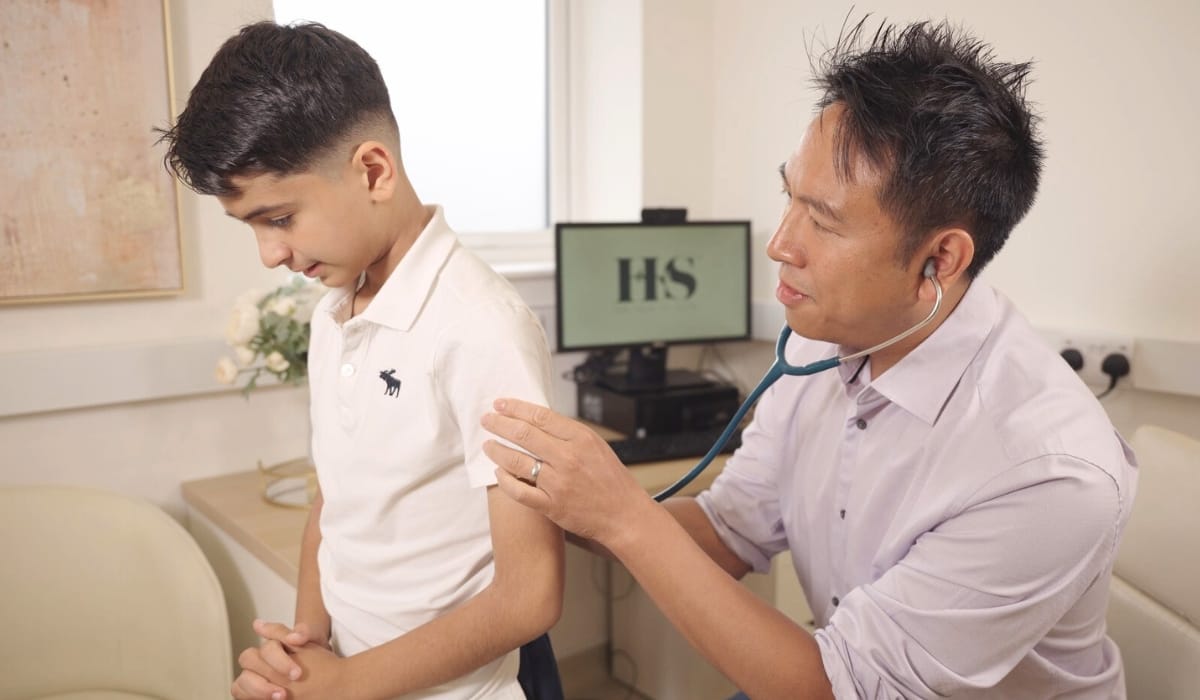
Paediatric Respiratory in Leicester
Expert Paediatric Respiratory Care at The Health Suite Leicester – Compassionate Treatment for Your Child’s Breathing Health
Paediatric respiratory care at The Health Suite Leicester provides expert diagnosis and treatment for children with respiratory issues. The Health Suite Leicester offers a comprehensive range of services, including assessments for conditions like asthma, bronchitis, wheezing, and other breathing difficulties. Led by experienced paediatricians, the team conducts thorough evaluations to identify the root cause of respiratory symptoms and create personalised treatment plans to help manage and improve your child’s respiratory health. With a focus on compassionate care and the latest medical advancements, The Health Suite Leicester ensures that your child receives the best possible treatment for optimal breathing and overall well-being.
If your child is suffering from persistent coughing, difficulty in breathing, or other respiratory symptoms, our specialised team of paediatric respiratory experts in The Health Suite Leicester is ready to assist you. We provide comprehensive and expert advice and diagnostic services, along with personalised treatment plans tailored specifically for the unique respiratory needs of children and young people from birth to 18 years old.
Common Paediatric Respiratory Concerns We Address:
- Asthma Management: We provide specialised care and management plans for asthma in children and teenagers, ensuring effective control of symptoms and reducing the risk of asthma attacks.
- Recurrent Chest Infections: We treat frequent respiratory conditions such as pneumonia and bronchiolitis, offering tailored treatments to manage and prevent recurrent infections.
- Breathing Difficulties: Our experts diagnose and manage conditions such as preschool wheezing, shortness of breath, and chronic or recurrent cough, providing targeted care to improve respiratory health.
- Sleep-Related Breathing Disorders: We offer advice and first-line management for sleep-related breathing disorders, ensuring better sleep quality and addressing issues like sleep apnea or snoring.
- Respiratory Allergies: We identify and treat allergic triggers impacting your child’s respiratory health, providing effective solutions to manage symptoms and improve overall comfort.
- Allergy Testing for Respiratory Allergens: We offer blood tests to identify potential environmental allergens and triggers, allowing for a precise diagnosis and customised treatment plan to manage allergies effectively.
Advanced Outpatient Respiratory Testing in Leicester for Children:
- Chest X-rays: Chest X-rays are a valuable diagnostic tool for visualising the lungs, heart, and airways. This imaging technique helps identify underlying respiratory conditions such as infections, lung diseases, structural abnormalities, or foreign objects in the airway. Chest X-rays provide a clear, detailed view of your child’s lung health and assist healthcare providers in making informed decisions about the best course of treatment.
- CT Scans: For more detailed and in-depth imaging of the lungs and airways, CT (computed tomography) scans are used. Unlike standard X-rays, CT scans provide high-resolution, cross-sectional images, allowing healthcare professionals to identify issues like lung damage, tumours, or abnormalities in the airways with greater accuracy. This test is often recommended when a more detailed view is required to diagnose complex respiratory conditions or plan for advanced treatment.
- FeNO Testing: Fractional exhaled nitric oxide (FeNO) testing measures the levels of nitric oxide in your child’s exhaled breath, which can indicate inflammation in the airways. Elevated FeNO levels are often a sign of asthma or other inflammatory airway diseases. This test is quick, non-invasive, and helps assess the presence and degree of airway inflammation, providing valuable information to guide treatment decisions, particularly for managing asthma and allergic respiratory conditions.
At The Health Suite Leicester, these advanced outpatient respiratory tests offer detailed insights into your child’s lung and airway health, helping ensure accurate diagnoses and the creation of personalised treatment plans for effective respiratory condition management.
Concern about paediatric respiratory health is crucial as children’s airways and lungs are still developing, making them more susceptible to respiratory conditions. Early detection and management of respiratory issues such as asthma, bronchitis, or allergies can prevent long-term complications and ensure your child’s overall well-being. Respiratory problems in children can affect their growth, physical activity, and quality of life, which is why prompt medical attention is essential. Addressing concerns early allows for better treatment outcomes, improves breathing function, and minimises the risk of severe respiratory episodes. Prioritising paediatric respiratory health also helps to create tailored care plans, supporting a child’s development and reducing the impact of respiratory conditions on their day-to-day life.
Book an appointment for paediatric respiratory care at The Health Suite Leicester today and ensure your child’s breathing health is in expert hands!
Understanding Children's Respiratory Health: Insights from The Health Suite Leicester | Paediatric
Wheezing & Asthma in Children | Causes, Symptoms & Management | Paediatrics | The Health Suite
Allergic Rhinitis in Children | Causes, Symptoms & Treatment | Paediatrics | The Health Suite
Treatment options and pricing
Browse and click below to book any of our available services.
Paediatric Respiratory Initial Consultation
A Paediatric Respiratory Initial Consultation assesses breathing issues in children. It includes medical history, examination, and possible tests.
Paediatric Respiratory Follow-up Consultation
A Paediatric Respiratory Follow-up Consultation reviews progress, test results, and treatment effectiveness for ongoing respiratory concerns in children.
What we treat
At The Health Suite Leicester, our private medical clinic offers expert care whenever you need it. Our team of experienced GPs and healthcare professionals provide personalised diagnosis and treatment for a wide range of medical conditions, ensuring high-quality, professional care in a comfortable setting.
Click below to view useful info on a few of the common conditions we treat:
-
Asthma & Reactive Airways
Control breathing symptoms. We provide expert clinical assessments, long-term monitoring, and highly personalised action plans to safely manage childhood asthma and support an active life.
-
Chronic or Recurrent Cough
Investigate persistent coughs. If your child has a cough that won't go away, we conduct thorough diagnostic checks to identify and rule out underlying airway or respiratory disorders.
-
Wheeze & Breathlessness
Evaluate breathing difficulties. We offer specialist assessment for children experiencing recurrent wheezing, shortness of breath, or noisy breathing to guide safe, effective treatments.
-
Recurrent Chest Infections
Build respiratory resilience. We support children who suffer from repeated chest infections, identifying root causes and designing protective, preventative medical strategies.
-
Exercise-Induced Symptoms
Optimise fitness and play. We assess chest tightness, wheezing, or breathlessness triggered by physical activity, helping your child exercise and play sports comfortably.
-
many more
Our clinicians manage a broad spectrum of conditions, and individual assessment allows us to tailor care beyond the examples listed. We encourage you to book a consultation to discuss your symptoms and appropriate treatment options.
Symptom checker
If you are experiencing any of these symptoms, please book an appointment with us. Symptoms can vary from person to person and from condition to condition. A proper diagnosis can only be made through a thorough medical examination.
Our clinicians will carry out a full assessment to ensure an accurate diagnosis and appropriate care.
-
Is your child wheezing or having trouble breathing?
Noisy breathing, wheeze, or shortness of breath during play or at rest may indicate asthma, bronchitis, or other airway issues needing specialist review.
-
Does your child have a persistent cough that won’t go away?
A long‑standing cough, especially one that lasts for weeks, may suggest an underlying respiratory condition rather than a simple cold.
-
Are there frequent chest infections or bronchial symptoms?
Recurrent chest infections, prolonged coughs, or repeated bronchitis episodes can signal reactive airways or other chronic respiratory concerns.
-
Does your child have noisy breathing or recurrent croup episodes?
Stridor, croup‑like symptoms, or upper airway noise during breathing suggest possible airway sensitivity requiring careful assessment.
-
Is your child short of breath during exercise or physical activity?
Breathlessness during exercise that is out of proportion to effort may be linked to underlying asthma, exercise‑induced bronchoconstriction, or deconditioning.
-
Has your child’s breathing changed at night?
Night‑time cough, frequent waking due to breathlessness, or sleep‑related breathing issues may require respiratory evaluation and monitoring.
Why choose The Health Suite for Paediatric Respiratory ?
Choose The Health Suite Leicester for expert, personalised healthcare, fast access to specialists, advanced diagnostics and exceptional patient care.
-
Expert Knowledge
We have mastery in diagnosing and managing respiratory conditions in children, continuously updating our knowledge with the latest advancements.
-
Compassionate Communication
We provide clear, empathetic communication to support and understand both children and their families.
-
Holistic Care
We deliver comprehensive, collaborative care that addresses the overall health and well-being of your child.
Advice from the experts
Read clear, expert advice from our clinicians, offering trusted advice, clinical insight, and practical guidance to help you understand your treatment and care options.



Have a query about Paediatric Respiratory at The Health Suite Leicester?
We recognise that getting the healthcare assistance you need can be difficult. So if you have a query, feel free to contact us and one of our treatment co-ordinators will be happy to help. We aim to reply to all queries within 24 hours (Mon – Fri).
Meet our Paediatric Respiratory Clinicians
Meet our dedicated team at The Health Suite Leicester, where skilled professionals are committed to providing exceptional care tailored to your medical and wellness needs.

Dr David Lo
Common Q&A about Paediatric Respiratory
Our FAQ section is designed to address common questions you may have, from how our treatments work to what you can expect during and after your session.
Our team is always available to provide additional support if you need more personalised guidance, ensuring that you feel informed and confident every step of the way.
You may also be interested in the following

Viral Respiratory RNA Screen (PCR) Swab
Access a private multi-pathogen respiratory RNA screen at our Leicester clinic for fast, gold-standard laboratory results.
Lung Function Assessment
Private lung function and spirometry testing in Leicester. Diagnose asthma or COPD and track respiratory health with expert, HSE-registered care.

Quantiferon Blood Test
Private QuantiFERON TB Blood Tests in Leicester. Fast, accurate laboratory screening for latent tuberculosis with official work and visa clearance.