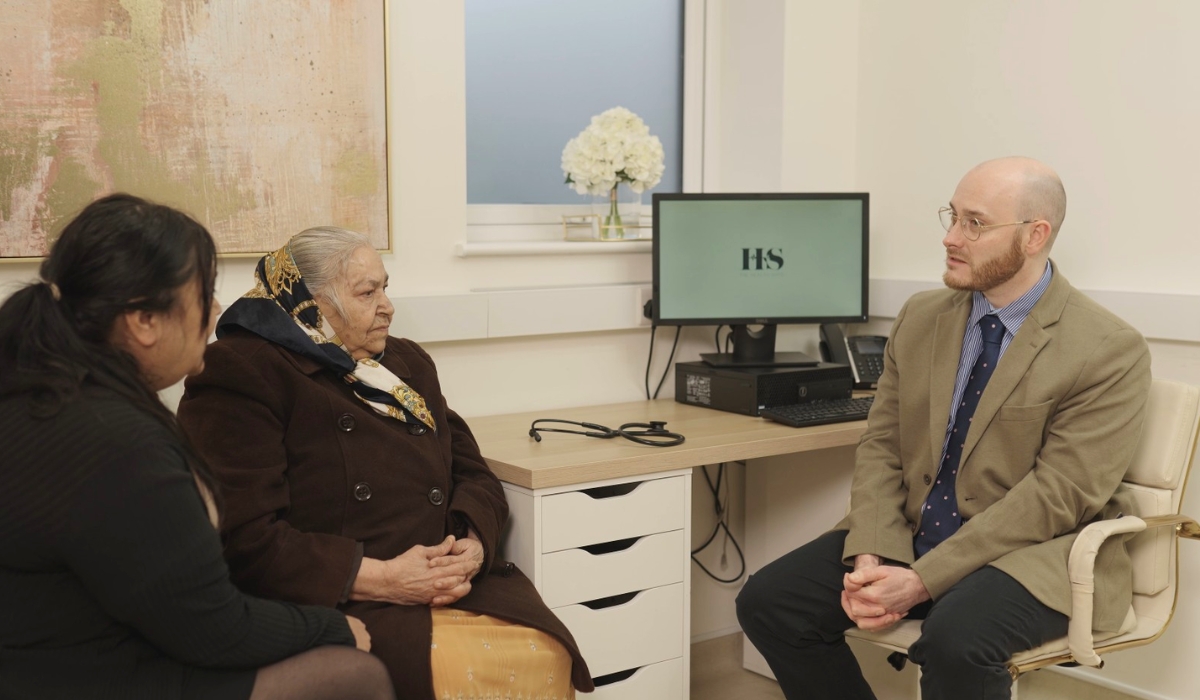
Geriatric Medicine & Comprehensive Geriatric Assessment in Leicester
Geriatric Medicine & Comprehensive Geriatric Assessment in Leicester
As we get older, health can become more complex. Many people live with several long-term conditions, are on multiple medicines, and notice changes in memory, balance, energy and confidence.
At The Health Suite Leicester, our Consultant in Geriatric and General Medicine offers a comprehensive assessment for older adults, focusing on frailty, falls, cognition, bone health and complex multimorbidity.
The aim is simple: help you stay well, independent and at home for as long as possible.
A core part of this service is the Comprehensive Geriatric Assessment (CGA) – a structured, multidimensional review of your medical, functional, cognitive, and social needs, followed by a personalised care plan. CGA is widely recognised as the gold standard in caring for frail older adults.
Who is this service for?
You may benefit from a geriatric review if you (or a family member) are typically 70+ and have:
- Recurrent falls, dizziness or blackouts
- Multiple long-term conditions (e.g. heart disease, diabetes, COPD, arthritis)
- Polypharmacy – usually 5 or more regular medicines
- Noticeable slowing down, weakness or loss of confidence
- Concerns about bone health or a history of fragility fractures
- Changes in memory, thinking or mood
- Increased frailty after a recent hospital stay or surgery
You do not need to be under a hospital geriatrician already – this clinic is ideal for people who want a proactive, joined-up view of their health.
What is a Comprehensive Geriatric Assessment (CGA)?
A CGA is a structured assessment that looks beyond single diseases and single organs. It brings together:
- Medical conditions and symptoms
- All current medications and possible side effects
- Mobility, balance, falls risk and bone health
- Memory, thinking, mood and sleep
- Nutrition, weight change and muscle strength
- Social circumstances, carers and home environment
- Your own goals and priorities
International research shows that when CGA is offered to older adults at higher risk, it can reduce hospital bed days and admissions, without increasing mortality. In one large Swedish primary care study of adults aged 75+, a CGA-based model of care reduced hospital days by about 22% and lowered overall health care costs by around 17% over two years.
Conditions and problems we commonly help with
Our Consultant Geriatrician can support older adults with:
- Falls, dizziness and balance problems
- Recurrent admissions or slow recovery after illness
- Medication burden – side effects, interactions, deprescribing
- Frailty and functional decline
- Osteoporosis and fracture prevention
- Memory concerns, confusion or cognitive decline
- Complex cardiovascular or cerebrovascular risk
- Pre-operative optimisation and post-operative follow-up in older or frail patients
The Geriatrician at The Health Suite, where needed, will work closely with The Health Suite team – including physiotherapy, podiatry, nutrition, psychology, cardiology and diagnostics – to deliver a genuinely multi-disciplinary plan.
Watch to learn more about this treatment
Watch expert videos on your treatment to understand the benefits, process, and what to expect before your consultation.
Comprehensive Geriatric Assessment | Supporting Health as We Age | The Health Suite Leicester
What Is Geriatric Medicine? | Whole-Person Care for Older Adults | The Health Suite Leicester
Maintaining Strength & Balance in Older Adults | Elderly Medicine | The Health Suite Leicester
Treatment options and pricing
Browse and click below to book any of our available services.
Search services
Initial Geriatric Assessment
Consultant-led geriatric assessment reviewing medical history, medications, mobility, cognition and frailty, with a personalised care plan.
Geriatric Follow-up Appointments
A focused review to discuss test results, adjust treatments, refine diagnoses and coordinate ongoing care with your GP or specialists.
No matching items found.
What to expect at your appointments
A full geriatric assessment covering health, mobility, cognition, medications and follow-up care, with coordinated ongoing management plan.
-
Initial Geriatric Assessment
Your first visit includes:
- Detailed medical, functional and social history
- Review of falls, continence, sleep, mood and nutrition
- Structured assessment of frailty and cognition (where appropriate)
- Full medication review, including opportunities for simplification
- Focused physical examination – for example:
— Heart and lungs
— Neurological examination, gait and balance
— Postural blood pressure - A clear, prioritised problem list and initial care plan
- Arranging any necessary tests (bloods, ECG, scans, bone health investigations)
We encourage you to bring your medication list or boxes, and a family member or carer if possible.
-
Follow-up Appointment
Follow-ups are used to:
- Review test results and refine diagnoses
- Check response to any medication changes or new treatments
- Adjust your care plan as things evolve
- Coordinate with your NHS GP and hospital teams (with your consent)
You will receive a written summary of key findings and recommendations after your assessment, which you can share with relatives or carers.
What we treat
At The Health Suite Leicester, our private medical clinic offers expert care whenever you need it. Our team of experienced GPs and healthcare professionals provide personalised diagnosis and treatment for a wide range of medical conditions, ensuring high-quality, professional care in a comfortable setting.
Click below to view useful info on a few of the common conditions we treat:
-
Falls, Dizziness & Balance Problems
Falls are a common concern in later life and may result from muscle weakness, medication effects, cardiovascular issues or neurological conditions. A geriatric assessment evaluates fall risk factors and provides recommendations to improve balance, mobility and safety.
-
Frailty & Functional Decline
Frailty refers to reduced strength, endurance and resilience that increases vulnerability to illness. Geriatric medicine assesses mobility, nutrition, muscle strength and independence, helping create a personalised plan to maintain function and quality of life.
-
Medication Complexity (Polypharmacy)
Older adults often take multiple medications for different conditions, which can increase side effects and interactions. A geriatrician reviews all medications, identifies unnecessary treatments and helps optimise prescriptions safely.
-
Memory Concerns & Cognitive Changes
Memory difficulties, confusion or changes in thinking may arise from many causes including dementia, medications or medical conditions. A geriatric assessment evaluates cognition and mental health to guide diagnosis and appropriate management.
-
Bone Health & Fracture Risk
Ageing can weaken bones and increase the risk of fractures, especially after falls. Geriatric medicine assesses bone health, osteoporosis risk and fall factors, helping reduce fracture risk through prevention strategies and treatment guidance.
-
many more
Our clinicians manage a broad spectrum of conditions, and individual assessment allows us to tailor care beyond the examples listed. We encourage you to book a consultation to discuss your symptoms and appropriate treatment options.
Symptom checker
If you are experiencing any of these symptoms, please book an appointment with us. Symptoms can vary from person to person and from condition to condition. A proper diagnosis can only be made through a thorough medical examination.
Our clinicians will carry out a full assessment to ensure an accurate diagnosis and appropriate care.
-
Have you or a loved one experienced recent falls, dizziness, or balance problems?
Frequent falls or dizziness in older adults may signal underlying issues such as weakness, medication side effects, blood pressure changes or neurological conditions. A geriatric assessment reviews mobility, balance, medications and overall health to identify causes and reduce fall risk.
-
Are multiple long-term health conditions becoming harder to manage?
Many older adults live with several chronic conditions such as heart disease, diabetes or arthritis. A comprehensive geriatric assessment reviews these conditions together rather than individually, helping coordinate care and optimise treatment plans.
-
Are you taking several medications and concerned about side effects?
Taking five or more regular medications (polypharmacy) increases the risk of side effects and drug interactions. A geriatric consultation includes a detailed medication review to simplify treatment where possible and improve safety.
-
Have you noticed changes in memory, thinking, or concentration?
Cognitive changes such as forgetfulness, confusion or difficulty focusing may occur with ageing but can also indicate underlying conditions. A geriatric assessment evaluates memory, cognition, mood and sleep to identify causes and recommend appropriate support.
-
Are you feeling weaker, slower or less confident in daily activities?
Frailty and reduced muscle strength can affect independence and increase health risks. A comprehensive assessment reviews mobility, nutrition, strength and physical function to help maintain independence and prevent further decline.
-
Has recovery from illness, surgery or hospital admission been slow?
Older adults may experience prolonged recovery after illness or hospital stays. Geriatric medicine focuses on identifying factors affecting recovery — including mobility, nutrition, medications and overall health — to support safe rehabilitation.
Why choose The Health Suite for Geriatric Medicine & Comprehensive Geriatric Assessment?
Choose The Health Suite Leicester for expert, personalised healthcare, fast access to specialists, advanced diagnostics and exceptional patient care.
-
Consultant-led, evidence-based care
Your assessment is led by a Consultant in Geriatric and General Medicine, using CGA – the most evidence-based approach to caring for frail older adults and those with multimorbidity.
-
Joined-up multi-disciplinary support
Under one roof, you can access advanced diagnostics, falls and balance-focused physiotherapy, podiatry, nutritional therapy, cardiology and more – making it easier to act on the results of your assessment.
-
Proactive, preventative focus
Rather than waiting for crisis or admission, we identify risk early and put preventive measures in place – exactly the kind of approach that research suggests can reduce hospital stays for high-risk older adults.
Advice from the experts
Read clear, expert advice from our clinicians, offering trusted advice, clinical insight, and practical guidance to help you understand your treatment and care options.

Have a query about Geriatric Medicine & Comprehensive Geriatric Assessment at The Health Suite Leicester?
We recognise that getting the healthcare assistance you need can be difficult. So if you have a query, feel free to contact us and one of our treatment co-ordinators will be happy to help. We aim to reply to all queries within 24 hours (Mon – Fri).
Meet our Geriatric Medicine & Comprehensive Geriatric Assessment Clinicians
Meet our dedicated team at The Health Suite Leicester, where skilled professionals are committed to providing exceptional care tailored to your medical and wellness needs.

Dr Ian Edwards
Common Q&A about Geriatric Medicine & Comprehensive Geriatric Assessment
Our FAQ section is designed to address common questions you may have, from how our treatments work to what you can expect during and after your session.
Our team is always available to provide additional support if you need more personalised guidance, ensuring that you feel informed and confident every step of the way.
You may also be interested in the following

Dementia Assessment and Diagnosis 65+
Private dementia assessment in Leicester. Memory clinic diagnosis, cognitive testing & support from specialist clinicians.

Bone Health Blood Test
Book a private Bone Health Blood Test at The Health Suite Leicester. Get rapid, precise lab screening for calcium, vitamin D, and osteoporosis markers.