Autism spectrum disorder (ASD) is a neurodevelopmental condition that affects how a person communicates, processes information and experiences the world around them. For many adults, it goes unrecognised for decades. Historically, autism diagnosis was concentrated in childhood, and predominantly in boys. As understanding of the spectrum has broadened, it has become increasingly clear that a significant number of adults are living with undiagnosed autism, having spent years developing coping strategies to navigate a world not designed for the way their minds work [1].
Many individuals will have received other diagnoses along the way, including anxiety, depression or ADHD, without the underlying picture ever being fully understood [2]. In the UK, it is estimated that around 1 in 100 people are autistic, though many researchers believe the true prevalence is higher when accounting for those who remain undiagnosed [3].
A formal assessment, and the diagnosis that may follow from it, can be genuinely life-changing, not because it changes who a person is, but because it finally explains why certain aspects of life have always felt harder than they perhaps should.
Why So Many Adults Reach Adulthood Without a Diagnosis
The reasons adults reach midlife without an autism diagnosis are varied, but several patterns emerge consistently in the research.
Diagnostic criteria for autism were historically developed based on studies of male children, meaning presentations that differ from that model, particularly in women and girls, were routinely missed or misattributed [4]. Autistic women are significantly more likely to have learned to mask their differences, mirroring the social behaviours of those around them in ways that can conceal the extent of their difficulties from clinicians, employers and even close family members [5].
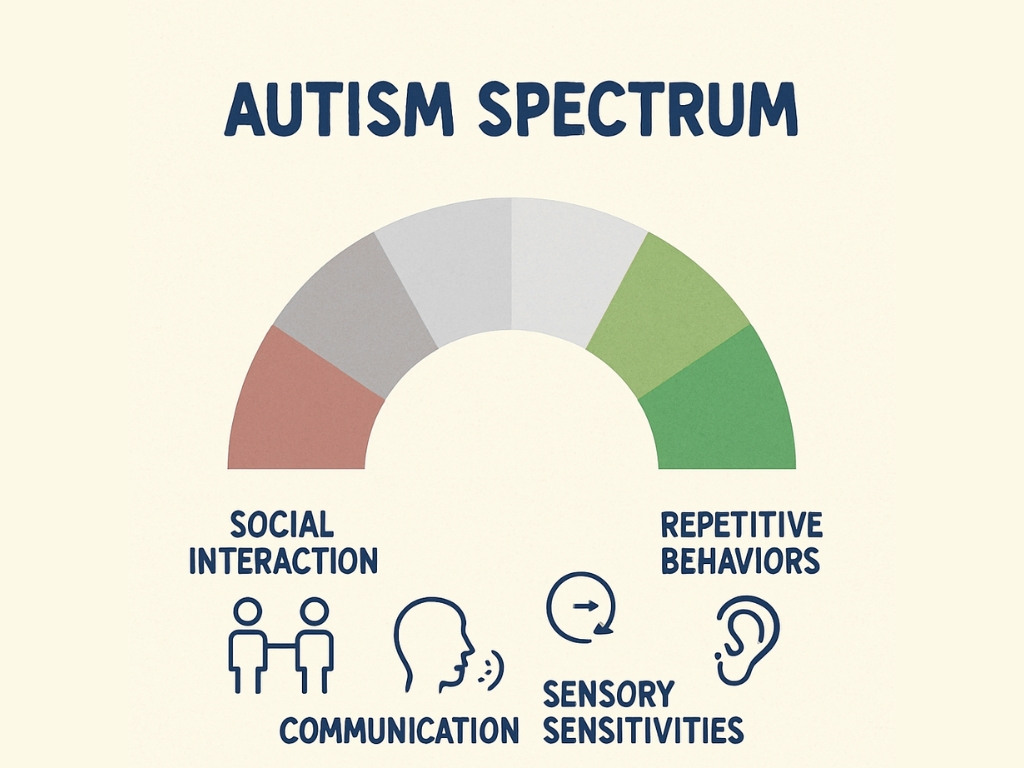
A systematic review published in the journal Autism, examining gender differences in autism presentation, found that autistic females were diagnosed on average several years later than autistic males, and were more likely to have received prior psychiatric diagnoses before autism was identified [6]. For many women, a diagnosis in adulthood arrives alongside the realisation that a significant portion of their life was shaped by a condition they did not know they had. But gender alone does not explain the diagnostic gap. Many adults who present for assessment in midlife or later describe childhoods in which they were considered simply quiet, shy, eccentric or highly sensitive, labels that felt partially true but never quite sufficient.
For higher-achieving individuals in particular, academic success can mask significant underlying difficulties with social communication, sensory processing and emotional regulation, meaning the support structures of school and structured routine can disguise the extent of a person’s differences until those structures fall away in adulthood [7]. The co-occurrence of other conditions also plays a role in delayed diagnosis. Anxiety, depression, obsessive compulsive disorder and ADHD are all significantly more common in autistic people than in the general population, and in many cases these conditions are identified and treated without the clinician looking further for an underlying neurodevelopmental explanation [8].
A person may spend years managing the symptoms of anxiety without anyone exploring why social situations, sensory environments or unexpected change produce such a disproportionate response. Signs and symptoms of autism may present differently across one’s lifespan. The demands placed on an individual change considerably between childhood, adolescence and adult life, and some people find that their coping strategies, however effortful, are sufficient to manage until a significant life event removes the scaffolding they have quietly relied upon.
It is often at these points of transition that adults first seek answers, and find that the difficulties they assumed were character flaws or personal weaknesses have a clear and coherent explanation [9].
The Impact of Living Without a Diagnosis
Living without a diagnosis does not mean living without difficulty. For many undiagnosed autistic adults, daily life involves a sustained and largely invisible effort to manage sensory environments, decode social interactions, maintain routines and meet neurotypical expectations across work, relationships and social settings.
The cumulative toll of this effort is well documented. A large-scale study published in The Lancet Psychiatry found that autistic adults had significantly higher rates of anxiety, depression and burnout than the general population, with many attributing their mental health difficulties directly to the experience of masking and social camouflaging over many years [10].
Autistic burnout, a state of chronic exhaustion resulting from prolonged masking and sensory overload, is increasingly recognised as a distinct and serious phenomenon that carries real risks if left unaddressed [11]. Employment outcomes are also affected. Research from the Office for National Statistics found that only 22% of autistic adults in the UK were in any form of paid employment, the lowest employment rate of any disability group surveyed, despite the majority expressing a strong desire to work [12].
Without an understanding of their own neurology, many autistic adults struggle to identify the working environments, communication styles and reasonable adjustments that would allow them to thrive.
Relationships are another area where the absence of a diagnosis can create lasting difficulty. Differences in communication style, sensory needs and social processing can create misunderstandings that erode relationships over time, particularly where neither party has a framework for understanding why interactions feel so effortful.
What Changes With a Diagnosis
A formal autism diagnosis in adulthood does not solve every difficulty, but the evidence is consistent that it changes the context within which those difficulties are experienced, and that this matters enormously.
A qualitative study published in Autism in Adulthood found that the majority of adults who received a late diagnosis described the experience as profoundly clarifying, with many reporting reduced self-blame, greater self-compassion and a renewed ability to make sense of their life history in light of their diagnosis [13].
The experience of reframing past struggles, not as personal failings, but as the predictable consequence of navigating the world as an undiagnosed autistic person, was described by many participants as a significant source of relief.
A diagnosis also opens practical doors. Under the Equality Act 2010, autism is a protected characteristic, and employers are legally required to make reasonable adjustments for autistic employees [14]. These might include adjustments to communication formats, working patterns, sensory environments or the structure of meetings and appraisals. Many autistic adults report that they were simply unaware they were entitled to these adjustments, or lacked the diagnosis needed to request them formally.
Access to appropriate therapeutic support also becomes possible following a formal assessment. Approaches including cognitive behavioural therapy adapted for autistic adults, occupational therapy focused on sensory processing, and structured support around executive functioning have all demonstrated benefit in this population [15]. Without a diagnosis, access to appropriately tailored support is significantly harder to obtain.
What an Adult Autism Assessment Involves
A comprehensive adult autism assessment is a structured, multi-method clinical process. It is not a single test, and no blood test or brain scan can diagnose autism. Diagnosis is made clinically, based on a detailed picture of a person’s development, behaviour and current functioning, built up across multiple sources and assessment tools [16]. A thorough assessment begins with a detailed developmental history, exploring early childhood behaviour, communication, social development and sensory experiences, often gathered with input from a family member or someone who knew the person in childhood, where possible.
This is complemented by standardised diagnostic tools, including the Autism Diagnostic Observation Schedule (ADOS-2), widely regarded as the gold standard observational assessment for autism, and the Autism Diagnostic Interview, Revised (ADI-R) [17]. Validated self-report measures, including the Autism Spectrum Quotient (AQ) and the Ritvo Autism and Asperger Diagnostic Scale (RAADS-R), provide additional structured information about the individual’s own experience of their difficulties [18].
Screening for co-occurring conditions, including ADHD, anxiety, depression and sensory processing difficulties, forms an important part of a comprehensive assessment, given the high rates of co-occurrence across these conditions [19]. The assessment concludes with a clear written report setting out findings, a formal diagnosis where criteria are met, and practical recommendations tailored to the individual’s circumstances, including workplace adjustments, therapeutic referrals and signposting to community support.
Adult ASD Assessment at The Health Suite Leicester
If you have spent years wondering whether your experience of the world might be explained by autism, or if you have been told by others that you seem different without ever having that difference properly understood, a formal assessment provides the clarity and context that so many adults in this position have been searching for.
At The Health Suite Leicester, our adult autism assessments are consultant-led and comprehensive. We take a thorough developmental history, use gold-standard diagnostic tools including the ADOS-2, and screen carefully for co-occurring conditions to ensure the full picture is understood.
Every assessment concludes with a detailed written report, a formal diagnosis where criteria are met, and personalised recommendations to support you in work, relationships and daily life. Understanding yourself more fully is not a small thing. For many of our patients, it is the beginning of everything changing for the better.
Book ASD Assessments The Health Suite Leicester
Related Services at The Health Suite
References:
- Lai MC, Lombardo MV, Baron-Cohen S. Autism. Lancet. 2014;383(9920):896–910
- Lugnegård T, Hallerbäck MU, Gillberg C. Psychiatric comorbidity in young adults with a clinical diagnosis of Asperger syndrome. Res Dev Disabil. 2011;32(5):1910–1917
- National Autistic Society. Autism Facts and History. nas.org.uk. Accessed 2025. Available at: https://www.autism.org.uk/advice-and-guidance/what-is-autism/the-history-of-autism
- Loomes R, Hull L, Mandy WPL. What is the male-to-female ratio in autism spectrum disorder? A systematic review and meta-analysis. J Am Acad Child Adolesc Psychiatry. 2017;56(6):466–474
- Hull L, et al. Putting on my best normal: social camouflaging in adults with autism spectrum conditions. J Autism Dev Disord. 2017;47(8):2519–2534
- Bargiela S, Steward R, Mandy W. The experiences of late-diagnosed women with autism spectrum conditions. Autism. 2016;20(10):1257–1267
- Lai MC, et al. Prevalence of co-occurring mental health diagnoses in the autism population: a systematic review and meta-analysis. Lancet Psychiatry. 2019;6(10):819–829
- Meier SM, et al. Obsessive-compulsive disorder and autism spectrum disorders: longitudinal and offspring risk. PLoS One. 2015;10(11):e0141703
- Huang Y, et al. The role of major life events in the timing of late autism diagnosis. Autism. 2020;24(6):1482–1493
- Cassidy S, et al. Autistic adults’ views and experiences of having a mental health diagnosis. Lancet Psychiatry. 2018;5(11):885–894
- Raymaker DM, et al. Having all of your internal resources exhausted beyond measure and being left with no clean-up crew: defining autistic burnout. Autism Adulthood. 2020;2(2):132–143
- Office for National Statistics. Outcomes for Disabled People in the UK. ONS; 2021. Available at: https://www.ons.gov.uk/peoplepopulationandcommunity/healthandsocialcare/disability/articles/outcomesfordisabledpeopleintheuk/2021
- Leedham A, et al. I was exhausted trying to figure it out: the experiences of older autistic adults following a late diagnosis. Autism Adulthood. 2020;2(1):56–68
- Equality Act 2010. London: HMSO; 2010. Available at: https://www.legislation.gov.uk/ukpga/2010/15/contents
- Spain D, et al. Social understanding intervention for adults with autism spectrum disorders and other mental health conditions. Br J Psychiatry. 2017;209(3):236–243
- Lord C, et al. Autism spectrum disorder. Nat Rev Dis Primers. 2020;6(1):5
- Lord C, et al. The autism diagnostic observation schedule, second edition (ADOS-2). J Child Psychol Psychiatry. 2012;53(4):408–415
- Ritvo RA, et al.The Ritvo autism and asperger diagnostic scale-revised (RAADS-R): a scale to assist the diagnosis of autism spectrum disorder in adults. J Autism Dev Disord. 2011;41(8):1076–1089
- Leitner Y. The co-occurrence of autism and attention deficit hyperactivity disorder in children: what do we know? Front Hum Neurosci. 2014;8:268