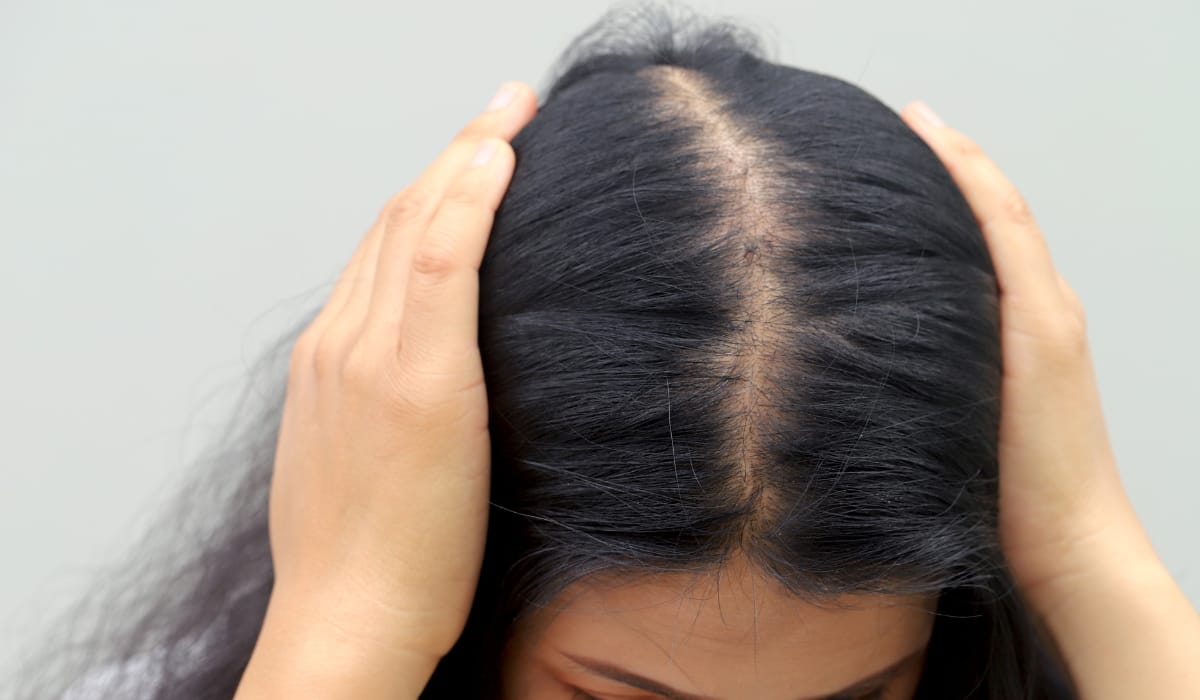
Hair loss is one of the most common aesthetic and psychological concerns faced by both men and women, yet the landscape of available treatments often feels overwhelming. Androgenetic alopecia – better known as male- or female-pattern hair loss [1] – remains the most prevalent cause, driven by genetics, hormones, and progressive miniaturisation of the hair follicle.
Its scale is substantial: estimates suggest around 50% of men over 50 and 50% of women over 65 experience pattern hair loss, [2][3] while UK-wide figures suggest more than six million men and eight million women are affected [4][5]. Other research indicates that by the age of seventy, as many as 80% of men show some thinning or balding, while half of all women experience noticeable hair loss by their fifties [6][7]. These figures make clear why hair loss is not merely a cosmetic issue but one that shapes confidence, emotional well-being, and even professional presence.
As patients navigate the crowded marketplace of shampoos, supplements, serums, pills, devices, and injectable therapies, many struggle to distinguish which treatments carry robust scientific backing and which provide more modest or uncertain benefits.

Traditional approaches – minoxidil, finasteride, low-level laser therapy, platelet-rich plasma (PRP) – all contribute meaningfully to the hair-loss treatment ecosystem [1][8][9]. But innovation continues to push the field forward, especially where technology can make established treatments more precise, more comfortable, and more effective.
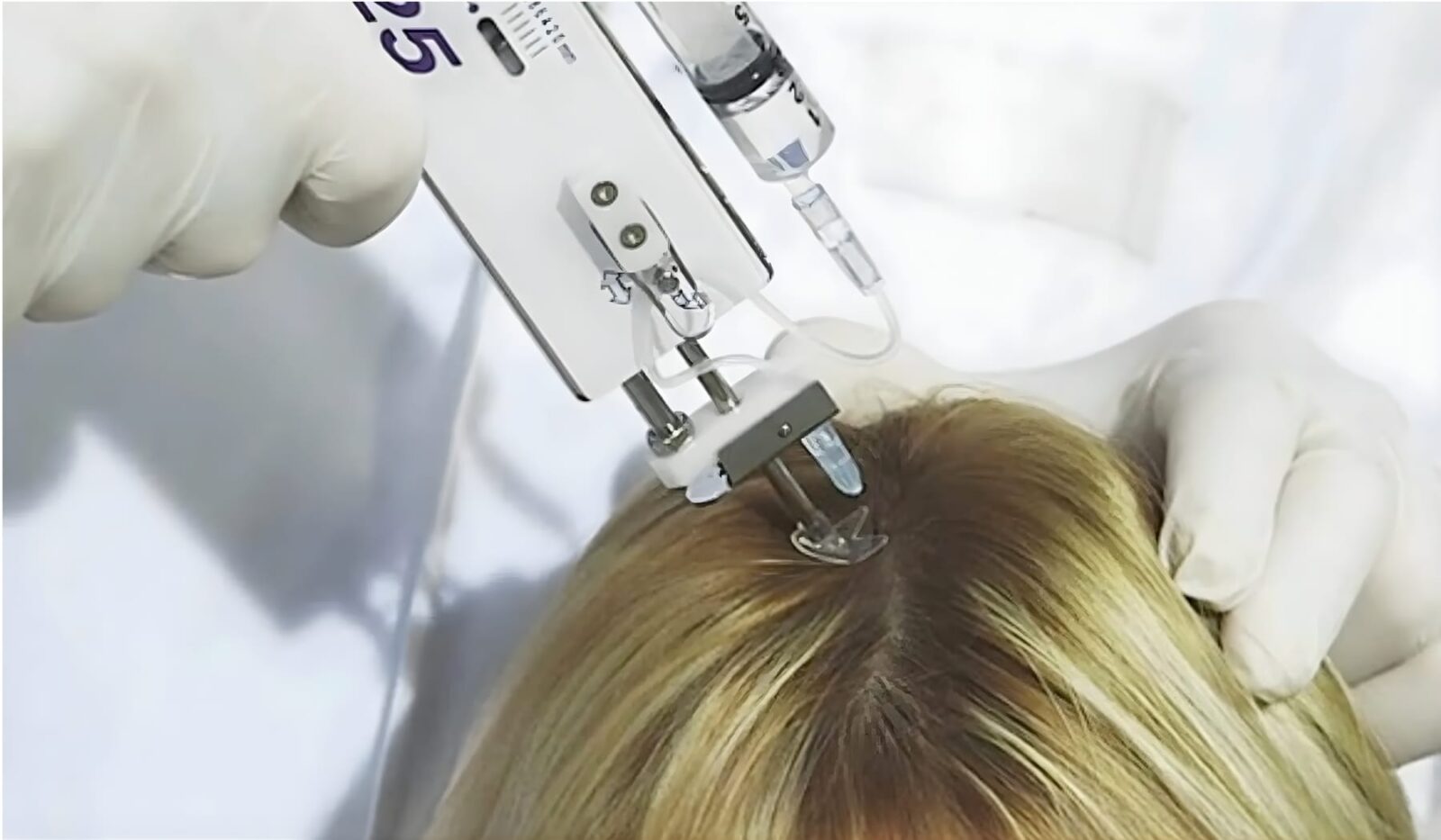
It is within this evolving space that the U225 meso gun, now offered at The Health Suite Leicester, has emerged as a sophisticated, patient-centred advancement in hair-loss management.
Recognising What Traditional Therapies Offer
Understanding how newer modalities compare requires a grounded look at the established pillars of hair-loss therapy. Among them, topical minoxidil remains one of the most recognised first-line treatments.
- Widely available in 2% and 5% formulations, minoxidil has repeatedly demonstrated efficacy in slowing shedding and increasing hair density [10]. Yet it demands consistent, long-term commitment: twice-daily application for months, often indefinitely, is required to sustain results. Many patients discontinue use prematurely, not because the treatment fails but because the routine becomes impractical or because side effects such as irritation reduce compliance [11].
- Oral finasteride is another cornerstone, particularly for men. Acting by reducing dihydrotestosterone – the hormone intimately involved in follicular shrinkage – finasteride has been shown in multiple trials and meta-analyses to be one of the most effective non-surgical therapies available [12][13]. However, because it exerts systemic hormonal effects, it is not suitable for everyone, especially women of childbearing potential [1]. Some patients, concerned about potential sexual or mood-related side effects, prefer to avoid oral medications altogether.
- Low-level laser therapy offers a non-invasive alternative. With the rise of home-use laser helmets and devices, patients can stimulate the scalp using specific wavelengths of red or near-infrared light believed to enhance cellular metabolism and follicular activity. While studies indicate meaningful benefit for many users, [15] the results remain dependent on consistent use – often three or more times per week for several months – making adherence another limiting factor.
- Among the regenerative therapies, PRP has become one of the most sought-after. The process involves drawing a patient’s own blood, separating the platelet-rich component, and injecting it into the scalp to stimulate healing pathways and follicular activity [16]. A systematic review of PRP studies found that more than 80% reported positive effects on hair growth, particularly in density and thickness [17].
Researchers have also noted that combining PRP with existing treatments, such as minoxidil or finasteride, can increase overall effectiveness [18]. And importantly, PRP’s safety profile is strong, with adverse effects usually mild and temporary [19].
Yet despite its popularity, PRP lacks universal standardisation. Studies differ widely in platelet concentration, injection depth, injection volume, and treatment frequency. For example, two patients receiving ‘PRP’ may actually be undergoing significantly different procedures. This variability shows why improvements in technique – and in the devices used – are becoming increasingly important.
Moving to Mesotherapy and the Promise of Localised Delivery
Within the broader sphere of injectable solutions, mesotherapy has gained traction as a way to deliver bioactive compounds directly into the middle layer of the skin, the mesoderm, which sits close to the hair follicles.
Rather than relying on systemic absorption or surface-level penetration, mesotherapy introduces growth factors, peptides, vitamins, and sometimes microdosed pharmaceuticals precisely where they can impact follicular health [20].
Mesotherapy brings several advantages. It allows clinicians to tailor the formulation to the individual: a patient in early-stage thinning may benefit from a regenerative mixture, while a patient with diffuse shedding might require additional cocktail components designed to support cellular metabolism [20][21].
Because the injections are localised, systemic exposure is minimal – an important consideration for those wary of oral medications. Mesotherapy can also be combined with PRP, enabling a layered regenerative and nutritive approach that harnesses the patient’s own biology alongside targeted compounds [22].
The challenge, historically, has been consistency. Manual mesotherapy requires a clinician to make dozens – sometimes hundreds – of tiny injections in a session. Even in expert hands, manual technique introduces normal fluctuations in depth, angle, and dose, which influence treatment uniformity and patient comfort.
This is where technological refinements have reshaped the field.
Considering the U225 Meso Gun in Hair Loss Treatment
At The Health Suite Leicester, the integration of the U225 meso gun reflects a commitment to elevating hair-loss treatment through precision and patient experience.
Unlike manual mesotherapy, the U225 gun uses pneumatic pressure to deliver extremely rapid micro-injections at controlled depths and volumes [23]. This level of calibration ensures that every area of the scalp receives a consistent dose – something difficult to achieve manually, especially across larger treatment zones.
The gun’s high-frequency, low-force mechanism reduces discomfort and minimises tissue trauma, leading to less redness, less bruising, and practically no downtime. Treatments can be performed efficiently while maintaining meticulous technique, making the therapy more accessible for individuals with busy schedules [23].
Crucially, the U225 gun is not merely a ‘device’ but a platform. It enables The Health Suite’s clinicians to deliver a range of advanced formulations – from PRP to growth-factor blends to targeted mesotherapy cocktails – with enhanced accuracy. The technology does not replace clinical judgment; instead, it amplifies it, ensuring that each therapeutic ingredient reaches the intended depth with minimal variation.
Patients experiencing early to moderate stages of androgenetic alopecia often respond particularly well to U225-delivered mesotherapy or PRP [24]. At this point, follicles are weakened but still viable, and targeted regenerative stimulation can meaningfully improve density, thickness, and shedding patterns. Those who are hesitant to take oral finasteride because of side-effect concerns often find mesotherapy an appealing alternative or complement.
The approach is also ideally suited for patients already using minoxidil or laser therapy and wanting to enhance their regimen. Because mesotherapy works through a different mechanism – localised bio-stimulation – it fits naturally into multi-modal treatment plans.
In addition, many patients choose the U225 mesotherapy approach as a long-term maintenance strategy. Once initial improvements stabilise, periodic sessions can help sustain follicular health without the commitment of daily medication or device use.
Understanding Safety and the Importance of Protocol-Driven Care
While the U225 meso gun itself is a delivery mechanism rather than a biological treatment, the scientific basis for the therapies it administers is robust. PRP continues to show promising results in both clinical trials and real-world settings, with strong safety data and a biologically plausible mechanism involving growth-factor-driven follicular activation.
Studies examining combination therapies – particularly PRP paired with minoxidil – consistently show improvements greater than those seen with monotherapies alone [25]. Growth-factor-based mesotherapy has also shown favourable results in emerging research, though further high-quality trials are required to standardise formulations and protocols [20].
What matters most in clinical practice is consistency.
The variability that sometimes affects PRP and mesotherapy outcomes comes not from the underlying science but from differences in how treatments are prepared and administered. A protocol-driven approach, combined with the U225’s precise delivery, helps reduce that variability.
Offering a Modern, Patient-Centred Future for Hair Restoration
The Health Suite’s integration of the U225 meso gun is part of a broader commitment to medical-grade hair restoration that is transparent, evidence-informed, and tailored to each patient. Every journey begins with an in-depth consultation, during which clinicians evaluate hair-loss patterns, medical history, lifestyle, and treatment goals. This ensures that mesotherapy is recommended not as an add-on but as a meaningful part of a cohesive plan or regenerative protocols.
Our specialists pride themselves on detailed technique, sterile handling, and meticulous control of injection depth and formulation selection. This attention to detail helps safeguard safety and ensures that patients receive a consistently high-quality treatment each visit. The use of the U225 meso gun complements this ethos, delivering a therapeutic experience that is clinically refined and notably comfortable.
As the field of hair restoration evolves, patients no longer need to choose between harsh pharmaceuticals and cosmetic quick fixes. Instead, a new generation of treatments – combining biological stimulation, technological precision, and personalised care – offers a more balanced, evidence-aligned path forward. The U225 meso gun exemplifies this progression: a tool that harnesses the strengths of mesotherapy and regenerative medicine while overcoming many of the limitations that historically affected manual techniques.
For anyone seeking a modern, minimally invasive, and technically sophisticated solution to hair thinning, The Health Suite’s U225 mesotherapy programme represents a compelling option. It brings together science, technology, and thoughtful clinical practice, offering patients not only improved outcomes but also a more comfortable and controlled treatment experience.
Find out more about how The Health Suite’s comprehensive hair loss support and its specialist U225 Meso Gun treatment, and book an appointment online.
Explore our hair loss support and U225 Meso Gun treatment
References:
- NHS. Hair loss. Available at: https://www.nhs.uk/symptoms/hair-loss/
- BBC News. Hair loss: What is female-pattern baldness? Available at: https://www.bbc.co.uk/news/uk-40118058
- Alopecia UK. Androgenetic Alopecia (Pattern Hair Loss). Available at: https://www.alopecia.org.uk/androgenetic-alopecia-pattern-hair-loss
- NHS. Men’s Health. NHS Church End Medical Centre. Available at: https://www.cemc.nhs.uk/clinics-and-services/mens-health/
- Ranscombe, S. Volume control: Hair loss causes and treatments. Harpers Bazaar Magazine. Available at: https://www.harpersbazaar.com/uk/beauty/hair/a19178588/hair-loss-causes-treatments/
- Asfour L, Cranwell W, Sinclair R. Male Androgenetic Alopecia. [Updated 2023 Jan 25]. In: Feingold KR, Ahmed SF, Anawalt B, et al., editors. Endotext [Internet]. South Dartmouth (MA): MDText.com, Inc.; 2000-. Available at: https://www.ncbi.nlm.nih.gov/books/NBK278957/
- Mane. 23 Hair Loss Statistics that Will Surprise You. Available at: https://maneadvancedhair.com/blog/hairlossstatistics/
- Hetz SP, Martin J, Pototschnig H. Patient Satisfaction and Clinical Effects of Platelet-Rich Plasma on Pattern Hair Loss in Male and Female Patients. Cureus. 2022; 5;14(9):e28801
- Pillai JK, Mysore V. Role of Low-Level Light Therapy (LLLT) in Androgenetic Alopecia. J Cutan Aesthet Surg. 2021;14(4):385-391
- EMC. Minoxidil 5% w/v cutaneous spray, solution PIL. Available at: https://www.medicines.org.uk/emc/files/pil.100306.pdf
- Shadi Z. Compliance to Topical Minoxidil and Reasons for Discontinuation among Patients with Androgenetic Alopecia. Dermatol Ther (Heidelb). 2023;13(5):1157-1169
- Aditya K, et al. Efficacy of non-surgical treatments for androgenetic alopecia: a systematic review and network meta-analysis. Journal of the European Academy of Dermatology and Venereology. 2018; 32(12), 2112-2125
- Estill MC, et al. Finasteride and Dutasteride for the Treatment of Male Androgenetic Alopecia: A Review of Efficacy and Reproductive Adverse Effects. Georgetown Medical Review. 2023;7(1)
- NHS. Fertility and pregnancy while taking finasteride. Available at: https://www.nhs.uk/medicines/finasteride/fertility-and-pregnancy-while-taking-finasteride/
- Pillai JK, Mysore V. Role of Low-Level Light Therapy (LLLT) in Androgenetic Alopecia. J Cutan Aesthet Surg. 2021;14(4):385-391
- Paichitrojjana A, Paichitrojjana A. Platelet Rich Plasma and Its Use in Hair Regrowth: A Review. Drug Des Devel Ther. 2022; 10;16:635-645
- Advanced Dermatology & Aesthetic Medicine. PRP for Hair Loss: Your Complete Guide to Platelet-Rich Plasma Hair Restoration. Available at: https://advanceddermchi.com/blogs/prp-for-hair-loss
- Xiao C, et al. Meta-analysis of efficacy of platelet-rich plasma combined with minoxidil in the treatment of androgenetic alopecia. Aesthetic Plast Surg. 2024;48(6):e1234-e1245
- Rodrigues M, et al. Platelet-rich plasma in the management of alopecia: a systematic review and meta-analysis. Drugs R D. 2025;25(3):145-162
- Aledani EM, et al. Mesotherapy as a Promising Alternative to Minoxidil for Androgenetic Alopecia: A Systematic Review. Cureus. 2024; 5;16(5):e59705
- Li Y, et al. Current application of mesotherapy in pattern hair loss: A systematic review. J Cosmet Dermatol. 2022;21(7):2767-2776
- Latkoska S, Mirela V, Petrov A, Boshkovski VB. Mesotherapy and PRP Treatment in Combination with Hair Loss in Women Case Report. Global journal of clinical and cosmetic dermatology. 2022
- Harrison J. Advances in aesthetic therapies: plasma-rich protein procedure for the treatment of alopecia. Plast Surg Nurs. 2017;37(2):52-55
- Khatu SS, et al. Platelet-rich plasma in androgenic alopecia: myth or an effective tool. J Cutan Aesthet Surg. 2014 Apr;7(2):107-10
- Yao J, et al. The additive value of platelet-rich plasma to topical Minoxidil in the treatment of androgenetic alopecia: A systematic review and meta-analysis. PLoS ONE. 2024; 19(8): e0308986