Every year, the month of Ramadan creates one of the biggest “real-world” fasting studies on the planet. For around 29–30 days, many people fast from dawn to sunset, avoiding food and drink during daylight hours. Because it’s practised across many countries and cultures, researchers have used Ramadan as a natural model to study what happens when humans follow a consistent, daytime fast and an evening eating window.
This article is patient-facing and safety-first. It’s not medical advice, and it isn’t a recommendation that everyone should fast—especially not “dry fasting” (no water). If you have any medical conditions or take regular medication, it’s worth speaking with a clinician before you try it.
What makes Ramadan fasting different from most “intermittent fasting”?
Most popular fasting approaches allow water, tea, or electrolytes. Ramadan fasting is usually a dry fast during daylight hours.
Two other important differences:
- The fasting length changes depending on where you live and what time of year it falls (because the Islamic calendar is lunar and shifts through the seasons). In some locations, the fast may be relatively short; in others, it can be long.
- Lifestyle changes often come with it (later evenings, altered sleep patterns, changes in meal composition, community gatherings). These can influence results in studies—so it’s rarely “just fasting” in isolation.
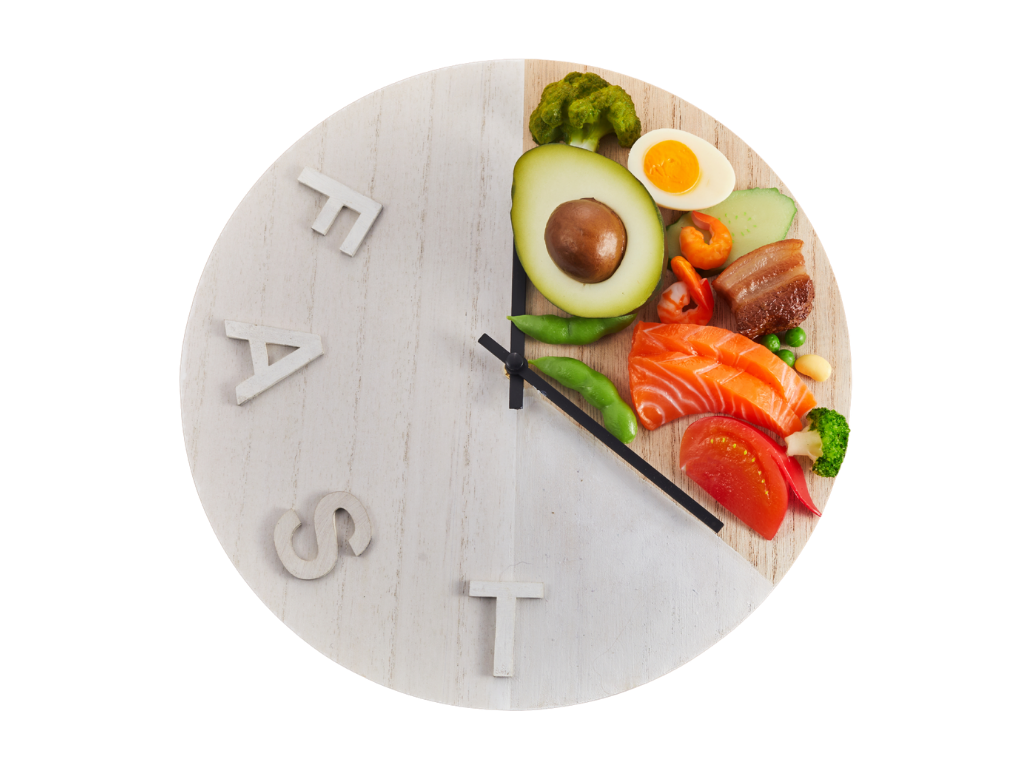
What the research suggests
1) Metabolic health can improve—even when weight loss is modest
Across systematic reviews and meta-analyses, Ramadan fasting is often associated with small-to-moderate improvements in metabolic markers such as waist circumference, blood pressure, triglycerides and fasting glucose in many (but not all) groups. Results vary depending on baseline health, diet quality, sleep, and activity. (Jahrami et al., 2022; Osman, Haldar and Henry, 2020)
A key takeaway for patients: The scale isn’t the only measure of benefit. Some people see metabolic improvements even if their weight doesn’t change dramatically.
2) Inflammation markers may shift in a favourable direction
Inflammation isn’t inherently “bad”—it’s part of immune function. But chronically elevated inflammatory signals can be associated with long-term metabolic risk.
One human study measured inflammatory cytokines and immune cells before, during and after Ramadan fasting and found reductions in several pro-inflammatory markers in healthy participants. (Faris et al., 2012)
What this means practically: Fasting may nudge the immune–metabolic system toward a calmer baseline in some people—but it’s not a guarantee, and it doesn’t replace the fundamentals (sleep, diet quality, movement, stress support).
3) “Cell clean-up” (autophagy) is plausible—and now being measured in people
Autophagy is your cells’ way of recycling old or damaged parts and helping maintain cellular housekeeping. A lot of early work is from animal models, but human research is growing.
In one study, people who fasted during Ramadan showed measurable changes in the body’s “cell clean-up” system (autophagy). Some of the genes that help start this process became more active, and the effect appeared stronger in women for one of the markers measured. (Dastghaib et al., 2025)
In another study of adults living with overweight or obesity, four weeks of dawn-to-dusk fasting was linked with increased activity in several genes involved in autophagy. (Bou Malhab et al., 2025)
Important nuance: These are biomarkers—they suggest activation of pathways, not a magic “anti-ageing switch.” They’re still meaningful, but they should be interpreted cautiously.
4) Fasting can influence gene pathways linked to oxidative stress and metabolism
Some studies have shown changes in the expression of genes involved in antioxidant defence and metabolic regulation during Ramadan fasting (particularly in participants with overweight/obesity). (Madkour et al., 2019)
It’s tempting to jump from “gene expression changed” to “disease prevented.” That leap is too big. But these studies do support a more grounded statement:
Meal timing + a daily fasting window can shift biological pathways that researchers associate with metabolic resilience.
5) Your body clock and meal timing matter—sometimes more than we realise
Human metabolism follows circadian rhythms. When we eat late at night, sleep poorly, and snack across long hours, it can push hormones and glucose regulation in an unfavourable direction.
Time-restricted eating research (outside Ramadan) suggests that earlier eating windows can improve insulin sensitivity and blood pressure even without weight loss. (Sutton et al., 2018)
Ramadan fasting isn’t always “early eating” (iftar can be late, and some people eat into the night), but it can still create a consistent daily pattern—and consistency is often a win for the body.
Why dates are traditionally used to break the fast
Breaking the fast gently matters—especially after many hours without food and drink.
Dates have a long cultural history as an iftar food, and nutritionally, they make sense:
- They provide a quick source of carbohydrates to gradually raise blood glucose.
- They offer potassium and magnesium (useful minerals when you’re rehydrating and re-feeding).
- They tend to be well tolerated by the stomach.
In research, several varieties of dates have been shown to have a relatively low to moderate glycaemic index, including in people with type 2 diabetes (in controlled settings). (Alkaabi et al., 2011)
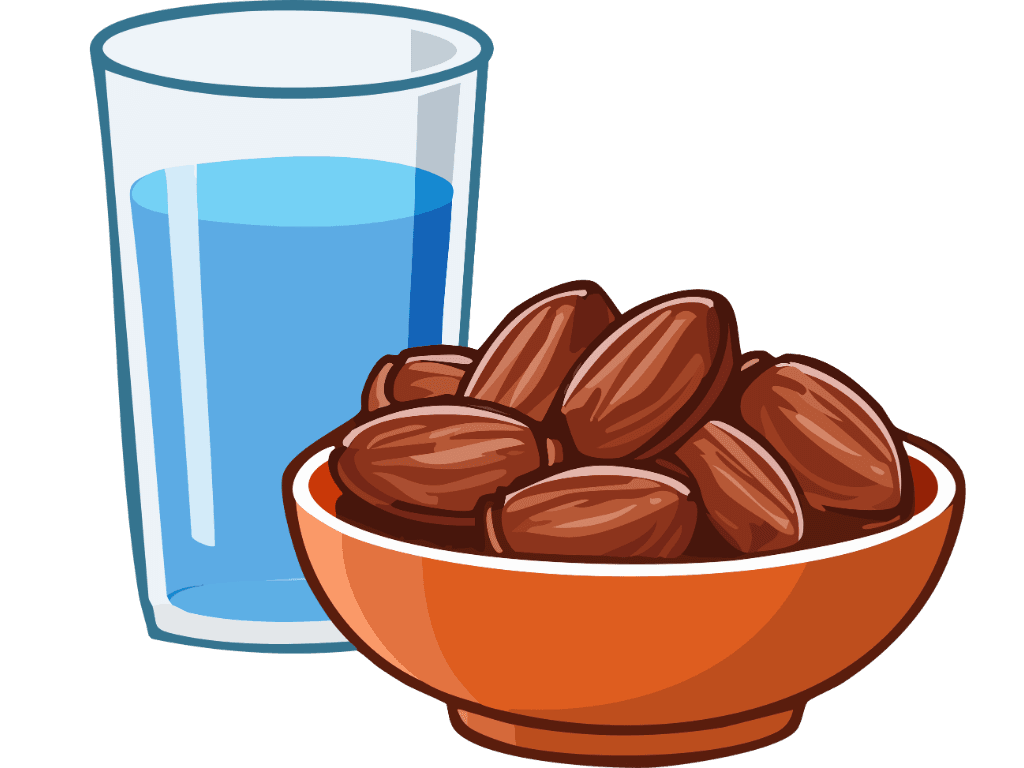
Practical tip: For most people, 1–3 dates + water is a gentle start, followed by a balanced meal after a short pause. If you have diabetes, portion size and medication planning matter—see the safety section below.
How to try a dawn-to-sunset fast (without needing to do a full month)
If you’re curious (for spiritual reasons, cultural solidarity, or health exploration), you don’t need a long protocol.
A simple, cautious approach:
1) Start with a low-demand day
Choose a weekend or a lighter workday. Avoid starting on a day with heavy training, travel, or high heat exposure.
2) Build a steady pre-dawn meal (suhoor-style)
Aim for:
- Protein (eggs, Greek yoghurt, tofu, legumes)
- Fibre + slow carbs (oats, chia, whole grains, lentils)
- Healthy fats (olive oil, nuts, avocado)
- Salted foods or soup if appropriate for you (helps hydration retention)
3) Plan hydration for the non-fasting hours
Because the day is “dry,” hydration becomes a nighttime project:
- Sip water steadily after sunset
- Consider electrolytes if you’re prone to headaches/cramps (as appropriate for your health conditions)
- Limit very salty or very sugary foods late at night (they can worsen thirst)
4) Keep exercise light and strategic
During adaptation:
- Prefer walking, mobility, gentle cycling
- If training, many people feel best close to sunset (so they can hydrate soon after), or after the evening meal
5) Break the fast gently
A simple structure:
- Water
- 1–3 dates (or a small portion of fruit)
- Pause 5–10 minutes
- Then a balanced meal (protein + vegetables + slow carbs)
Who should get medical advice before fasting (and who may be advised not to)
Please take this section seriously—especially with dry fasting.
You should speak to a clinician before fasting if you have:
- Diabetes (type 1, type 2 on insulin, or type 2 on sulfonylureas), a history of hypoglycaemia, or poor glucose awareness
- Pregnancy or breastfeeding
- Chronic kidney disease, kidney stones, or recurrent dehydration
- Heart failure, recent cardiac events, unstable angina, or complex cardiovascular disease
- Eating disorder history (past or present)
- Adrenal insufficiency or conditions requiring steroid replacement
- Any condition where dehydration could be dangerous, or where medication timing must be precise
Clinical guidance exists specifically to help risk-stratify patients who wish to fast (for example, in cardiovascular disease and diabetes). (Akhtar et al., 2022; Hassanein et al., 2022) Pregnancy evidence is mixed and limited; if someone chooses to fast, it should be individualised and closely monitored. (Ong et al., 2023) Kidney disease evidence varies by severity and comorbidity—monitoring and individual risk assessment matter. (Bragazzi, 2014)

Red flags while fasting (stop and seek help):
- Fainting, confusion, chest pain, severe weakness
- Persistent vomiting
- Signs of significant dehydration (very dark urine, inability to pass urine, dizziness on standing that doesn’t settle)
A balanced bottom line
Ramadan-style fasting isn’t a “trend”—it’s a longstanding practice with spiritual roots, cultural meaning, and (in many people) a surprisingly measurable physiological impact.
If you’re healthy and want to explore a dawn-to-sunset fast, you can do so thoughtfully:
- Prioritise hydration after sunset
- Keep meals balanced, not extreme
- Protect sleep
- Treat it as a body-awareness practice, not a test of willpower
And if you have a medical condition, it’s not a personal failure to choose not to fast. In many traditions, protecting health is part of the point.
Boost your health with personalised diet and nutrition. Book your consultation today!
References
- Akhtar, A.M., Ghouri, N., Chahal, C.A.A., Patel, R., Ricci, F., Sattar, N., Waqar, S. and Khanji, M.Y. (2022) ‘Ramadan fasting: recommendations for patients with cardiovascular disease’, Heart, 108(4), pp. 258–265. doi:10.1136/heartjnl-2021-319273.
- Alkaabi, J.M., Al-Dabbagh, B., Ahmad, S., Saadi, H.F., Gariballa, S. and Al Ghazali, M. (2011) ‘Glycemic indices of five varieties of dates in healthy and diabetic subjects’, Nutrition Journal, 10, 59. doi:10.1186/1475-2891-10-59.
- Bou Malhab, L.J., et al. (2025) ‘Dawn-to-dusk intermittent fasting is associated with overexpression of autophagy genes: A prospective study on overweight and obese cohort’, Clinical Nutrition ESPEN, 65, pp. 209–217. doi:10.1016/j.clnesp.2024.11.002.
- Bragazzi, N.L. (2014) ‘Ramadan fasting and chronic kidney disease: A systematic review’, Journal of Research in Medical Sciences, 19(7), pp. 665–676.
- Dastghaib, S., Siri, M., Rahmani-Kukia, N., Heydari, S.T., Pasalar, M., Zamani, M., Mokaram, P. and Bagheri-Lankarani, K. (2025) ‘Effect of 30-day Ramadan fasting on autophagy pathway and metabolic health outcome in healthy individuals’, Molecular Biology Research Communications, 14(2), pp. 115–127. doi:10.22099/mbrc.2024.50105.1978.
- Faris, M.A.-I.E., Kacimi, S., Al-Kurd, R.A., Fararjeh, M.A., Bustanji, Y.K., Mohammad, M.K. and Salem, M.L. (2012) ‘Intermittent fasting during Ramadan attenuates proinflammatory cytokines and immune cells in healthy subjects’, Nutrition Research, 32(12), pp. 947–955. doi:10.1016/j.nutres.2012.06.021.
- Hassanein, M., et al. (2022) ‘Diabetes and Ramadan: Practical guidelines 2021’, Diabetes Research and Clinical Practice, 185, 109185. doi:10.1016/j.diabres.2021.109185.
- Jahrami, H., Trabelsi, K., Alhaj, O.A., Saif, Z., Pandi-Perumal, S.R. and BaHammam, A.S. (2022) ‘The impact of Ramadan fasting on the metabolic syndrome severity in relation to ethnicity and sex: Results of a systematic review and meta-analysis’, Nutrition, Metabolism and Cardiovascular Diseases, 32(12), pp. 2714–2729. doi:10.1016/j.numecd.2022.09.001.
- Ong, A.K.W., Yee, A.L., Fong, A.J.H., Arasoo, V.J.T. and Ramadas, A. (2023) ‘Effects of Ramadan fasting on fetal health: A systematic review’, Australian and New Zealand Journal of Obstetrics and Gynaecology, 63(5), pp. 625–637. doi:10.1111/ajo.13706.
- Osman, F., Haldar, S. and Henry, C.J. (2020) ‘Effects of Time-Restricted Feeding during Ramadan on Dietary Intake, Body Composition and Metabolic Outcomes’, Nutrients, 12(8), 2478. doi:10.3390/nu12082478.
- Sutton, E.F., Beyl, R., Early, K.S., Cefalu, W.T., Ravussin, E. and Peterson, C.M. (2018) ‘Early time-restricted feeding improves insulin sensitivity, blood pressure, and oxidative stress even without weight loss in men with prediabetes’, Cell Metabolism, 27(6), pp. 1212–1221.e3. doi:10.1016/j.cmet.2018.04.010.