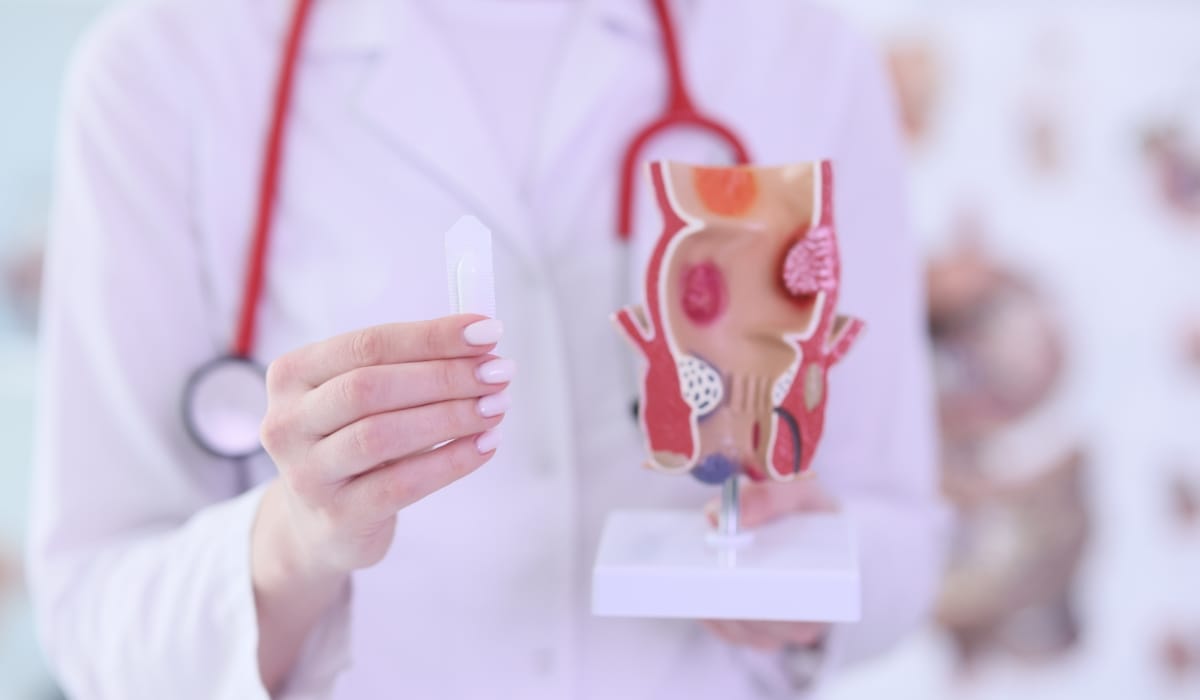

Haemorrhoid Banding | Rubber Band Ligation (RBL) at The Health Suite
What Happens During the Procedure?
- Assessment and positioning
- A small scope (anoscope) is used to identify the haemorrhoid
- A band is applied with a ligator device
- You go home the same day with aftercare advice
Most patients describe a pressure sensation rather than sharp pain.
Benefits of Haemorrhoid Banding
- Minimally invasive (no cutting, no surgical wound)
- Quick recovery
- Effective for internal haemorrhoids
- Outpatient treatment
- Lower burden than surgical haemorrhoidectomy for suitable grades
Risks and Possible Complications
Common/expected:
- mild pressure/discomfort for a few days
- light bleeding when the haemorrhoid detaches (often days 2–7)
- temporary “need to open bowels” sensation
Rare but important:
- severe pain
- heavy bleeding (can occur around 10–14 days)
- infection
- urinary retention
Seek urgent medical advice if you develop heavy bleeding, severe pain, fever, or difficulty passing urine.
Recovery and Aftercare
For the first few days:
- Avoid heavy lifting and straining
- Keep activity gentle (walking is helpful)
- Warm baths can ease discomfort
Bowel care (key to success and preventing recurrence):
- Increase fibre
- Adequate fluids
- Consider fibre supplements if advised
Pain relief:
- Paracetamol or ibuprofen are often sufficient
- Avoid aspirin unless advised by your clinician
If multiple haemorrhoids require treatment, sessions may be spaced 4–6 weeks apart.
Who Is Suitable for Banding?
You may be suitable if:
- You have Grade 1–3 internal haemorrhoids
- Bleeding or prolapse persists despite conservative measures
- You want a non-surgical option
Banding may not be appropriate if:
- Symptoms are from external haemorrhoids
- Grade 4 prolapse is present
- There is active inflammatory bowel disease
- You are taking certain blood-thinning medications (this is assessed individually)
Treatment options and pricing
Browse and click below to book any of our available service.
Haemorrhoid Banding: Initial Appointment
Included in the Haemorrhoid Banding: Initial Appointment
A private consultation with a Consultant Colorectal Surgeon to review symptoms, bowel habits, and medical history. Examination confirms haemorrhoids and rules out other causes of bleeding, with discussion of Rubber Band Ligation, expected outcomes, and personalised aftercare.
Haemorrhoid Banding: Procedure
Included in the Haemorrhoid Banding: Procedure
Rubber Band Ligation (RBL) is performed as a minimally invasive outpatient procedure. A small rubber band is placed around the base of the internal haemorrhoid, reducing blood flow so it shrinks and detaches naturally. Most patients experience mild pressure and recover quickly at home.
Common Q&A about Haemorrhoid Banding
Our FAQ section is designed to address common questions you may have, from how our treatments work to what you can expect during and after your session.
Our team is always available to provide additional support if you need more personalised guidance, ensuring that you feel informed and confident every step of the way.
Most people feel pressure or fullness rather than sharp pain. Significant pain should be reported.
Symptoms typically improve as the haemorrhoid shrinks and detaches within 7–14 days.
Yes—new haemorrhoids can develop, especially if constipation/straining continues. Bowel care reduces recurrence.
Some patients need more than one session if multiple haemorrhoids are present.
For Grade 1–3 internal haemorrhoids, banding is often preferred due to faster recovery. Surgery may be recommended for more advanced disease.
Many people can, depending on discomfort and the nature of their work.
Light bleeding can occur, especially when the haemorrhoid detaches. Heavy bleeding is not normal and needs urgent review.
Usually not, but you will be given specific instructions if anything additional is required.
Yes—examination is essential to confirm haemorrhoids and rule out other causes of bleeding.
Symptom checker
If you are experiencing any of these symptoms, please book an appointment with us. Symptoms can vary from person to person and from condition to condition.A proper diagnosis can only be made through a thorough medical examination.
Our clinicians will carry out a full assessment to ensure an accurate diagnosis and appropriate care.
Do you notice bright red blood after bowel movements?
Fresh, bright‑red bleeding during or after stools is a classic sign of internal haemorrhoids that may benefit from banding.
Are you experiencing anal discomfort or pressure during bowel movements?
Internal haemorrhoids can cause a feeling of fullness or pressure, especially when straining to pass stools.
Do you feel a bulge or prolapse from the anus when you open your bowels?
Haemorrhoids that protrude and then retract or need to be pushed back can be a symptom indicating banding may help.
Have simple treatments like creams, sitz baths, or fibre changes failed to ease symptoms?
Persistent symptoms despite conservative measures suggest a procedural option like banding might be appropriate.
Do you have internal haemorrhoids that bleed or feel uncomfortable but don’t require major surgery?
Banding is ideal for internal haemorrhoids where non‑surgical relief is desired and symptoms are significant.
Are symptoms affecting your confidence, comfort, or quality of life?
Ongoing discomfort, irritation, or fear of bleeding can impact daily life — banding provides a targeted treatment option.
What we treat
At The Health Suite Leicester, our private medical clinic offers expert care whenever you need it. Our team of experienced GPs and healthcare professionals provide personalised diagnosis and treatment for a wide range of medical conditions, ensuring high-quality, professional care in a comfortable setting.
Click below to view useful info on a few of the common conditions we treat:
Internal Haemorrhoids Causing Bleeding
Banding targets internal haemorrhoids that bleed during or after bowel movements. A small elastic band is placed around the tissue to cut off its blood supply, causing it to shrink and fall off.
Symptomatic Haemorrhoids Not Improved with Conservative Care
If lifestyle changes, creams, and sitz baths haven’t eased symptoms, banding offers a minimally‑invasive outpatient option to reduce size and discomfort.
Prolapsed Internal Haemorrhoids
Haemorrhoids that protrude during bowel motions and retract on their own or with gentle push‑back can be effectively treated with rubber band ligation.
Pressure and Discomfort Inside the Anal Canal
Internal haemorrhoids can cause a sensation of fullness, pressure, or mild discomfort. Banding relieves this by reducing the haemorrhoidal tissue causing the symptoms.
Recurring Haemorrhoid Symptoms
For haemorrhoids that flare up repeatedly, banding can help reduce recurrence and improve long‑term symptom control when combined with appropriate bowel care.
many more
Our clinicians manage a broad spectrum of conditions, and individual assessment allows us to tailor care beyond the examples listed. We encourage you to book a consultation to discuss your symptoms and appropriate treatment options.