
Dementia is widely understood as a condition of older age. Yet for a significant and often overlooked group of people, symptoms begin well before the age of 65, during what are frequently the most demanding years of a person’s adult life, when careers are at their peak, children are still being raised and financial responsibilities are at their heaviest. Young-onset dementia, sometimes referred to as early-onset dementia, is defined as dementia with symptom onset before the age of 65 [1].
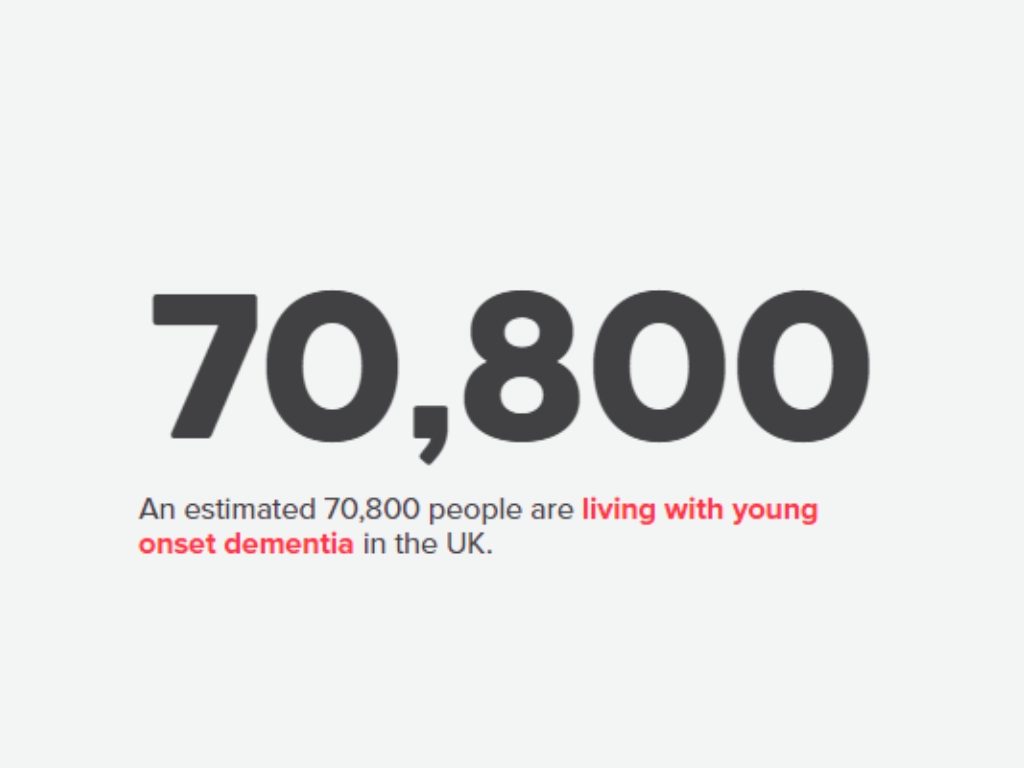
In the UK, it is estimated that around 70,800 people are living with young-onset dementia, representing approximately 5% of all dementia cases in the country [2]. Despite this, it remains poorly understood by the public, frequently misdiagnosed in clinical settings, and deeply underserved by support systems designed primarily with older adults in mind. The consequences of delayed diagnosis are considerable. Research consistently shows that people with young-onset dementia wait significantly longer for a diagnosis than older adults, with some studies reporting average delays of more than two years from first presentation to confirmed diagnosis [3].
During that time, individuals and families are left without explanation, without support and without the opportunity to plan for what lies ahead [1].
Understanding Young-Onset Dementia
Young-onset dementia is not a single condition but an umbrella term for a range of dementia syndromes that begin before the age of 65. The causes and presentations are more varied than in late-onset dementia, and this diversity is one of the reasons it is so frequently missed or misattributed.
Alzheimer’s disease remains the most common cause, accounting for around a third of young-onset dementia cases, though this proportion is lower than in older populations [4]. Vascular dementia, frontotemporal dementia (FTD), Lewy body dementia and rarer conditions, including Huntington’s disease, posterior cortical atrophy and Korsakoff syndrome all contribute to the picture [5].
Frontotemporal dementia deserves particular attention in the context of young-onset presentation.
Unlike Alzheimer’s disease, which typically begins with memory difficulties, FTD predominantly affects personality, behaviour and language, and has a younger average age of onset than most other dementia subtypes [6]. A person with FTD may present with striking changes in social behaviour, loss of empathy, disinhibition or a progressive difficulty finding words, none of which immediately suggest dementia to a clinician or family member encountering the condition for the first time.
Genetic factors also play a greater role in young-onset dementia than in late-onset disease. An estimated 10% of young-onset Alzheimer’s cases are linked to autosomal dominant mutations in genes including APP, PSEN1 and PSEN2, and first-degree relatives of those affected carry a meaningfully elevated risk [7]. For families in which young-onset dementia has occurred, genetic counselling forms an important part of the clinical picture.
Why Young-Onset Dementia Is So Often Missed
The diagnostic delay that characterises young-onset dementia is not simply a matter of clinicians failing to consider the diagnosis. It reflects a set of structural and perceptual barriers that make recognition genuinely difficult. The most fundamental is the issue of prior probability. Dementia in a 45 or 52 year old is statistically uncommon, and when a person of working age presents with memory lapses, word-finding difficulties, personality changes or difficulties with organisation, there are more likely explanations, including stress, depression, anxiety, menopause, thyroid dysfunction or vitamin deficiency, which should be explored first [8].
The problem arises when these avenues are exhausted without dementia being formally considered, and the diagnostic process stalls. Depression and young-onset dementia share a number of overlapping features, including cognitive slowing, poor concentration, withdrawal from social activities and loss of motivation, and the two conditions can co-exist [9]. A person who is struggling at work, becoming less engaged with family life and reporting that their memory is not what it was is far more likely to be assessed for depression than for a neurodegenerative condition, and in many cases that assessment will identify something real.
But when treatment for depression does not produce the expected improvement in cognitive function, that should prompt a more detailed neurological evaluation. For women in their late forties and early fifties, the hormonal changes of perimenopause add another layer of diagnostic complexity.
Cognitive symptoms, including brain fog, word retrieval difficulties and short-term memory lapses, are common features of the perimenopause, and clinically distinguishing these from the early features of a dementia syndrome requires careful, specialist evaluation [1][10]. The nature of early dementia symptoms also contributes to delay. In the earliest stages, difficulties may be subtle, inconsistent and easily attributed to external pressures. The person affected is often acutely aware that something has changed but finds it difficult to articulate what, or may minimise their concerns out of fear of what an assessment might reveal. Family members, similarly, may rationalise changes as stress or tiredness before the accumulation of symptoms makes the picture harder to ignore.
Recognising the Signs of Young-Onset Dementia
Because young-onset dementia presents differently depending on the underlying cause, there is no single symptom profile that captures every case. However, a number of warning signs should prompt consideration of a specialist assessment, particularly when they represent a clear change from a person’s previous baseline and persist over time. Memory difficulties are the most familiar early sign, particularly in Alzheimer’s disease. These typically affect episodic memory, the ability to recall recent events, conversations or appointments, rather than long-term or procedural memory [11].
Forgetting where keys have been left is common to most people; forgetting a conversation that took place an hour ago, or asking the same question repeatedly within a single interaction, represents a qualitatively different kind of difficulty. Changes in language and communication are particularly associated with FTD and the language-predominant dementias. A person may begin to struggle to find the right word during conversation, substitute incorrect words without noticing, speak less fluently than previously, or find reading and writing increasingly difficult [12].
In a person who has always been articulate and verbally confident, these changes tend to be noticed by those around them before the individual themselves acknowledges them. Personality and behavioural changes are among the most distressing early signs for families, and among the most diagnostically important. A person who was previously warm, socially engaged and emotionally regulated may become irritable, impulsive, socially inappropriate or strikingly apathetic [13].
They may make uncharacteristic financial decisions, lose interest in relationships or activities they previously valued, or behave in ways that seem out of character without any apparent awareness that their behaviour has changed. Difficulties with executive function, the cluster of cognitive skills that govern planning, organisation, problem-solving, multitasking and decision-making, are common across several dementia subtypes and often manifest first in the workplace [14].
A person who was previously highly competent may begin to struggle with complex projects, miss deadlines, make errors they would previously have caught, or find it difficult to manage competing demands. These difficulties are frequently attributed to stress or management failures before a cognitive explanation is considered. Visuospatial difficulties, including problems with navigation, judging distances, reading maps or managing visually complex tasks, are particularly associated with posterior cortical atrophy, a variant of Alzheimer’s disease with a younger average age of onset [15]. A person who becomes lost in familiar environments, or who finds driving increasingly anxiety-provoking for reasons they cannot fully explain, may be experiencing early visuospatial decline.
When to Seek Assessment
Any persistent, unexplained change in cognitive function, personality, behaviour or communication that represents a departure from a person’s previous baseline warrants professional evaluation. This is particularly true where the changes are progressive rather than static, where they are noticed by others as well as the individual, and where they are affecting work, relationships or daily functioning. A formal cognitive assessment should not be delayed in the hope that symptoms will resolve on their own.
The earlier a diagnosis is made, the greater the opportunity to access disease-modifying or symptom-management treatments where available, to make informed decisions about work, finances and future care planning, and to access the support services that can make a significant difference to quality of life for both the individual and their family [16].
It is also worth noting that a thorough assessment may reveal a treatable cause for cognitive symptoms. Conditions including hypothyroidism, vitamin B12 deficiency, sleep apnoea, depression and normal pressure hydrocephalus can all produce dementia-like symptoms and are potentially reversible with appropriate treatment [17]. A specialist assessment does not assume a diagnosis of dementia; it is a structured process designed to reach the most accurate explanation for the symptoms being experienced.
In fact, research published in the British Journal of Psychiatry found that among adults under 65 referred to specialist memory services with cognitive concerns, a significant proportion received a diagnosis of a treatable or reversible condition rather than a primary dementia, underscoring the importance of comprehensive assessment rather than either dismissal or assumption [18].
Young-Onset Dementia Assessment at The Health Suite Leicester
If you or someone close to you has noticed changes in memory, language, personality or everyday functioning that feel out of keeping with age or circumstances, a specialist cognitive assessment provides the clarity and clinical rigour needed to understand what is happening and why.
At The Health Suite Leicester, our cognitive dementia assessments for younger adults are consultant-led and comprehensive. We take a detailed history of symptoms and their progression, carry out thorough neuropsychological testing across all relevant cognitive domains, and review relevant investigations, including blood tests and neuroimaging, where indicated.
Every assessment concludes with a clear written report, a clinical formulation and, where appropriate, a diagnosis with tailored recommendations for next steps, treatment, support and planning. We understand that seeking an assessment of this kind takes courage. Our aim is to provide a process that is thorough, sensitive and focused entirely on giving you and your family the clearest possible picture of what is happening, and what can be done.
Concerned about early memory or behaviour changes? Don’t wait.
References:
- Alzheimer’s Disease International. World Alzheimer Report 2019: Attitudes to Dementia. London: ADI; 2019. Available at: https://www.alzint.org/u/WorldAlzheimerReport2019.pdf
- Alzheimer’s Research UK. Young Onset Dementia. alzheimersresearchuk.org. Accessed 2025. Available at: https://www.alzheimersresearchuk.org/dementia-information/types-of-dementia/young-onset-dementia/
- van Vliet D, et al. Time to diagnosis in young-onset dementia as compared with late-onset dementia. Psychol Med. 2013;43(2):423–432
- Vieira RT, et al. Epidemiology of early-onset dementia: a review of the literature. Clin Pract Epidemiol Ment Health. 2013;9:88–95
- Onyike CU, Diehl-Schmid J. The epidemiology of frontotemporal dementia. Int Rev Psychiatry. 2013;25(2):130–137
- Rascovsky K, et al. Sensitivity of revised diagnostic criteria for the behavioural variant of frontotemporal dementia. Brain. 2011;134(9):2456–2477
- Campion D, et al. Early-onset autosomal dominant Alzheimer disease: prevalence, genetic heterogeneity, and mutation spectrum. Am J Hum Genet. 1999;65(3):664–670
- Livingston G, et al. Dementia prevention, intervention, and care: 2020 report of the Lancet Commission. Lancet. 2020;396(10248):413–446
- Bhatt J, et al. Depression and dementia: a systematic review of the causal relationship. J Affect Disord. 2020;276:619–627
- Maki PM, Henderson VW. Cognition and the menopause transition. Menopause. 2016;23(7):803–805
- Hodges JR, et al. Semantic dementia: progressive fluent aphasia with temporal lobe atrophy. Brain. 1992;115(6):1783–1806
- Gorno-Tempini ML, et al. Classification of primary progressive aphasia and its variants. Neurology. 2011;76(11):1006–1014
- Mendez MF. Early-onset Alzheimer disease and its variants. Continuum (Minneap Minn). 2019;25(1):34–51
- Hutchings R, et al. Occupational experiences of people with young onset dementia: a systematic review. Dementia. 2022;21(3):981–1002
- Crutch SJ, et al. Posterior cortical atrophy. Lancet Neurol. 2012;11(2):170–178
- Robinson L, et al. Effectiveness of educational interventions in improving detection and management of dementia in primary care. Int J Geriatr Psychiatry. 2010;25(4):346–354
- Clarfield AM. The reversible dementias: do they reverse? Ann Intern Med. 1988;109(6):476–486
- Draper B, et al. Early dementia diagnosis and the risk of suicide and euthanasia. Br J Psychiatry. 2010;196(5):384–388