
Athletic performance can place significant physiological demands on the body. From high-intensity training and competition to repeated mechanical loading of muscles, joints, and connective tissue, athletes rely on efficient recovery processes to maintain performance, reduce injury risk, and support long-term resilience [1]. Central to these processes is oxygen availability, cellular energy production, and tissue repair [2].
Hyperbaric oxygen therapy (HBOT) is a medical-grade treatment that involves breathing pure oxygen in a specially pressurised chamber. Under these conditions, oxygen delivery to tissues is significantly increased beyond what is possible at normal atmospheric pressure. This enhanced oxygen availability supports cellular metabolism, tissue repair, and recovery processes that are critical for athletic performance [3][4].
While HBOT has a long history of use in clinical medicine, helping with conditions such as decompression sickness, carbon monoxide poisoning, and chronic wounds [5][6][7], it is increasingly being explored within sports and performance settings. Athletes across a range of disciplines are turning to HBOT as part of a broader recovery and performance-support strategy aimed at optimising training adaptations and supporting physical resilience [8].
Understanding How Oxygen Supports Athletic Recovery
Oxygen is fundamental to energy production within the body. At a cellular level, oxygen is required for oxidative phosphorylation, the process by which mitochondria generate adenosine triphosphate, the primary energy currency of cells [9]. During intense physical activity, oxygen demand increases sharply, particularly within working muscles [9].
Following training or competition, the body enters a recovery phase characterised by tissue repair, inflammation resolution, and metabolic rebalancing. Adequate oxygen delivery during this period supports collagen synthesis, angiogenesis (the formation of new blood vessels), and the clearance of metabolic by-products generated during exercise.10,11
Injured or heavily loaded tissues often experience relative hypoxia, where oxygen supply does not fully meet demand. This can slow healing processes and prolong recovery time. But by increasing the amount of dissolved oxygen in the blood plasma, HBOT enhances oxygen diffusion into tissues that may otherwise be poorly perfused [12].
Looking at How Hyperbaric Oxygen Therapy Works
During HBOT, individuals breathe near-100% oxygen inside a chamber pressurised above normal atmospheric levels. This combination dramatically increases the amount of oxygen dissolved directly into the bloodstream, independent of haemoglobin [3][4].
As a result, oxygen can penetrate deeper into tissues, including muscles, tendons, ligaments, and cartilage. Elevated tissue oxygen levels are associated with enhanced cellular metabolism, improved mitochondrial efficiency, and activation of repair pathways involved in tissue regeneration [3][4]. Research indicates that hyperbaric oxygen exposure can stimulate the release of growth factors, support fibroblast activity, and enhance collagen production – all of which are relevant to musculoskeletal recovery [3][4][13][14]. It may also support angiogenesis, improving microcirculation and long-term tissue oxygenation [15].
For athletes, these effects are particularly relevant during periods of intensive training, competition congestion, or rehabilitation, where recovery capacity can be a limiting factor.
Examining the Evidence in Athletic and Sports Medicine Contexts
HBOT has been studied across a range of clinical and performance-related settings, including sports medicine, orthopaedics, and rehabilitation science. Evidence suggests that HBOT may support recovery from muscle damage, reduce perceived fatigue, and enhance tissue repair when integrated appropriately into training programmes [16]. Studies exploring muscle recovery following intense exercise have reported improvements in markers of muscle soreness and functional recovery when HBOT is used during the post-exercise period [4]. These findings suggest that enhanced oxygen delivery may accelerate the resolution of exercise-induced muscle stress.
For example, in elite youth footballers, just a single one-hour HBOT session post-match was shown to lower the Hooper Index (wellbeing/fatigue score) to 8.6 ± 2.41 versus 11.0 ± 3.23 in controls.
In injury-focused research, HBOT has been shown to support healing in soft tissue injuries, bone stress injuries, and tendon-related conditions by promoting oxygen-dependent repair processes [4][18]. While HBOT is not a substitute for structured rehabilitation, it may act as a supportive adjunct that enhances the body’s natural recovery response. While outcomes may vary depending on timing, frequency, and individual physiology, the importance of personalised application rather than routine or indiscriminate use is clear.
For example, a study of just mild HBOT in male university athletes found that after six daily 90-minute high-intensity cycling sessions, the treatment group showed significantly faster drops in perceived exertion (by post-6 intervention) and muscle damage markers like creatine kinase compared to controls, enabling a quicker return to baseline fitness [19].
Recognising Performance, Recovery, and Resilience Benefits
For athletes, recovery is not simply about returning to baseline but about adapting positively to training stimuli. Efficient recovery allows higher-quality training sessions, reduced cumulative fatigue, and more consistent performance over time.
By supporting cellular energy production and tissue repair, HBOT may help athletes tolerate higher training volumes or intensities with less residual fatigue [4]. This can be particularly valuable during competition phases or periods of condensed scheduling, where recovery time is limited. HBOT may also support neurological recovery. Oxygen availability is critical for brain metabolism, and some athletes report improvements in mental clarity, focus, and perceived readiness following treatment. It has even been trialled in supporting cognitive improvement following brain injuries [20].
Considering Which Athletes May Benefit Most
Over the long term, strategies that enhance recovery efficiency may reduce injury risk by limiting the accumulation of unresolved tissue stress and fatigue. Those returning from injury may also find HBOT helpful as part of a comprehensive rehabilitation plan, supporting tissue repair alongside physiotherapy and progressive loading. Endurance athletes, team sport players, and strength-based athletes all place distinct demands on the body, and HBOT protocols can be tailored accordingly [3][4].
However, response to HBOT is influenced by several factors, including training load, recovery capacity, injury status, and overall metabolic health [3][4]. Athletes undergoing high training volumes, intensive competition schedules, or repeated mechanical loading may derive particular benefit from enhanced recovery support. Lifestyle and nutritional status also influence responsiveness. Adequate protein intake, micronutrient sufficiency, hydration, and sleep are all essential for tissue repair [21]. When these foundations are in place, adjunctive therapies such as HBOT are more likely to deliver meaningful benefits.
Supporting Results Through an Integrated Performance Strategy
HBOT is most effective when integrated into a broader performance and recovery framework. Training load management, sleep quality, nutrition, and structured rehabilitation remain central pillars of athletic health. Athletes who view recovery as an active, multi-faceted process – rather than a passive absence of training – are often better positioned to sustain performance and reduce injury risk over time.
When used strategically, HBOT may help create a more favourable internal environment for recovery, allowing athletes to better engage in physiotherapy, strength training, and conditioning work [3][4]. Rather than replacing established recovery practices, it complements them by addressing cellular oxygen availability. This integrated approach aligns with contemporary sports science principles, which recognise that long-term performance is built through consistency, adaptability, and resilience rather than short-term gains alone.
Applying a Personalised, Clinic-led Approach With The Health Suite
Deciding whether HBOT is appropriate requires individualised assessment. Training demands, injury history, competition schedule, and recovery challenges all inform whether HBOT is likely to add value within a given performance plan. At The Health Suite Leicester, HBOT is considered within a personalised, evidence-led framework of care. Assessment extends beyond symptoms to explore training load, lifestyle factors, metabolic health, and recovery capacity.
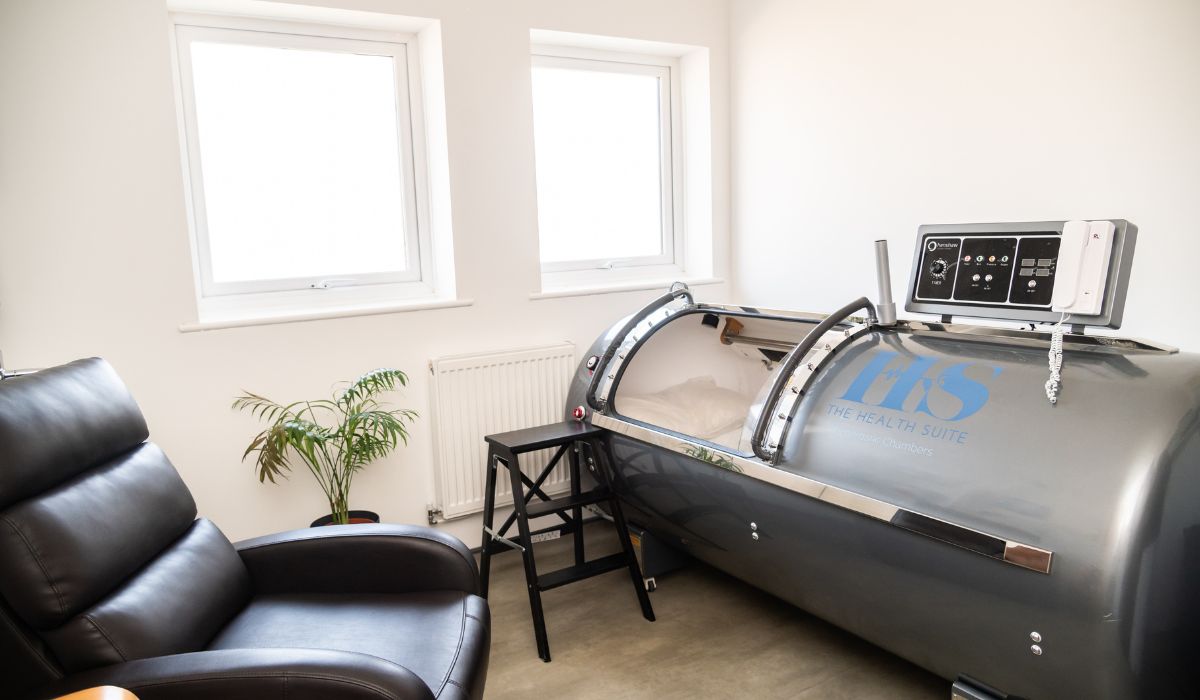
On site, our HBOT treatment involves you relaxing fully clothed, in a lying down position inside a state-of-the-art personal chamber whilst oxygen is delivered. It is a simple, painless, non-invasive form of therapy.
And where appropriate, HBOT may be integrated alongside physiotherapy, nutritional support, and performance-focused strategies aimed at supporting both short-term recovery and long-term athletic resilience. By tailoring our approach to HBOT, our team can ensure that the treatment is aligned with your individual goals, physiological needs, and stage of training of performance you may be at.
Find out how The Health Suite’s personalised approach to HBOT can support your recovery, performance, and long-term athletic health
Boost Recovery and Performance with Hyperbaric Oxygen Therapy
References:
- Bangsbo, J. Physiological Demands of Football. Available at: https://www.gssiweb.org/sports-science-exchange/article/sse-125-physiological-demands-of-football
- Joyner MJ, Coyle EF. Endurance exercise performance: the physiology of champions. J Physiol. 2008; 1;586(1):35-44
- Huang X, et al. Effects of Pre-, Post- and Intra-Exercise Hyperbaric Oxygen Therapy on Performance and Recovery: A Systematic Review and Meta-Analysis. Front Physiol. 2021; 23;12:791872
- Martín Pérez SE, et al. Effectiveness of Hyperbaric Oxygen Therapy for Musculoskeletal Pain Syndromes: A Systematic Review. Muscles. 2025; 16;4(4):63
- NHS England. Evidence Summary: Hyperbaric Oxygen Therapy. Available at: https://www.engage.england.nhs.uk/consultation/clinical-commissioning-wave10/user_uploads/d11x02-clncl-evidnc-review.pdf
- Moon RE. Hyperbaric oxygen treatment for decompression sickness. Undersea Hyperb Med. 2014;41(2):151-7
- Kranke P, et al. Hyperbaric oxygen therapy for chronic wounds. Cochrane Database Syst Rev. 2015; 24;2015(6):CD004123
- Ishii Y, et al. Hyperbaric oxygen as an adjuvant for athletes. Sports Med. 2005;35(9):739-46
- Rhodes CE, Denault D, Varacallo MA. Physiology, Oxygen Transport. [Updated 2022 Nov 14]. In: StatPearls [Internet]. Treasure Island (FL): StatPearls Publishing; 2025 Jan-. Available at: https://www.ncbi.nlm.nih.gov/books/NBK538336/
- Reinke, S. et al. The Influence of Recovery and Training Phases on Body Composition, Peripheral Vascular Function and Immune System of Professional Soccer Players. PLoS ONE. 2009; 4(3), p. E4910
- Kračun D, et al. Reactive oxygen species in tendon injury and repair. Redox Biology. 2025; 81, p103568
- Ortega MA, et al. A General Overview on the Hyperbaric Oxygen Therapy: Applications, Mechanisms and Translational Opportunities. Medicina (Kaunas). 2021; 24;57(9):864
- Gupta M, Rathored J. Hyperbaric oxygen therapy: future prospects in regenerative therapy and anti-aging. Front Aging. 2024; 2;5:1368982
- Hachmo Y, et al. The effect of hyperbaric oxygen therapy on the pathophysiology of skin aging: a prospective clinical trial. Aging (Albany NY). 2021; 16;13(22):24500-24510
- Fu Q, et al. Hyperbaric oxygen therapy for healthy aging: From mechanisms to therapeutics. Redox Biology. 2022; 53, p102352
- Barata P, et al. Hyperbaric oxygen effects on sports injuries. Ther Adv Musculoskelet Dis. 2011;3(2):111-21
- Gušić M, et al. Effects of hyperbaric oxygen therapy on recovery after a football match in young players: a double-blind randomized controlled trial. Frontiers Physiology. 2024; 15
- Raj M, et al. Hyperbaric Oxygen Therapy for Soft Tissue Injury in Open Musculoskeletal Trauma: A Prospective Study. Cureus. 2023;15;15(11):e48848
- Qu C, et al. Effects of Mild Hyperbaric Oxygen Therapy on Timing Sequence Recovery of Muscle Fatigue in Chinese University Male Athletes. Journal of exercise science and fitness. 2024; 22,4: 305-315
- Gottfried I, Schottlender N, Ashery U. Hyperbaric Oxygen Treatment-From Mechanisms to Cognitive Improvement. Biomolecules. 2021; 15;11(10):1520
- Lalieu RC, et al. Nutritional status of patients referred for hyperbaric oxygen treatment; a retrospective and descriptive cross-sectional study. Diving Hyperb Med. 2021; 20;51(4):322-327