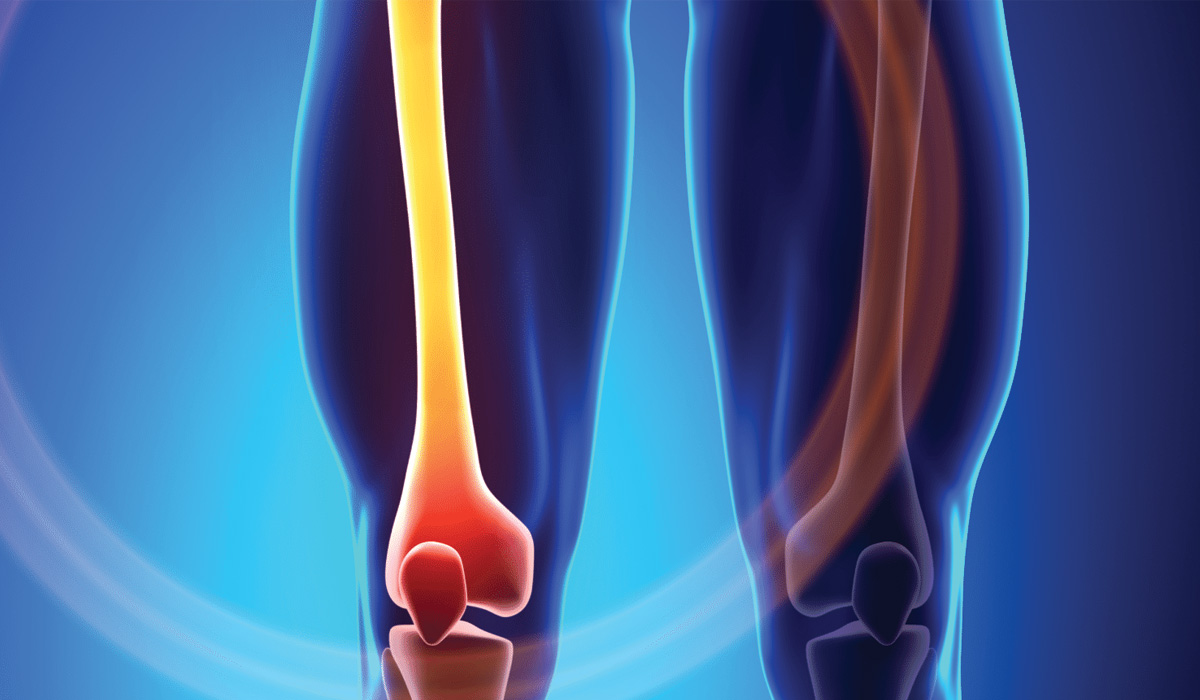
Pain in the joints or bones can be unsettling, especially when it lingers or affects everyday movement [1]. Although pain is common, it is rarely straightforward. Joints and bones respond to a wide range of influences, including inflammation, hormonal changes, physical strain, nutritional status and long-term health conditions [2]. For many people, these sensations begin gradually – a stiffness in the morning, an ache after a long day, or a sense that certain activities become harder than they once were [3]. Others experience more sudden pain, often following an injury or illness [4].
Whatever the pattern, joint and bone discomfort can have a considerable impact on wellbeing, affecting mobility, sleep, mood and confidence in daily tasks [5]. Understanding these influences is an important first step in managing pain effectively. Research consistently shows that early recognition and appropriate response – whether through lifestyle adjustments, nutritional support, physical therapy or medical guidance – can help reduce symptoms and slow the progression of underlying conditions [6][7].
While many causes of bone pain may be benign, symptoms that do not improve over time may indicate infection, metabolic imbalance or other conditions requiring clinical management [8].
Understanding What Causes Joint Pain and Bone Aches
This all tells us that bone pain should not be ignored, particularly when it is persistent or severe. Acute injuries such as fractures usually produce sharp, immediate discomfort [9][10]. Chronic, ongoing pain, however, often reflects longer-term processes such as arthritis, degenerative changes, repetitive strain or persistent inflammation [11].

Many patients naturally seek pain relief. Early diagnosis and appropriate management may reduce long-term joint damage, emphasising the value of seeking advice when symptoms first emerge. Because of the varied potential causes, identifying the source of discomfort is an essential first step [11].
Arthritis remains one of the most common reasons for joint pain [12]. Osteoarthritis – the most widespread form in the UK – develops when the smooth cartilage that cushions joints slowly wears down, leading to stiffness, swelling and reduced mobility [13].
Rheumatoid arthritis, by contrast, is an autoimmune condition in which the immune system attacks joint tissue, creating prolonged inflammation and pain [14]. The impact of these conditions on populations worldwide is clear. For example, a study exploring rheumatoid arthritis among patients in France found that 38.4% of patients continue to experience moderate to severe pain, even though many were already on treatment [15].
Once the cause is understood, individuals can access the right support – whether physical, nutritional, lifestyle-based or medical – to manage symptoms with greater confidence.
For example, a study exploring rheumatoid arthritis among patients in France found that 38.4% of patients continue to experience moderate to severe pain, even though many were already on treatment [15].
Bone pain may stem from other conditions, including osteoporosis, which is a disease characterised by a loss of bone density and strength [16]. Because osteoporosis progresses silently, with bone density decreasing (a stage called osteopenia), many people remain unaware of it until a fracture occurs [16]. Yet early warning signs – brittle nails, receding gums, frequent fractures, or height loss due to vertebral compression – offer important clues that bone integrity may be weakening [17].
Autoimmune conditions such as lupus or psoriatic arthritis can also cause joint swelling and pain through systemic inflammation [18][19], while fibromyalgia produces widespread discomfort that often feels as though it affects bones, joints and muscles simultaneously [20]. In fibromyalgia, for example, the bones are not structurally damaged; instead, the nervous system amplifies pain signals, creating heightened sensitivity [21]. In fact, research into fibromyalgia has found that people with the condition tend to feel pain more intensely than those without it.
On average, their pain scores were about one point higher on a 0–10 scale, even when researchers took age and other factors into account [22]. Nutritional deficiencies can also contribute. Low levels of vitamin D or calcium weaken bone structure and impair function, increasing the risk of both discomfort and injury [23]. Similarly, lifestyle factors, such as inactivity, ongoing stress and poor sleep, place further strain on the body’s ability to repair surrounding tissues effectively [24].
| Red Flag Symptom | Possible Concern | Urgency |
|---|---|---|
| Sudden severe pain after a fall or twist | Fracture or acute injury | Same day assessment |
| Persistent pain that lasts >6 weeks | Arthritis, inflammation, low bone density | GP or osteopathy review |
| Night pain that wakes you | Inflammation or structural change | Prompt assessment |
| New swelling, redness, warmth | Infection or inflammatory arthritis | Same day or urgent review |
| Unexplained weight loss + bone pain | Rare but possibly serious illness | Urgent medical review |
| Height loss or repeated fractures | Osteoporosis | Bone density scan recommended |
| Pain with fever | Infection | Immediate medical help |
Reducing Inflammation and Supporting Joint Comfort
Inflammation lies at the centre of many joint and bone conditions [25]. While it plays a vital role in healing, long-term or excessive inflammation can damage tissues and intensify discomfort [25]. Supporting the body’s natural repair mechanisms through diet, movement and daily habits can make a profound difference.
Nutrition is one of the most effective ways to influence inflammation [26]. Diets rich in leafy greens, colourful fruits, omega-3-rich fish and heart-healthy fats have consistently been shown to reduce inflammatory markers in the body [26]. Meanwhile, vegetables like spinach, kale and broccoli supply antioxidants that help protect cells from damage [27].
Studies have found that individuals following an anti-inflammatory dietary pattern had significantly lower levels of C-reactive protein (CRP), a key marker of inflammatory activity [28][29]. Foods such as salmon, sardines, walnuts and flaxseeds provide essential fatty acids that promote joint lubrication and reduce stiffness.
Supplements may offer additional support when used appropriately. Omega-3 fatty acids and turmeric (which contains the active compound curcumin) have demonstrated anti-inflammatory effects, while glucosamine has been studied for its ability to support cartilage health. According to research, these supplements can offer relief alongside a balanced diet, particularly for individuals experiencing chronic joint discomfort [30].
Movement remains central to reducing inflammation and supporting long-term joint comfort. Low-impact exercises – including swimming, yoga, Pilates or gentle cycling – help maintain mobility, support joint lubrication and reduce stiffness without placing excessive strain on vulnerable areas.
Consistent movement, even in small amounts, has been shown to reduce pain sensitivity and improve function in conditions such as osteoarthritis [31]. The key is to begin gradually and adapt activity levels to personal comfort.
Hormonal changes, particularly those associated with menopause, can also influence inflammation and bone strength. As oestrogen levels fall, bone density decreases, and joint stiffness often becomes more noticeable.
Studies have shown that women may lose up to 20% of their bone mass in the five to seven years following menopause [32]. Making lifestyle and nutritional support during this stage is especially important.
How to Reduce Joint Pain & Bone Aches (Evidence-Informed Actions)
| Approach | How It Helps | Examples You Can Start Today |
|---|---|---|
| Anti-inflammatory eating | Lowers CRP, protects joints, reduces pain | Add: leafy greens, berries, oily fish (salmon, sardines), nuts, olive oil. Reduce: processed foods & sugars. |
| Omega-3 fats | Improves lubrication, reduces stiffness | 2–3 portions oily fish weekly or supplements if appropriate |
| Turmeric / Curcumin | Evidence for lowering inflammation | Add to cooking or use a supplement (with clinician advice) |
| Daily gentle movement | Improves mobility and reduces stiffness | Walking, Pilates, yoga, swimming, cycling |
| Strength training | Protects joints by strengthening supporting muscles | 2 sessions per week focusing on legs, hips, and core |
| Adequate sleep & stress support | Reduces pain sensitivity and inflammation | Sleep routine, stress management, breathing practices |
| Oestrogen support in menopause (where appropriate) | Helps maintain bone density and joint comfort | Discuss HRT with a clinician |
| Weight management (if needed) | Reduces mechanical load on joints | Even 5% weight reduction reduces knee OA symptoms |
| Glucosamine & chondroitin | Supports cartilage and joint cushioning | Consider osteoarthritis after assessment |
Maintaining Bone Strength Through Key Nutrients
Bone health depends on a finely calibrated balance of minerals, vitamins and hormones. Bones continuously remodel throughout life, building and rebuilding tissue in response to physical demands and available nutrients.
Ensuring that the body receives the right nutrients allows this process to function optimally, maintaining strength, flexibility and resilience.
Calcium (found in dairy, fortified plant milks, leafy greens, etc.) is essential for forming the structural foundation of bone. Vitamin D (found in oily fish, fortified foods, and everyday sunlight) works alongside calcium, enabling the body to absorb and utilise it effectively; without adequate vitamin D, even a calcium-rich diet may not fully support bone strength. Surrounding this, protein helps with muscle preservation around the bone.
Magnesium also contributes to bone formation by enhancing the activity of osteoblasts – the cells responsible for creating new bone – while vitamin K2 helps guide calcium into bone tissue rather than allowing it to accumulate in soft tissues.
Research tells us that individuals with balanced intakes of calcium, vitamin D, magnesium, and vitamin K2 had significantly higher bone mineral density than those with lower intakes of these nutrients [33]. Food remains the best source of these nutrients, although supplementation may be warranted in cases of deficiency.
Many foods naturally support bone health. Dairy products such as milk, yoghurt and cheese provide easily absorbed calcium. Leafy greens, including kale, collard greens and spinach, offer both calcium and vitamin K. Oily fish like salmon and sardines provide calcium along with vitamin D – one of the few natural dietary sources. Fortified cereals, juices and plant milks offer helpful alternatives for individuals with specialised dietary needs.
Vitamin D deficiency is a particularly common, yet often overlooked, factor in bone pain and fragility. Without sufficient vitamin D, bones become softer and more prone to fractures, while muscle weakness increases the likelihood of falls.
So, the collective insights across the deep timeline of diet and nutritional studies is enough to tell us that an approach to pain must be multifaceted, crossing multi-disciplinary approaches.
Key Nutrients for Bone Strength & Where to Get Them
| Nutrient | Why It Matters | Top Food Sources | When to Consider Supplementation |
|---|---|---|---|
| Vitamin K2 | Directs calcium into bones (not arteries) | Eggs, fermented foods (natto), cheese | Low intake, osteoporosis risk |
| Omega-3 | Reduces inflammation & improves joint lubrication | Salmon, mackerel, walnuts, flaxseed | Inflammation, arthritis symptoms |
Alleviating Pain With The Health Suite
At The Health Suite Leicester, we understand how deeply joint and bone pain can affect everyday life. The discomfort you experience is never ‘just physical’ – it influences sleep, mood, resilience and your ability to move with confidence. That is why our pain, physiotherapy and osteopathy services adopt a personalised, multidisciplinary approach designed to understand not only where the pain is coming from, but also why it has developed and how it affects your daily experience.
Our clinicians take time to explore the full picture: lifestyle, posture, movement patterns, stress levels, underlying medical conditions and the nutritional or hormonal factors that may be contributing to your discomfort. By combining medical insight with hands-on therapies, rehabilitative exercise guidance and evidence-informed lifestyle strategies, we help individuals address pain from every angle.
Whether your discomfort stems from inflammation, arthritis, osteoporosis, injury, fibromyalgia or complex multi-factorial causes, our team works with you to create a clear, practical plan that supports both immediate relief and long-term progress. Many people find that, with the right support, strength returns more quickly than expected, movement becomes easier, and confidence begins to rebuild.
If you are ready to take steps toward greater comfort, mobility and bone health, The Health Suite is here to help.
Book a consultation today and begin your journey toward effective, compassionate pain management.
References:
- NHS. Joint Pain. Available at: https://www.nhs.uk/symptoms/joint-pain/
- WHO. Musculoskeletal health. Available at: https://www.who.int/news-room/fact-sheets/detail/musculoskeletal-conditions
- Harvard Health Publishing. Explain the pain – Is it osteoarthritis or rheumatoid arthritis? Available at: https://www.health.harvard.edu/pain/explain-the-pain–is-it-osteoarthritis-or-rheumatoid-arthritis
- Healthline. Bone Pain or Tenderness. Available at: https://www.healthline.com/health/bone-pain-or-tenderness
- Wang ST, Ni GX. Depression in Osteoarthritis: Current Understanding. Neuropsychiatr Dis Treat. 2022 22;18:375-389
- Elma Ö, Brain K, Dong HJ. The Importance of Nutrition as a Lifestyle Factor in Chronic Pain Management: A Narrative Review. J Clin Med. 2022 9;11(19):5950
- Wang W, Niu Y, Jia Q. Physical therapy as a promising treatment for osteoarthritis: A narrative review. Front Physiol. 2022 14;13:1011407. doi: 10.3389/fphys.2022.1011407
- Pickering ME, Delay M, Morel V. Chronic Pain and Bone-Related Pathologies: A Narrative Review. J Pain Res. 2024 5;17:2937-2947
- NICE. Fractures (non-complex): assessment and management. Available at: https://www.nice.org.uk/guidance/ng38/ifp/chapter/pain-relief
- Zhao Y, et al. Chronic Pain after Bone Fracture: Current Insights into Molecular Mechanisms and Therapeutic Strategies. Brain Sci. 2022 9;12(8):1056
- Pickering ME, Delay M, Morel V. Chronic Pain and Bone-Related Pathologies: A Narrative Review. J Pain Res. 2024 5;17:2937-2947
- NHS. Arthritis. Available at: https://www.nhs.uk/conditions/arthritis/
- NHS Inform. Osteoarthritis. Available at: https://www.nhsinform.scot/illnesses-and-conditions/muscle-bone-and-joints/conditions-that-can-affect-multiple-parts-of-the-body/osteoarthritis
- NHS. Rheumatoid arthritis. Available at: https://www.nhs.uk/conditions/rheumatoid-arthritis/
- Vergne-Salle P, et al. The burden of pain in rheumatoid arthritis: Impact of disease activity and psychological factors. Eur J Pain. 2020;24(10):1979-1989
- NHS. Osteoporosis. Available at: https://www.nhs.uk/conditions/osteoporosis/
- Scan. Osteoporosis Symptoms: What Are the Early Warning Signs? Available at: https://uk.scan.com/health-hub/osteoporosis-symptoms-what-are-the-early-warning-signs-of-osteoporosis
- Arthritis Foundation. Psoriatic Arthritis. Available at: https://www.arthritis.org/diseases/psoriatic-arthritis
- NHS. Lupus. Available at: https://www.nhs.uk/conditions/lupus/
- NHS. Fibromyalgia. Available at: https://www.nhs.uk/conditions/fibromyalgia/symptoms/
- Clauw DJ, et al. The science of fibromyalgia. Mayo Clin Proc. 2011;86(9):907-11
- de Souza JB, et al. Do the instruments used to assess fibromyalgia symptoms according to ACR criteria generate similar scores in other chronic musculoskeletal pain? BMC Musculoskelet Disord. 2023;24(1):476
- Voulgaridou G, et al. Vitamin D and Calcium in Osteoporosis, and the Role of Bone Turnover Markers: A Narrative Review of Recent Data from RCTs. Diseases. 2023 8;11(1):29. doi: 10.3390/diseases11010029
- Swanson CM. Sleep disruptions and bone health: what do we know so far? Curr Opin Endocrinol Diabetes Obes. 2021 1;28(4):348-353
- Chen L, et al. Inflammatory responses and inflammation-associated diseases in organs. Oncotarget. 2017 14;9(6):7204-7218
- Harvard Health Publishing. Foods that fight inflammation. Available at: https://www.health.harvard.edu/staying-healthy/foods-that-fight-inflammation
- St. John’s Health. Top 20 Foods High In Antioxidants. Available at: https://www.stjohns.health/documents/content/top-20-foods-high-in-antioxidants.pdf
- Gynette L Reyneke, et al. Dietary Patterns Associated With Anti-inflammatory Effects: An Umbrella Review of Systematic Reviews and Meta-analyses. Nutrition Reviews. 2025. nuaf104
- Perzia B, et al. Once-Daily Low Inflammatory Foods Everyday (LIFE) Smoothie or the Full LIFE Diet Lowers C-Reactive Protein and Raises Plasma Beta-Carotene in 7 Days. Am J Lifestyle Med. 2020 5;16(6):753-764
- Jhun J, et al. Curcumin and omega-3 ameliorate experimental osteoarthritis progression in terms of joint pain and mitochondrial dysfunction. J Inflamm (Lond). 2025 15;22(1):27
- Susko AM, Fitzgerald GK. The pain-relieving qualities of exercise in knee osteoarthritis. Open Access Rheumatol. 2013 15;5:81-91
- Keen MU, Barnett MJ, Anastasopoulou C. Osteoporosis in Females. [Updated 2025 Jun 29]. In: StatPearls [Internet]. Treasure Island (FL): StatPearls Publishing; 2025 Jan-. Available from:https://www.ncbi.nlm.nih.gov/books/NBK559156/
- van Ballegooijen AJ, et al. The Synergistic Interplay between Vitamins D and K for Bone and Cardiovascular Health: A Narrative Review. Int J Endocrinol. 2017:7454376