Autism Spectrum Disorder (ASD) is a group of neurodevelopmental conditions characterised by persistent differences in social communication and patterns of behaviour or interests [1][2][3].
For an autism diagnosis to be considered, these differences should have been present from early development (even if they were only recognised later), be seen in more than one setting (for example, at home and at school), and cause a clear, persistent impact on everyday life, learning or relationships [4]. Autism is not caused by parenting, diet, screen time or family stress. Instead, research shows it stems from a range of genetic influences and environmental influences, including social determinants that appear to affect crucial aspects of early brain development [5]. Crucially, loved ones or carers are not to blame.
Current UK estimates suggest around 1 in 100 children are autistic, [6] with school census data showing that 1.8% of pupils (over 170,000 school-age children in England alone) now have a Special Educational Needs (SEN) plan [7]. Some experts believe the true rate – including undiagnosed cases – may be even higher, given there are often delays for diagnosis [6]. Yet by understanding how autism presents – and how assessment works – parents can make informed and confident decisions about next steps, such as diagnosis, management and adjustment [8].
Early Signs of Autism in Children
Autism presents differently in every child. Some children show clear signs in toddlerhood, while for others, differences become more noticeable as social and academic expectations increase. Broadly speaking, autism signs fall into two areas: social communication differences, and restricted or repetitive patterns of behaviour, interests or activities [4].
Social communication differences may include limited eye contact or reduced response to name, delayed speech or differences in language development, difficulty interpreting facial expressions or tone of voice, challenges forming or maintaining peer relationships, and a preference for solitary activities [4][9].
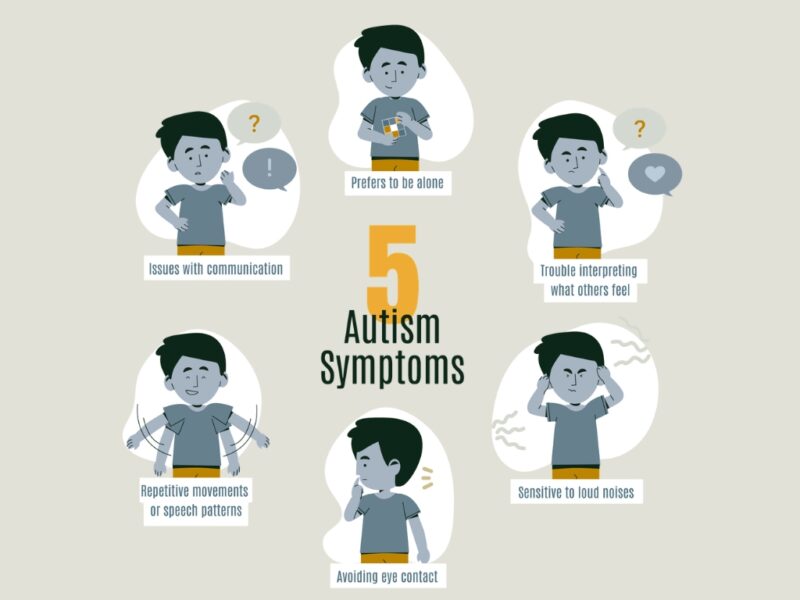
Some children may use language fluently but struggle with the subtleties of conversation, such as turn-taking, understanding implied meaning, or adapting communication to different social contexts [9]. Restricted or repetitive patterns may include a strong preference for routine and significant distress when plans change unexpectedly, repetitive movements such as rocking or hand flapping, highly focused or intense interests, sensory sensitivities to sound, texture, taste or light, and repetitive or highly structured play [9]. Sensory overload can sometimes lead to emotional dysregulation, particularly in busy or unpredictable environments [9].
It is important to remember that many children display some of these behaviours occasionally. Autism is considered when patterns are persistent, developmentally atypical, and significantly affect everyday functioning at home, in school and socially. Alongside challenges, autistic children often demonstrate remarkable strengths that can transform how families, schools and society view and support them. These frequently include creativity and original thinking, deep focus or hyperfocus on preferred topics, exceptional attention to detail and pattern recognition, strong visual or factual memory, and honesty, loyalty and straightforwardness in relationships [10].
Research shows these strengths – when recognised and nurtured – correlate with better mental health, higher self-esteem and improved wellbeing for autistic children [10].
When to See a Paediatrician
Parents often seek support when a nursery or school raises developmental concerns, when speech, play or peer relationships appear significantly different from age expectations, or when emotional regulation is closely linked to change, unpredictability or sensory input [11]. It may also be appropriate to seek further advice if there is a family history of autism, if difficulties are present across multiple settings, or if there is overlap with anxiety or learning differences [1]. Transition points – such as starting nursery or primary school – frequently make differences more visible, as demands for independence, flexibility and social understanding increase [12].
Seeking support does not mean something is ‘wrong.’ It means you are looking for clarity. In fact, early understanding can reduce frustration, improve access to appropriate support, and protect a child’s confidence and wellbeing.
How Autism is Diagnosed
Autism cannot be diagnosed through a blood test, brain scan or single screening questionnaire. Diagnosis is made clinically using established criteria and a structured assessment process. A comprehensive autism assessment includes a detailed developmental history, exploring early milestones, communication development, play patterns, sensory preferences and family history [4]. Parents are typically asked to complete validated questionnaires such as the Social Communication Questionnaire (SCQ) or Autism Spectrum Quotient (AQ), while schools may provide structured feedback using tools like the Strengths and Difficulties Questionnaire (SDQ) or teacher observation schedules to capture how a child presents across different environments [13].
A comprehensive autism assessment typically involves a specialist clinician observation using gold-standard tools such as the Autism Diagnostic Interview, Revised (ADI-R) – a detailed parent interview covering developmental history; the Developmental, Dimensional. It can also include aDiagnostic Interview (3di) or Diagnostic Interview for Social and Communication Disorders (DISCO) – structured caregiver questionnaires widely used in the UK. Direct child observation via the Autism Diagnostic Observation Schedule (ADOS or ADOS-2) also helps to assess social interaction, play and communication in a naturalistic setting [4].
Where appropriate, overlapping conditions such as ADHD, anxiety, language disorder or learning differences are also considered to ensure an accurate and complete picture. This comprehensive approach rules out alternative explanations and identifies co-occurring challenges (which affect 50–70% of autistic children), enabling more targeted support [14].
For example, a child with both autism and ADHD might benefit from combined strategies for attention and sensory regulation, while anxiety-focused interventions could address meltdowns triggered by social overload. A thorough assessment provides clarity not only about diagnosis, but also about a child’s strengths, needs and optimal support strategies.
Management and Adjustment Options
An autism diagnosis is not a label – it is an explanation. It helps families, schools and clinicians understand how a child experiences the world and what adjustments may help them thrive. Key management strategies are tailored and evidence-based. These include speech and language therapy to support verbal/non-verbal communication, social use of language, and understanding of idioms or sarcasm [15].
Other options include occupational therapy focusing on sensory regulation (such as managing noise sensitivity), fine motor skills, and daily living tasks like dressing or handwriting; and school-based SEN support, teaching assistant time, visual timetables, quiet zones, or modified workloads [16]. Families can also implement home-based adjustments like structured routines, visual schedules (such as now/next boards), noise-cancelling headphones, and predictable reward systems, alongside parent training programmes from organisations like the National Autistic Society to build consistent strategies, reduce meltdowns, and foster emotional regulation [17][18]. Social skills groups and LEGO (‘Play Brick Therapy’) or club-based therapy further help children practice peer interactions in low-pressure settings [19].
When combined with strengths-based approaches – such as interest-led learning projects – these adjustments enable autistic children to flourish academically, socially and emotionally. Early intervention improves long-term outcomes in independence and well-being.
Autism Assessment with The Health Suite Leicester
If you are considering an autism assessment for your child, The Health Suite Leicester offers a comprehensive, Consultant-led paediatric autism assessment service designed to provide clarity and direction for families. Led by an experienced Consultant Paediatrician, our assessments combine detailed developmental history, structured parent interviews (such as ADI-R or DISCO), validated questionnaires (like SCQ or AQ), and gold-standard clinical observation tools (including ADOS-2) to build a complete picture of your child’s communication style, behaviour, and developmental profile.
Because autism cannot be identified through a single screening tool, we follow a structured multi-step process aligned with NICE guidelines, ensuring reliable diagnosis whether conducted by our multidisciplinary team or integrated with NHS pathways. Following assessment, families receive a detailed written report within 8 weeks, plus personalised guidance outlining practical next steps – from school-based SEN support and EHCP applications to speech/occupational therapy recommendations, home visual schedules, and parent training programmes.
Our approach is collaborative, transparent, and strengths-focused, helping families move forward with confidence and the support they need.
Book your child’s Autism Assessment with expert guidance at The Health Suite.
Visit our related treatment services for Child Autism at The Health Suite Leicester
References:
- NHS England. Autism spectrum disorder. Available at: https://www.genomicseducation.hee.nhs.uk/genotes/knowledge-hub/autism-spectrum-disorder/#overview
- Lai, Meng-Chuan, et al. Autism. The Lancet. 2014; 383; 9920: 896-910
- NHS. What is autism? Available at: https://www.nhs.uk/conditions/autism/what-is-autism/
- National Autistic Society. Criteria and tools used in an autism assessment. Available at: https://www.autism.org.uk/advice-and-guidance/diagnosis/assessment-and-diagnosis/criteria-and-tools-used-in-an-autism-assessment
- Autism Speaks. What causes autism? Available at: https://www.autismspeaks.org/what-causes-autism
- BMA. Autism spectrum disorder. Available at: https://www.bma.org.uk/what-we-do/population-health/improving-the-health-of-specific-groups/autism-spectrum-disorder
- Special Needs Jungle. 19.5% pupils with SEND, but don’t believe the hype: Most are still educated in mainstream schools. Available at: https://www.specialneedsjungle.com/19-5-pupils-send-england-dont-believe-hype-most-still-educated-mainstream-schools/
- NICE. Autism spectrum disorder in under 19s: recognition, referral and diagnosis. Available at: https://www.nice.org.uk/guidance/cg128
- Autism Speaks. Autism diagnostic criteria: DSM-5. Available at: https://www.autismspeaks.org/autism-diagnostic-criteria-dsm-5
- Taylor, E.C, et al. Psychological strengths and well-being: Strengths use predicts quality of life, well-being and mental health in autism. Autism. 2023; 27(6):1826-1839
- Gentles SJ, et al. Parent engagement in autism-related care: a qualitative grounded theory study. Health Psychol Behav Med. 2018;15;7(1):1-18
- NICE. Autism spectrum disorder in under 19s: recognition, referral and diagnosis. Available at: https://www.nice.org.uk/guidance/cg128/chapter/Context
- NICE. Autism diagnosis in children and young people. Available at: https://www.nice.org.uk/guidance/cg128/evidence/evidence-update-pdf-183224557
- Lai, M, et al. Prevalence of co-occurring mental health diagnoses in the autism population: a systematic review and meta-analysis. The Lancet. 2019; 6;10:819-829
- Anixt JS, Ehrhardt J, Duncan A. Evidence-Based Interventions in Autism. Pediatr Clin North Am. 2024;71(2):199-221
- NICE. Autism spectrum disorder in under 19s: recognition, referral and diagnosis. Available at: https://www.nice.org.uk/guidance/cg128/resources/autism-spectrum-disorder-in-under-19s-recognition-referral-and-diagnosis-pdf-35109456621253
- Rutherford M, et al. Piloting a Home Visual Support Intervention with Families of Autistic Children and Children with Related Needs Aged 0-12. Int J Environ Res Public Health. 2023;1;20(5):4401
- Department of Health and Social Care. Core Capabilities Framework for Supporting Autistic People. Available at: https://www.autismhampshire.org.uk/assets/uploads/Autism_Capabilities_Framework_Oct_2019_1.pdf
- Wright B, et al. I-SOCIALISE: Results from a cluster randomised controlled trial investigating the social competence and isolation of children with autism taking part in LEGO® based therapy (‘Play Brick Therapy’) clubs in school environments. Autism. 2023;29;27(8):13623613231159699