Fatty Liver Disease: Why Early Liver Scanning Matters More Than Ever
- Published:
- Last medically reviewed:
Fatty liver disease has become one of the most prevalent chronic liver conditions in the world, yet it remains one of the least discussed. Unlike conditions that announce themselves through obvious symptoms, fatty liver disease progresses silently in the vast majority of people, causing no pain, no jaundice and no noticeable deterioration in daily function until it has reached a stage at which the damage is considerably harder to reverse.
By the time most people discover they have it, the condition has often been present and progressing for years. In the UK, non-alcoholic fatty liver disease, now increasingly referred to as metabolic dysfunction-associated steatotic liver disease, affects an estimated 25% to 30% of the adult population, making it the most common liver condition in the country.1
Rates have risen sharply in parallel with the increasing prevalence of obesity, type 2 diabetes, insulin resistance and metabolic syndrome, and the consequence is a growing population of people carrying significant liver disease without any awareness of it. Understanding what fatty liver disease is, how it progresses, and why early liver scanning represents the most important tool available for identifying it before harm becomes irreversible, matters for anyone with the risk factors that place them in the vulnerable population.
-
What Is Fatty Liver Disease?
The liver is the body’s primary metabolic organ, responsible for processing nutrients, synthesising proteins, regulating blood glucose, filtering toxins and performing hundreds of other functions essential to normal physiology.
In a healthy liver, fat content accounts for less than 5% of liver weight. When fat accumulates beyond this threshold, the condition known as hepatic steatosis develops, representing the earliest stage of fatty liver disease.2
In many people, simple steatosis remains stable and does not progress to more serious disease. However, in a significant proportion, the accumulation of fat in liver cells triggers an inflammatory response that leads to a more advanced condition known as non-alcoholic steatohepatitis (NASH).
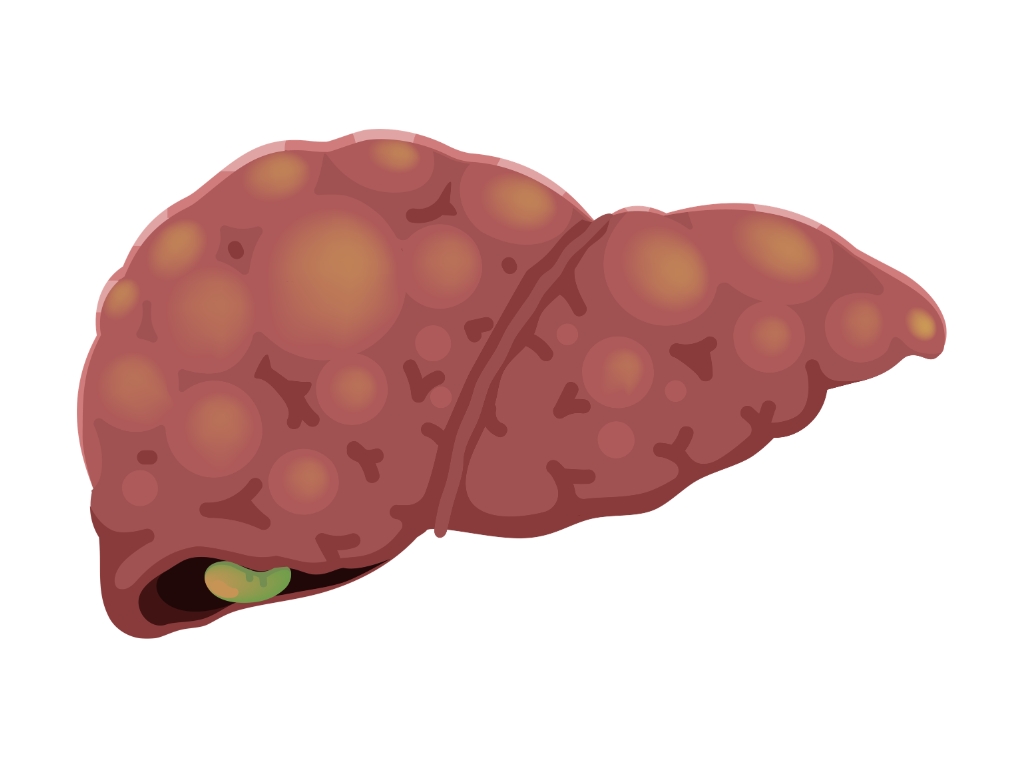
NASH involves active liver cell injury alongside fat accumulation, and it is at this stage that the risk of progressive fibrosis, the development of scar tissue within the liver, becomes clinically significant.3 As fibrotic tissue replaces healthy liver tissue over time, liver function becomes progressively impaired. Advanced fibrosis can progress to cirrhosis, in which the normal architecture of the liver is extensively replaced by scar tissue, liver function is severely compromised, and the risk of liver failure and hepatocellular carcinoma rises substantially.4
Cirrhosis is largely irreversible, which is precisely why identifying fibrosis at earlier stages, when lifestyle and medical intervention can still halt or reverse progression, represents such a significant clinical opportunity.
How Big Is the Problem in the UK?
Fatty liver disease in the UK sits at the intersection of several of the country’s most pressing public health challenges. The prevalence of obesity in UK adults now exceeds 28%, and obesity is one of the strongest independent risk factors for both the development of fatty liver disease and its progression to fibrosis.⁵
Type 2 diabetes, which affects approximately 4.3 million people in the UK, is associated with a significantly elevated risk of advanced liver disease, with studies suggesting that between 50% and 75% of people with type 2 diabetes have some degree of hepatic steatosis.⁶
Metabolic syndrome, characterised by the combination of central obesity, hypertension, dyslipidaemia and insulin resistance, substantially amplifies risk at every stage. Despite this, fatty liver UK data consistently show that the condition is dramatically underdiagnosed. The majority of people with hepatic steatosis or early fibrosis have never received a liver health assessment and are entirely unaware that they carry any liver disease at all.⁷
NHS pathways for identifying fatty liver disease outside of incidental imaging findings or abnormal liver blood tests are limited, and even abnormal liver enzymes, which may represent the only biochemical signal of underlying disease, are frequently not followed up with further investigation. The result is a substantial and growing gap between the true burden of liver disease in the population and what is actually being identified and managed.
Why You Cannot Wait for Symptoms
The clinical challenge with fatty liver disease is that the stages at which it is most amenable to intervention are precisely the stages at which it is least likely to produce any symptoms that would prompt a person to seek help. Fatigue and a vague sense of right upper abdominal discomfort are occasionally reported, but these are non-specific and easily attributed to other causes.⁸
The absence of symptoms is therefore entirely consistent with the presence of significant liver disease, including early fibrosis that, if identified, could be meaningfully addressed. Symptoms more clearly attributable to liver disease, including pronounced fatigue, abdominal swelling, easy bruising, jaundice and confusion, typically emerge only at the stage of advanced fibrosis or cirrhosis, at which point the window for reversing the underlying process has significantly narrowed or closed.⁹
This makes waiting for symptoms a particularly poor strategy for fatty liver disease, and it is the clearest possible argument for proactive liver scanning in people who carry the relevant risk factors.
Who Is Most at Risk?
The population for whom proactive liver health assessment is most clearly indicated reflects the broad range of conditions and lifestyle factors associated with fatty liver disease and its progression. People with a diagnosis of type 2 diabetes or pre-diabetes, those with obesity or significant central weight gain, individuals with metabolic syndrome or a history of elevated liver enzymes, and people with a family history of liver disease all carry a clearly elevated risk that warrants active investigation.¹⁰
Beyond these established risk groups, a liver health check is appropriate for anyone whose lifestyle may be placing sustained pressure on liver function. High alcohol consumption, even within conventionally accepted limits, a diet dominated by ultra-processed foods, a history of rapid weight fluctuation, and long-term use of medications metabolised by the liver are all factors that may be contributing to liver stress not yet visible in routine blood results.
It is also worth noting that fatty liver disease does not exclusively affect people who are overweight. Lean NAFLD, the occurrence of hepatic steatosis in individuals with a normal body mass index, is an increasingly recognised phenomenon affecting an estimated 7% of the general population, often in the context of insulin resistance, dyslipidaemia or genetic susceptibility.¹¹ BMI alone is therefore not a reliable indicator of liver health, and the absence of obvious metabolic risk factors does not eliminate the case for assessment in someone with other relevant features in their history.
What Do You Need To Know About Liver Fibrosis Screening?
Not all fatty liver disease is equal in its clinical significance or urgency, and accurate staging is essential for guiding appropriate management. The key clinical distinction is between simple steatosis, early fibrosis and advanced fibrosis or cirrhosis, with each stage carrying different prognostic implications and requiring a different response.
Simple steatosis without fibrosis carries a relatively favourable prognosis. With appropriate lifestyle modification, including weight loss, dietary improvement and management of associated metabolic conditions, regression of steatosis is achievable in a significant proportion of patients.¹² The evidence is clear that a 5% to 10% reduction in body weight can produce meaningful improvements in liver fat content and inflammation, and that sustained weight loss of 10% or more is associated with regression of fibrosis in a proportion of patients with early disease.¹³
Once fibrosis progresses to more advanced stages, the capacity for regression diminishes and the priority shifts from reversal to halting further progression and managing complications. Liver fibrosis screening, therefore, represents a genuinely different clinical opportunity depending on when it takes place.
Identifying disease at the steatosis or early fibrosis stage is an opportunity that depends entirely on proactive assessment in individuals who have not yet developed symptoms, and it is one that has been transformed by the development of validated non-invasive scanning techniques that make accurate staging accessible without any invasive procedure.
What Does a Liver Scan Actually Involve?
Until relatively recently, accurate assessment of liver fibrosis required a liver biopsy, an invasive procedure carrying a small but real risk of complications. The development of liver elastography has transformed this landscape entirely, making it possible to assess liver stiffness, which correlates directly with the degree of fibrosis present, through a painless, non-invasive external examination.¹⁴
Shear wave elastography, the modality used in NHS and hospital hepatology settings, is a non-invasive ultrasound technique for assessing liver stiffness. Also endorsed by the European Association for the Study of the Liver, it produces quantitative stiffness measurements that can be mapped to established staging systems ranging from minimal fibrosis through to cirrhosis.
Many patients searching for a liver scan in the UK will be familiar with the term FibroScan, which is a proprietary, branded elastography device. Shear wave elastography provides the same core clinical information on liver stiffness while simultaneously delivering full diagnostic imaging of liver anatomy, structure and fat content in a single assessment.¹⁵
When combined with blood-based fibrosis scoring using the FIB-4 index, which incorporates age, liver enzyme levels, and platelet count into a validated risk stratification score, the resulting assessment provides a comprehensive and clinically meaningful picture that goes considerably beyond what a single blood test or standalone scan offers in isolation.¹⁶
This integrated approach, imaging plus biochemistry interpreted together in a clinical context, is the standard recommended by the European Association for the Study of the Liver for non-invasive evaluation of liver disease severity.
What Happens Next?
Receiving the results of a comprehensive liver assessment provides clinically actionable information regardless of what they show. A result indicating minimal steatosis and no significant fibrosis provides reassurance alongside a clear understanding of the lifestyle and monitoring factors that will keep things that way.
A result indicating early steatosis or mild fibrosis identifies a window of genuine opportunity, one in which targeted dietary modification, weight management, treatment of associated metabolic conditions and appropriate clinical follow-up can meaningfully alter the disease trajectory before it progresses further.¹² Results indicating more advanced fibrosis provide information that is equally valuable, precisely because it prompts appropriate escalation, whether that means onward referral to hepatology, further specialist investigation, or accelerated management of the metabolic conditions driving liver disease progression. In every case, knowing is better than not knowing, and earlier knowledge is better than later knowledge.
The purpose of proactive liver scanning is not to find problems for their own sake, but to find them at the point at which something can still be done about them.
Liver Health Assessment at The Health Suite Leicester
At The Health Suite Leicester, our liver health assessment provides a fully integrated, consultant-quality evaluation of liver health in a single visit. Our assessment combines ultrasound-based shear wave elastography with a full diagnostic liver ultrasound, same-day blood tests including FIB-4 calculation, and a GP follow-up consultation once blood results are available.
Shear wave elastography provides a quantitative measurement of liver stiffness to assess for fibrosis and stratify risk from mild fibrosis through to advanced fibrosis or cirrhosis. The simultaneous diagnostic ultrasound assesses liver structure, size, fat content and the presence of any focal lesions. Blood tests taken on the day of your appointment are used to calculate your FIB-4 score, integrating biochemical markers with imaging findings for a more accurate and personalised risk assessment than either approach provides in isolation.
Our GE shear wave elastography system provides the same core clinical information as FibroScan while simultaneously delivering full diagnostic imaging of liver anatomy and fat content, with findings interpreted by an experienced clinician in the context of your individual history and results. This is not a standalone scan. It is a clinically integrated liver health check designed to give you, and your GP, a comprehensive and accurate picture of your liver health with clear, personalised guidance on what the findings mean and what next steps, if any, are indicated.
If you have risk factors for fatty liver disease, have received abnormal liver blood results, or simply want a thorough and proactive liver health check, this assessment provides the clinical depth that liver health deserves.
Liver Fibrosis Scan and Health Assessment
Learn more about our liver fibrosis scan and comprehensive liver health assessment in Leicester, with consultation and personalised advice.
Liver Fibrosis Scan (Ultrasound Elastography) FibroScan Alternative
Liver fibrosis scanning in Leicester. Ultrasound elastography, blood tests, and a private GP review combined in one package.