The Science of Sauna: Health Benefits, Types and How to Use Heat Therapy Safely
- Published:
- Last medically reviewed:
Heat has been used therapeutically for thousands of years, across cultures as distinct as Finland, ancient Rome and Japan. What has changed in recent decades is not the practice itself but our understanding of the biology behind it.
The evidence base supporting regular sauna use has grown substantially enough to shift heat therapy from cultural tradition into the domain of serious clinical interest, with findings from large prospective cohort studies and clinical trials demonstrating meaningful benefits across multiple physiological systems.1
Understanding what those benefits are, what type of sauna delivers them, and how to use heat therapy safely and effectively can be one of the best ways to immerse yourself in the world of heat.
-
What Happens to the Body in a Sauna?
When the body is exposed to the elevated temperatures of a sauna, core body temperature begins to rise and the body responds by dramatically increasing blood flow to the skin to facilitate heat dissipation through sweating. Heart rate increases in a manner comparable to moderate-intensity aerobic exercise, with studies documenting rates of between 100 and 150 beats per minute depending on temperature and duration.2
This cardiovascular demand is central to many of the adaptations that regular sauna use produces over time. Simultaneously, the body releases heat shock proteins that protect cells from damage and support cellular repair, growth hormone secretion rises significantly, and noradrenaline levels increase, contributing to the mood-elevating effects that regular sauna users commonly report.3
These acute responses, repeated consistently over weeks and months, drive adaptations across virtually every physiological system the research has examined.

| Heat Shock Proteins (HSPs) | Growth Hormone | Noradrenaline (Norepinephrine) |
|---|---|---|
| These are protective proteins produced by the body in response to stress, particularly heat. They play a crucial role in maintaining cellular integrity by repairing damaged proteins, supporting normal cell function, and helping the body adapt to physiological stress. | A key regenerative hormone released by the brain, particularly during periods of stress and recovery. It supports tissue repair, muscle maintenance, metabolic function, and overall cellular renewal. | A vital chemical messenger involved in the body’s stress and alertness response. It enhances focus, increases energy, and plays an important role in mood regulation — contributing to the sense of clarity and uplift many people report after sauna use. |
How Do Infrared Sauna Compare To Traditional Sauna?
A traditional Finnish sauna heats the ambient air to between 70 and 100 degrees Celsius using a wood-burning or electric stove. The body is heated through convection from the surrounding air, and humidity can be adjusted by pouring water over heated stones.
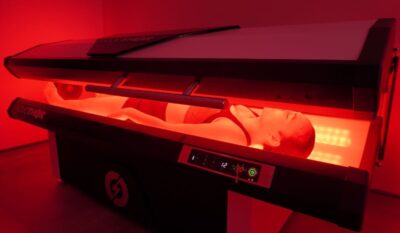
This is the modality studied in the majority of large epidemiological research on sauna health benefits, including the landmark Finnish cohort studies that have produced the most compelling cardiovascular outcome data.4 An infrared sauna operates at considerably lower ambient temperatures, typically between 45 and 65 degrees Celsius, using infrared light panels that penetrate the skin directly and heat body tissues from within.
Because infrared radiation heats the body more directly, meaningful core temperature elevation and sweating can be achieved at lower ambient temperatures, making it more accessible for people who find the intense heat of a traditional sauna difficult to tolerate.5 The practical distinction that matters most is that the evidence base for traditional sauna is substantially larger and more robust, particularly for cardiovascular outcomes.
Both modalities produce heat stress and their associated physiological responses, but they should not be assumed to be clinically interchangeable.
What Cardiovascular Health Benefits Are There?
The cardiovascular evidence for regular sauna use is the most extensive in the research literature. The Kuopio Ischaemic Heart Disease Risk Factor Study followed over 2,000 middle-aged Finnish persons for an average of twenty years and found that the frequency of sauna use was inversely and dose-dependently associated with fatal cardiovascular events.
Those who used the sauna four to seven times per week had a 50% lower risk of fatal cardiovascular disease compared with those who used it once per week, after adjustment for conventional risk factors.4
The mechanisms are well characterised. Regular sauna use improves arterial compliance, reduces arterial stiffness and enhances endothelial function, producing vascular adaptations directly relevant to cardiovascular risk reduction.1
Blood pressure is reduced both acutely following sessions and chronically with regular use, with studies demonstrating reductions comparable in magnitude to those produced by antihypertensive medication in mildly hypertensive populations.6
How Are Sauna Linked To Inflammation, Immunity and Mental Health?
Regular sauna use is associated with reductions in circulating C-reactive protein and other pro-inflammatory cytokines, consistent with a meaningful anti-inflammatory effect of repeated heat exposure.7
For people managing inflammatory conditions, including rheumatoid arthritis and fibromyalgia, heat therapy has been studied as an adjunct to conventional management, with evidence of improvements in pain and stiffness from regular use.8
On immunity, research has found that regular sauna users experience significantly fewer episodes of the common cold than non-users, with the benefit increasing with frequency of use.9
The elevation of core body temperature during sauna use mimics the fever response, which enhances the activity of certain immune cells and impairs the replication of some pathogens. The psychological benefits of regular sauna use are also increasingly well documented. A clinical trial published in JAMA Psychiatry found that a single session of whole-body hyperthermia produced antidepressant effects that persisted for six weeks in patients with major depressive disorder, with an effect size comparable to that of antidepressant medication.10
Regular sauna users also demonstrate improved heart rate variability, a marker of autonomic nervous system balance and stress resilience, consistent with the subjective sense of relaxation that most people experience after a session.11
How Do You Use a Sauna Safely?
For those new to sauna use, sessions of ten to fifteen minutes at moderate temperatures, around 70 to 80 degrees Celsius in a traditional sauna, represent a sensible starting point. Experienced users typically tolerate fifteen to twenty minutes at higher temperatures. Discomfort or lightheadedness is a signal to exit immediately, regardless of elapsed time. Frequency matters significantly. The cardiovascular outcome data suggest a dose-dependent relationship between sauna use and health benefit, with three to four sessions per week representing a practically achievable and evidence-supported target.4
Hydration is equally important. A session of moderate duration can produce sweat losses of between 0.5 and 1 litre, and drinking water before and after replacing fluids is a practical minimum. Alcohol before or during sauna use significantly increases the risk of hypotension and cardiac events and should be avoided entirely.12
Contraindications include unstable cardiovascular disease, recent myocardial infarction, uncontrolled hypertension and acute febrile illness. Pregnancy and certain medications affecting thermoregulation or fluid balance also warrant medical assessment before commencing regular sauna use.
Health and Wellness at The Health Suite Leicester
Regular sauna use is one component of a broader approach to health that recognises the connection between physical, mental and metabolic function. At The Health Suite Leicester, we take a comprehensive view of health that goes beyond the absence of illness to encompass the lifestyle, nutritional, physical and psychological factors that determine how well the body functions over time.
Our experienced team provides personalised assessment, nutrition guidance, stress management support and a range of health programmes designed to support every aspect of your health in a coordinated, evidence-based way.
Whether you are exploring heat therapy as part of a recovery programme, addressing specific health concerns through lifestyle intervention, or looking for a structured approach to improving your long-term health, The Health Suite Leicester provides the expertise and individualised support to help you get there.
Find out more about our health and wellness services at The Health Suite Leicester today.
Looking to Improve Your Health and Wellbeing?
At The Health Suite Leicester, we combine advanced testing, personalised advice, and innovative therapies to help you achieve your health goals. Book your consultation today and discover a tailored approach to better health.