
Adult ADHD in Women: Why Symptoms Are Often Missed
- Published:
- Last medically reviewed:
Attention deficit hyperactivity disorder (ADHD) is consistently diagnosed in boys at rates two to nine times higher than in girls.1 By adulthood, that gap narrows considerably, with prevalence estimates approaching an equal ratio between men and women.2 These statistics have, in part, been shaped by the diagnostic criteria for ADHD, which were developed primarily from research into boys displaying disruptive, hyperactive behaviour in classroom settings.3
Women with ADHD tend to present differently, with symptoms that are harder to see and easier to explain away.
The result is a diagnostic gap that leaves a significant number of women reaching their thirties, forties and beyond without any explanation for difficulties that have quietly shaped their entire lives.
-
Why Does ADHD Look Different in Women?
ADHD is a neurodevelopmental condition affecting attention regulation, impulse control and executive function, the set of mental skills that help people plan, organise, manage time and follow through on tasks.4
These core difficulties are the same regardless of sex, but the way they show up in daily life often differs considerably between men and women. Where boys and men with ADHD more commonly display outward hyperactivity, restlessness and impulsive behaviour, women and girls are more likely to experience what researchers describe as internalising symptoms:
- Persistent inattentiveness
- Difficulty holding a train of thought
- Emotional sensitivity
- Distractibility
- and an internal sense of mental noise that is invisible to those around them.1
These presentations are sometimes considered less disruptive and are therefore less likely to be referred for assessment or to prompt concern from teachers, employers or GPs.3
Women with ADHD are also more likely to develop what is known as masking, the practice of consciously or unconsciously concealing difficulties to meet social expectations.5
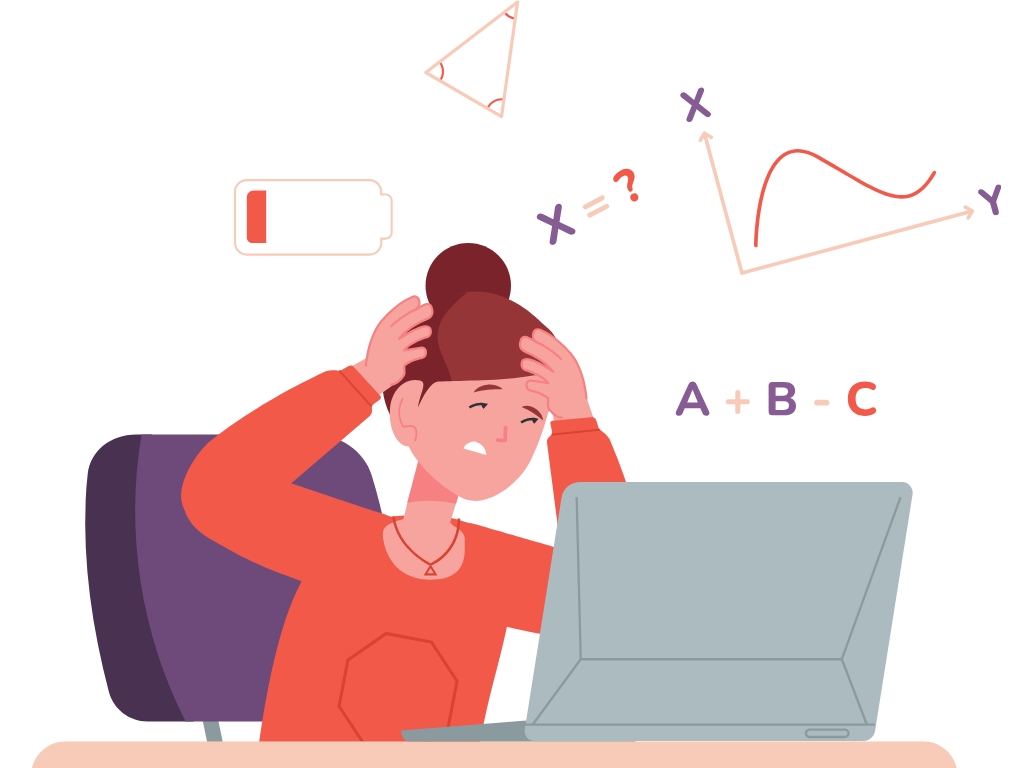
This might mean making extensive lists to compensate for poor working memory, arriving early to avoid losing track of time, or working twice as hard as everyone else simply to appear organised. Masking can be effective enough to hide symptoms from clinicians as well as colleagues, and one research review described ADHD in women as a hidden disorder as a result.5
The cost of maintaining it is high. Research has linked chronic masking to heightened anxiety, exhaustion and burnout that frequently arrive in clinical settings long before the underlying ADHD does.6 Many women who eventually seek assessment describe a similar pattern: a lifetime of coping that looked, from the outside, like competence.
The difficulties are real but hidden, because the entire point of masking is that it works, until it doesn’t. For many, the strategies that carried them through their twenties and thirties begin to fail under the weight of a demanding job, young children or hormonal change, and the question finally surfaces: why has staying on top of ordinary life always taken so much more out of me than it seems to take out of everyone else?
What Do ADHD Symptoms Typically Look Like?
Because inattentive symptoms are less visible than hyperactive ones, women with ADHD are more likely to be told they are disorganised, emotional, forgetful or anxious than to be referred for a neurodevelopmental assessment. 3 Common experiences include difficulty sustaining attention on tasks that are not immediately engaging, losing track of conversations or instructions, time-blindness and persistent lateness despite genuine effort, and a tendency to jump between tasks without completing them.
Feelings of mental overwhelm when faced with multiple competing demands are also common, with many women describing a feeling of always being on the edge of falling behind, no matter how hard they try. Emotional dysregulation is a particularly common but underappreciated feature of ADHD in women. 1
This refers to difficulty managing emotional responses proportionately, meaning strong reactions to criticism, rejection or perceived failure that can feel overwhelming and disproportionate. These experiences can sometimes take time to recover from, and are sometimes called rejection-sensitive dysphoria in the literature; it is a significant source of distress in adult women with undiagnosed ADHD. 6
Sleep difficulties, sensory sensitivities and a tendency to take on excessive responsibility to compensate for perceived inadequacy are also frequently reported. 6
Why Can Anxiety and Depression Get in the Way of a Diagnosis?
One of the most significant barriers to diagnosis is the presence of anxiety and depression, both of which are considerably more common in women with ADHD than in the general population.1
These conditions often develop as a secondary consequence of years of struggling without explanation or support, and they tend to be treated as the primary problem. Research involving women with late-diagnosed ADHD has documented low self-esteem, guilt, shame and negative self-perception stemming from years of internalised criticism, and has found that diagnosis can be profoundly restorative.7
In these instances, many women describe their lives as finally making sense and report improved wellbeing following the assessment. When a woman presents with anxiety, low mood or exhaustion, it is clinically reasonable to treat those symptoms. The problem arises when they are treated without ever asking whether ADHD might be driving them. In fact, research examining diagnostic pathways for UK women has found that many received mental health diagnoses and treatments for years before ADHD was considered, with the neurodevelopmental basis for their difficulties remaining unidentified throughout.8
Anxiety and depression are not the only labels women collect on the way to an ADHD diagnosis. The emotional dysregulation and rejection sensitivity described above can be mistaken for a personality disorder, and women are more likely than men to receive that misdiagnosis. Chronic exhaustion may be attributed to burnout or “just stress,” and cognitive difficulties to low mood or thyroid problems. Each of these can be true in its own right, and each can also be the visible surface of an unrecognised neurodevelopmental condition underneath.
A thorough assessment is what separates the two.
What Role Do Hormones Play?
ADHD does not exist in a hormonal vacuum, and for women, the interaction between ADHD and the body’s hormonal cycle adds another layer of complexity to both symptoms and diagnosis. The hormonal influence is not confined to perimenopause. Because oestrogen rises and falls across the menstrual cycle, many women with ADHD notice that their symptoms — and how well their medication works — vary predictably through the month, worsening in the low-oestrogen days before a period. The same mechanism explains why symptoms can flare in the postnatal period, and why ADHD and premenstrual dysphoric disorder (PMDD) so often travel together. Recognising the pattern is useful in itself, because it turns an unpredictable-feeling problem into something that can be anticipated and planned around.
Oestrogen plays a role in regulating dopamine, the chemical central to the attention and motivation difficulties seen in ADHD.9 When oestrogen levels fall, whether in the days before a period, during the postpartum period or across the perimenopause transition, ADHD symptoms can worsen significantly. Many women describe a sharp deterioration in concentration, emotional stability and daily functioning at these points, sometimes for the first time in their lives.
A growing body of research indicates low oestrogen environments are associated with increased ADHD symptom severity. When oestrogen is declining in someone whose dopamine is already dysregulated, both deficiencies accentuate one another, resulting in impairment across mood, memory, sleep and cognitive function. 9
A significant proportion of women receive their first ADHD diagnosis during perimenopause, not because the condition has appeared for the first time, but because hormonal change has removed the coping reserve that was keeping symptoms manageable.10
This overlap between perimenopausal symptoms and ADHD, including brain fog, poor sleep, low mood and difficulty concentrating, also creates genuine diagnostic complexity. The two conditions can look similar, coexist, and each make the other harder to manage, which is why identifying what is driving what requires careful clinical assessment.
What Does The ADHD Assessment Involve?
An ADHD assessment for adults is a structured clinical interview, typically conducted by a psychiatrist or specialist clinician. It covers current symptoms and how they affect daily life, a detailed developmental and personal history to understand how difficulties have presented across the lifespan, and relevant information from family members or close contacts where available.
ADHD is not diagnosed on the basis of a single questionnaire, and there is no blood test or scan that confirms it. The assessment involves weighing the pattern and history of difficulties against the diagnostic criteria set out in the clinical guidelines, and ruling out other explanations for the symptoms being described. 4
For women, a thorough assessment will also take account of masking, and of the fact that a well-managed exterior does not rule out significant internal struggle. So how do you tell them apart? The distinction usually lies in the timeline. Perimenopausal brain fog and concentration problems tend to appear for the first time in the forties or fifties and fluctuate with hormonal shifts.
ADHD is lifelong: the traits were present in childhood, even if they were masked, mislabelled or simply endured, and the difficulties run through the whole life history rather than being confined to recent years. The two frequently coexist, and perimenopause often does not create ADHD so much as strip away the reserves that were keeping it hidden. This is precisely why developmental history carries so much weight in assessment; the question is not only how you are functioning now, but how far back the pattern goes.
How Can You Access an Assessment in the UK?
NHS waiting times for adult ADHD assessment in England currently average 2–7 years across England, though some areas report wait times of 10-15 years. 11,12
Such numbers carry real impact, including worsening of mental health, going into the criminal justice system and substance misuse. 12
For most patients wanting a timely assessment, private assessment is the dependable route.
A diagnosis does not mark the end of the process. It opens access to support, whether through medication, coaching, therapy or practical adjustments at work, and it reframes a lifetime of difficulty in a way that many women describe as transformative.7
Beyond the Diagnosis: A Whole-Picture Approach
A diagnosis is the starting point, not the whole answer. Several other factors can worsen, mimic or compound attention and mood difficulties, and they are worth identifying rather than folding everything under a single label.
Thyroid dysfunction, low iron stores (ferritin), disrupted sleep, chronic stress and nutritional status can all drag on concentration, energy and emotional regulation – and each is modifiable.
The neurotransmitters at the centre of ADHD, dopamine and noradrenaline, are built from nutritional building blocks and cofactors including iron, tyrosine, B vitamins and magnesium; ensuring those foundations are in place will not replace a diagnosis or, where appropriate, medication, but it supports the conditions in which any treatment works best.
Where perimenopause is contributing, addressing hormonal symptoms may improve the overall picture and how well ADHD treatment performs, even though hormone replacement therapy is not in itself a treatment for ADHD.
Adult ADHD Assessment at The Health Suite
If you are a woman who has spent years managing difficulties with focus, organisation, emotional regulation or overwhelm, and have wondered whether there might be a neurodevelopmental explanation, an assessment is the appropriate next step.
At The Health Suite, we offer adult ADHD assessments, with clinicians experienced in recognising the full range of ADHD presentations, including those most commonly seen in women.
Book Your Adult ADHD Assessment
If you’ve recognised these symptoms in yourself, our specialist clinicians are here to help. Book a comprehensive adult ADHD assessment and gain the clarity and support you need.

Adult ADHD Assessment
Private adult ADHD assessment in Leicester with Consultant Psychiatrists. Expert diagnosis, detailed reports & tailored treatment plans, fast access.

ADHD Medication Prescribing
Private ADHD medication prescribing in Leicester. Safe initiation, titration & monitoring by Consultant Psychiatrists with fast private access.

Functional Medicine ADHD Support for Adults, Children & Teenagers
Specialist-led ADHD care in Leicester for adults & children.