
What are skin tags – and how can they be removed?
- Published:
- Last medically reviewed:
-
Understanding What Skin Tags Are
Skin tags, medically referred to as acrochordons, [3] are small, soft growths of skin that typically hang off the surface of the skin on a narrow stalk [4]. They are usually flesh-coloured or slightly darker and can range in size (usually 0.2 to 0.5 cm in diameter) [5].
These growths are non-cancerous and do not pose a direct threat to health [4]. They are composed of collagen fibres, blood vessels, and skin tissue and tend to develop in areas where skin folds or experiences repeated friction [4].
Skin tags are also distinct from other skin lesions such as warts, moles, or seborrhoeic keratoses. Unlike warts, they are not caused by viral infection, and unlike moles, they do not contain pigment-producing cells [5].
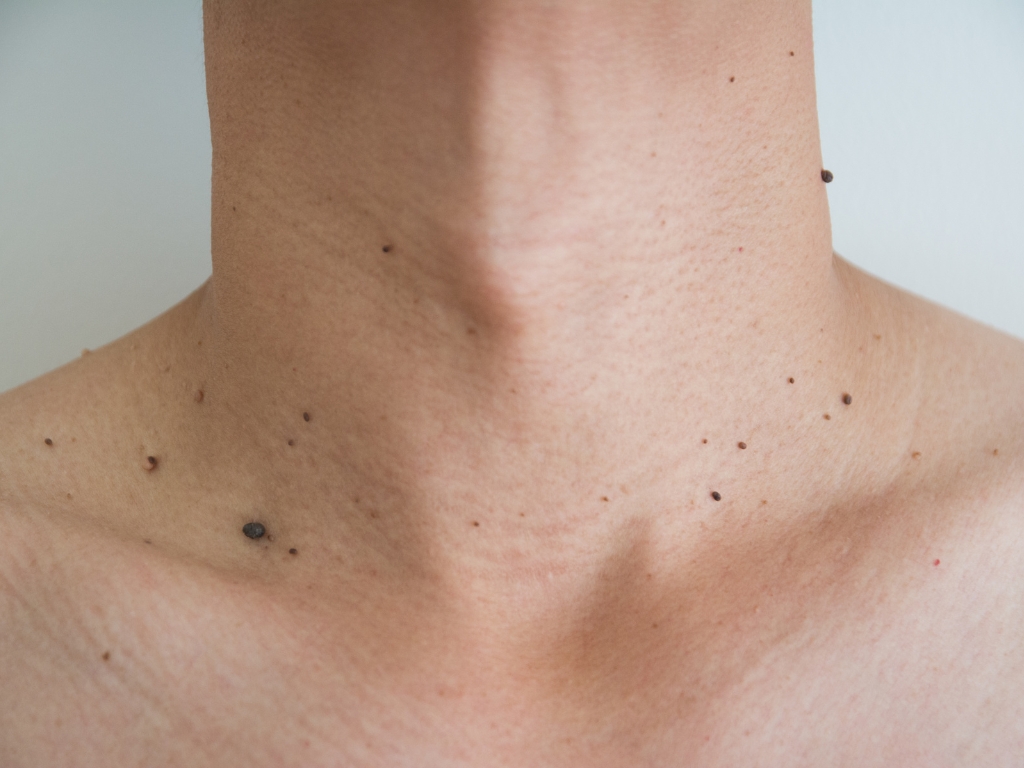
Correct identification is important, particularly if a lesion has changed in appearance, colour, or size. Regular skin checks – ideally as a professional review – help to ensure that new or changing lesions are identified early. This is particularly important for individuals with a personal or family history of skin cancer [1][5].
Recognising Why Skin Tags Develop
The exact cause of skin tags is not always fully understood, but several contributing factors often contribute [6]. One of the most significant is friction [7]. Studies show repeated low-grade friction induces epidermal thickening and cellular proliferation, forming multiple linear tags (e.g., 20+ lesions) precisely along trauma lines like bra straps in workers with repetitive arm motions [7]. Hormonal influences also appear to play a role. Skin tags are more common during pregnancy, likely due to hormonal changes combined with increased skin friction [1].
They are also frequently seen in people with insulin resistance or metabolic conditions. Research suggests an association between skin tags and conditions such as obesity, type 2 diabetes, and metabolic syndrome [8]. And while skin tags themselves are not dangerous, their presence can sometimes prompt clinicians to consider broader metabolic risk factors, particularly when multiple tags appear suddenly. Genetics may also contribute, as skin tags often run in families, with familial clustering observed in up to 30% of cases, suggesting polygenic inheritance patterns that amplify the other risks [1].
Identifying Commonly Affected Areas
While skin tags can develop almost anywhere on the body, there are some areas where they are most frequently found, as we know [2][3]. The neck is one of the most common sites, particularly where collars or jewellery cause repeated rubbing. The armpits are another frequent location due to constant movement and skin-on-skin contact [5]. In women, skin tags are commonly found under the breasts, while in both men and women they may appear in the groin or inner thighs. Eyelids are also a sensitive area where even small skin tags can be particularly bothersome [5].
While less common, skin tags can occasionally appear on the face, back, or other areas subject to pressure or friction. Their location often influences whether removal is sought, particularly if the tag catches on clothing, bleeds, or becomes irritated [9].
Distinguishing Skin Tags From Other Lesions
Accurate identification is an important step before any removal is considered. While skin tags are generally easy to recognise, other skin lesions can appear similar at first glance. Moles tend to be flat or raised but are usually pigmented and have a broader base [10]. Warts often have a rough surface and may spread or multiply due to their viral origin [11]. Seborrhoeic keratoses can appear as raised, waxy lesions and are more common with age [12].
Any lesion that is painful, ulcerated, bleeding without trauma, rapidly growing, or changing in colour should be assessed by a healthcare professional before treatment. This ensures that removal is appropriate and that more serious skin conditions are not overlooked [13].
Avoiding the Risks of DIY Removal
Despite the prevalence of online advice, home removal of skin tags using scissors, dental floss, or over-the-counter products carries risks. Without proper assessment, there is a possibility of misidentifying a lesion that should not be removed in this way.
DIY removal can result in excessive bleeding, infection, scarring, or delayed healing [1][6]. This is particularly concerning for people with underlying health conditions such as diabetes or those taking blood-thinning medications. Using unregulated products or attempting removal in sensitive areas such as the eyelids can also lead to complications [5]. For these reasons, professional assessment and treatment are strongly advised.
Using A Professional Removal Option
There are several safe and effective methods for removing skin tags when performed by trained healthcare professionals. The most appropriate technique depends on the size, location, and number of skin tags, as well as patient preference [14]. One common method is excision removal, where the skin tag is meticulously excised using a scalpel, eliminating it and leaving only a small, white or pink scar in its place [15].
Cryptherapy, which involves freezing the skin tag with liquid nitrogen, may also be used in selected cases. The cold temperature destroys the cells within the skin tags, cuts off the blood supply, and allows the skin tag to naturally fall off [16]. Recovery following professional skin tag removal is usually straightforward. Most procedures are quick and performed on an outpatient basis, with minimal downtime.
Keeping the area clean and following aftercare advice reduces the risk of infection and supports healing. And scarring is generally minimal, particularly when removal is performed by a Consultant Dermatologist or a surgical skin specialist. In many cases, the treated area becomes barely noticeable once healing is complete. Ultimately, all professional removal methods aim to minimise discomfort, reduce the risk of infection, and promote optimal healing.
Removing Skin Tags Safely With The Health Suite
At The Health Suite, we provide expert skin tag removal services through our skilled team of Consultant Dermatologists, GPs, and skin specialist nurses, specialising in safe, precise techniques that prioritise patient comfort and cosmetic outcomes. Your journey begins with a personalised consultation. A GP or consultant dermatologist examines your skin tags, discusses any discomfort or cosmetic concerns, and recommends the most appropriate treatment based on size, location, and number – whether a single bothersome tag on your eyelid or multiple growths in friction-prone areas.
Our two proven removal methods can then be tailored to your needs. Excision involves local anaesthetic for complete pain relief, followed by meticulous scalpel removal that eliminates the tag entirely, leaving only a small white or pink scar; this technique, performed exclusively by our dermatologists, suits larger tags or those with wider bases.
Cryotherapy freezes the tag using liquid nitrogen, destroying its cells and blood supply so it falls off naturally within days – this quick, versatile approach works well for smaller or multiple tags. Recovery is straightforward and downtime is minimal. These outpatient procedures restore smooth skin rapidly, preventing irritation from clothing or jewellery while reducing infection risk. Our professional removal ensures accuracy far superior to DIY remedies, with straightforward recovery and minimal downtime. This also means less worries about scarring.
Say goodbye to unwanted skin tags – Achieve smoother, clearer skin with professional skin tag removal.
Skin tags are common, harmless growths that can appear on areas such as the neck, underarms, eyelids, or body folds. While medically benign, they can sometimes become irritated, catch on clothing, or cause cosmetic concern.
At The Health Suite, we offer professional skin tag removal in a safe, clinical environment, carried out by experienced practitioners. Treatment is quick, precise, and designed to minimise discomfort while achieving a clear, smooth result.
Whether you have a single skin tag or multiple lesions, removal is tailored to your needs following a brief assessment to ensure the most appropriate approach.

Skin Tag Removal
Struggling with irritating skin tags on your neck, face, or body? Access expert, pain-free clinical removal using cryotherapy or minor surgery.