
Atrial Fibrillation: Symptoms, Causes and How Ambulatory ECG Picks It Up
- Published:
- Last medically reviewed:
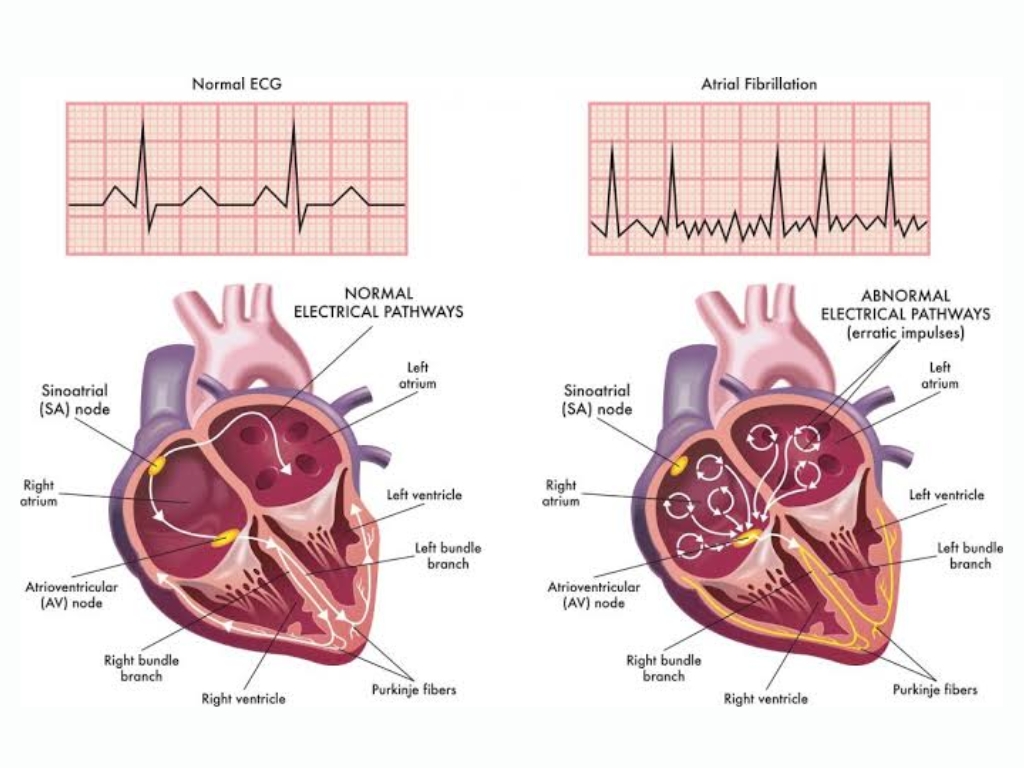
Atrial fibrillation is the most common sustained cardiac arrhythmia in clinical practice, and one that can be consequential to miss.1 It is a condition in which the coordinated electrical activity of the atria, initiated by the sinoatrial node, is replaced by rapid, chaotic electrical impulses arising from multiple competing sites across the atrial myocardium.2
The result is an irregular heartbeat, a loss of effective atrial contraction, and blood stasis within the left atrial within the heart that increases the risk of thrombus formation (a blood clot that forms inside a blood vessel or the heart) and cardioembolic stroke.3
What makes atrial fibrillation particularly challenging to identify is that a substantial proportion of those who have it are entirely unaware. Symptoms, when they occur, are often intermittent and non-specific. The condition can come and go for months or years before it is detected, and when it is finally identified, it is frequently through the investigation of an unrelated complaint or a stroke that might have been prevented.
Understanding what atrial fibrillation is, what causes it, how it presents, and how it is detected is the starting point for addressing it before its consequences become irreversible.
-
What Is Atrial Fibrillation?
Under normal conditions, the heart’s electrical activity begins in a cluster of specialised cells in the right atrium that fire at a regular rate and coordinate the contraction of the atria and ventricles. In atrial fibrillation, this organised action is replaced by multiple rapidly circulating electrical waves, producing atrial activity at rates of 300 to 500 impulses per minute, with the ventricles responding in an irregular, unpredictable pattern.2
The consequences of this are significant. Loss of effective atrial contraction reduces the efficiency of ventricular filling, meaning the upper chambers of the heart stop squeezing properly and can’t push blood into the lower chambers.3 Approximately 90% of blood clots inside the heart in patients with atrial fibrillation originate within the left atrium, and dislodgement of these clots into circulation is the mechanism underlying stroke.4
After adjustment for other cardiovascular risk factors, patients with atrial fibrillation face a three- to fivefold higher risk of stroke than those without the condition.5 This typical atrial fibrillation ends spontaneously within seven days of onset, often within 48 hours. Persistent atrial fibrillation continues beyond seven days and requires cardioversion to restore sinus rhythm.
Long-standing persistent atrial fibrillation is an action that has been present for more than twelve months. Permanent atrial fibrillation is a state in which restoration of rhythm is no longer being pursued.2
How Common Is Atrial Fibrillation?
Atrial fibrillation is a significant and growing public health challenge in the UK and worldwide. Global prevalence rose markedly from 33.5 million to 59 million individuals between 2010 and 2019, with a lifetime risk of approximately one in three to five individuals after the age of 45.6
In the UK, standardised prevalence in primary care increased from 2.14% in 2000 to 3.29% in 2016 and continues to rise as the population ages and detection improves.7 Atrial fibrillation accounts for approximately 1% of NHS expenditure, and the burden in terms of incident cases, disability-adjusted life years and mortality continues to increase across Europe.8
The condition disproportionately affects those over 65, a population in whom the competing risks of stroke and bleeding from anticoagulation require particularly careful clinical evaluation.
What Are the Symptoms of Atrial Fibrillation?
The clinical presentation of atrial fibrillation varies between individuals, and this variability in symptoms is itself one of the main reasons the condition is so frequently undetected. When symptoms are present, the most commonly reported are palpitations, which may be described as a fluttering, racing or irregular heartbeat, breathlessness on exertion or at rest, fatigue, reduced exercise tolerance, dizziness, and less commonly chest discomfort.9
In some individuals, the ventricular rate during atrial fibrillation is rapid and irregular enough to produce symptoms that can resemble those of acute heart failure. However, in at least one third of patients, no obvious symptoms or meaningful degradation of quality of life are reported, and the arrhythmia is identified only incidentally during routine examination or investigation for an unrelated condition.10 Critically, the risk of cardioembolic complications is equivalent whether atrial fibrillation is symptomatic or silent, a finding with direct implications for the threshold at which investigation is warranted.11
What Causes Atrial Fibrillation?
Atrial fibrillation arises from a combination of electrical triggers and an atrial substrate that has been rendered susceptible to arrhythmia by structural or functional change. Triggers are commonly ectopic beats arising from the veins, with changes promoted by a range of risk factors.12
Age is the most powerful non-modifiable risk factor. Among modifiable contributors, hypertension is the most prevalent, accounting for approximately 20% of new atrial fibrillation cases and increasing the risk by around 50% in men and 40% in women.13
Obesity exerts an independent effect, with each unit increase in body mass index associated with a 3% increase in atrial fibrillation risk, and with structural consequences including left atrial enlargement and increased epicardial fat providing an established arrhythmogenic substrate.13
Obstructive sleep apnoea is a particularly significant and frequently underrecognised contributor. Patients with obstructive sleep apnoea have been shown to be at up to four times higher risk of developing atrial fibrillation than those without it, through mechanisms including intermittent hypoxia, autonomic dysregulation and increased intrathoracic pressure variation driving atrial wall stretch.13
Alcohol consumption, diabetes mellitus, thyroid dysfunction, structural heart disease and chronic kidney disease are all established contributors through distinct but overlapping pathophysiological pathways.14
The significance of this risk factor profile is that many of the conditions predisposing to atrial fibrillation are identifiable and modifiable. Investigation prompted by palpitations, breathlessness or unexplained fatigue may reveal not only the arrhythmia itself but the metabolic and cardiovascular context in which it is occurring.
Why Is A Standard ECG Not Enough?
A standard resting 12-lead electrocardiogram (ECG) captures the heart’s rhythm at a single point in time, typically over a period of ten seconds. For a patient with permanent atrial fibrillation, this is sufficient to make the diagnosis. However, for a patient with paroxysmal atrial fibrillation, the probability that a ten-second snapshot will capture an episode is low, and a normal resting ECG does not exclude the diagnosis.2
Research comparing 24-hour Holter monitoring with extended ECG testing over fourteen days found that the detection rate of arrhythmias including atrial fibrillation was 66% at fourteen days compared with just 9% using 24-hour Holter monitoring alone.15,16 Extended monitoring also increases the probability of capturing episodes during the symptomatic triggers that prompted investigation, and of correlating rhythm with symptoms in real-world conditions rather than in a clinical setting.
What Does Ambulatory ECG Monitoring Involve?
Ambulatory ECG involves continuous recording of the heart’s electrical activity using a small wearable device attached to adhesive electrodes placed on the chest. The device records throughout the monitoring period, which may range from 24 hours to 7 days depending on the clinical indication and the frequency of symptoms being investigated.16
The recording is worn during normal daily activities, including sleep, exercise and the activities that typically provoke or coincide with symptoms.
At the end of the monitoring period, the recording is analysed to identify any episodes of atrial fibrillation, characterise their frequency, duration and ventricular rate, and correlate them with any symptoms the patient has recorded in a concurrent diary. The output provides clinicians with information that a resting ECG cannot, showing the rhythm as it behaves across time, in the context of real life.
When Should You Seek Investigation?
Investigation with ambulatory ECG is appropriate for any individual experiencing:
- Unexplained palpitations
- Episodes of breathlessness or dizziness without a clear cause
- A sensation of irregular heartbeat
- Or fatigue on exertion that is disproportionate to the level of activity.
Given that a significant proportion of atrial fibrillation episodes are asymptomatic, investigation is also warranted in individuals with a high-risk cardiovascular profile, in whom early detection can prevent complications rather than respond to them.
An irregular pulse detected incidentally during a clinical examination, or flagged by a wearable consumer device, is a sufficient indication for formal electrocardiographic assessment. Consumer devices can prompt useful clinical suspicion, but the diagnosis of atrial fibrillation requires confirmation by a medically analysed ECG recording, and clinical decisions cannot be made on the basis of consumer device data alone.
Ambulatory ECGs at The Health Suite
Characterising palpitations, dizziness or unexplained breathlessness requires more than a brief clinical consultation.
It requires a recording of the heart’s rhythm during the conditions in which symptoms occur. At The Health Suite, we offer ambulatory electrocardiography monitoring from 24 hours to 7 days, alongside 12-lead resting electrocardiography.
This approach provides the clinical data needed to identify or exclude atrial fibrillation and other arrhythmias with the detail and context that a single-timepoint recording cannotw provide.
ECG (Electrocardiogram)
Private adult resting ECG testing in Leicester. Fast, painless heart rhythm checks with an expert clinical report ready within 24 working hours.

24 Hour ECG Test
Private 24-hour ambulatory ECG testing in Leicester. Monitor your heart rhythm naturally during daily activities with rapid, expert analysis

Paediatric ECG (Electrocardiogram)
Gentle, child-friendly resting heart checks for palpitations, chest pain, and pre-medication ADHD screens.