Female Hair Loss: Causes, Tests and the Telogen Effluvium Picture
- Published:
- Last medically reviewed:
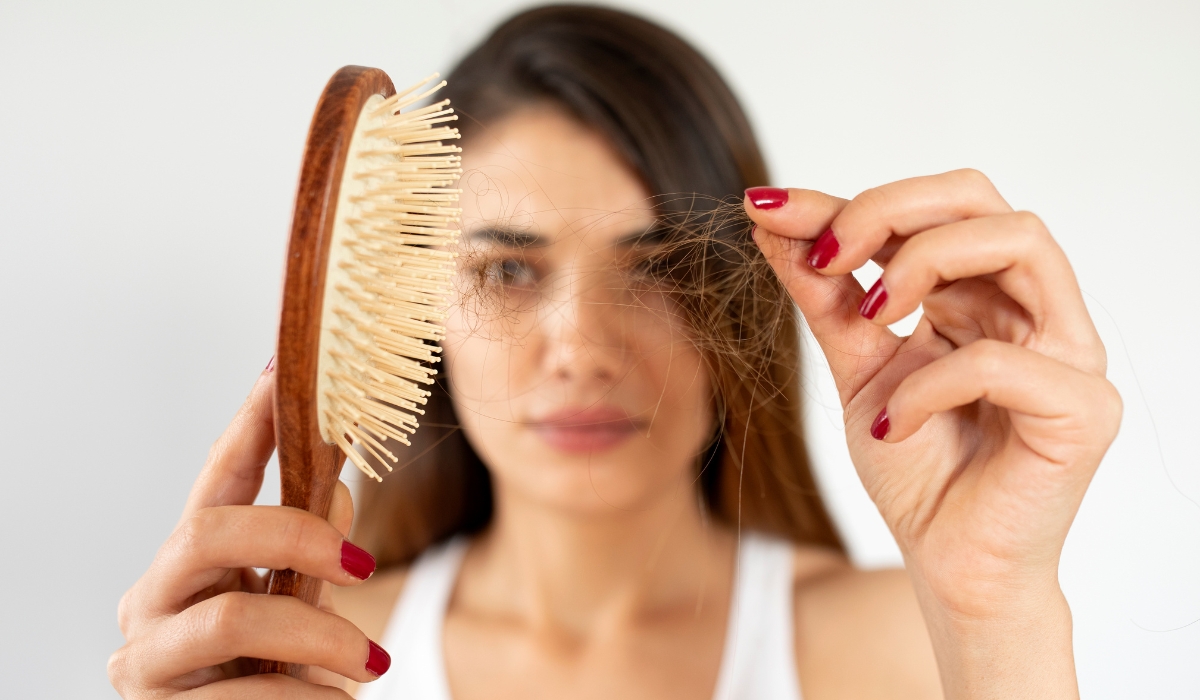
Losing more hair than usual is one of those experiences that is difficult to ignore and difficult to explain. In women, hair loss is more common than is widely recognised, and many of its most common causes are non-scarring, meaning that the hair follicles are not permanently destroyed.
One common pattern is called telogen effluvium, a condition in which a significant number of hairs are pushed prematurely into their resting and shedding phase following a physical or physiological stress. However, female pattern hair loss is the most common cause of hair loss in women overall, and the two conditions can occur together. It is almost always treatable once the underlying trigger has resolved or been treated, although regrowth takes time and chronic cases may require further investigation. It is also frequently misunderstood and more frequently uninvestigated.
What Goes On During The Hair Growth Process?
Every hair on the scalp is independently cycling through three specific phases:
- An active growth phase called anagen, which lasts approximately two to six years
- A brief transitional phase called catagen
- And a resting phase called telogen, which lasts around three to five months before the hair is shed and the cycle begins again.1
At any given time, approximately 85 to 90% of scalp hairs are in the anagen phase, and roughly 10% are in telogen, meaning that a baseline level of daily shedding between 50 and 100 hairs is entirely normal.2 Telogen effluvium occurs when a physiological stress causes a disproportionate number of hair follicles to leave anagen simultaneously and enter telogen, resulting in a surge of shedding that typically becomes noticeable two to three months after the triggering event, as those resting hairs are shed.1
Because the shedding is diffuse across the scalp rather than patterned, and because it follows the trigger by several months, the connection between cause and effect is not always apparent.
What Triggers Telogen Effluvium?
A wide range of physiological events can trigger telogen effluvium in women, and the delay between trigger and shedding means that the cause may need to be identified retrospectively.3 Childbirth is one of the most recognised triggers. During pregnancy, elevated hormones keep a higher than usual proportion of hair in the active growth phase. After delivery, those hormones fall rapidly, and the retained hairs enter telogen in synchrony, leading to a surge of shedding several months postpartum that can be significant in volume even though it is usually temporary.4
Other common triggers include significant illness or surgery, periods of severe physical or psychological stress, rapid or prolonged weight loss, crash dieting, and certain medications including those affecting hormone levels.3 Telogen effluvium can also become chronic, lasting six months or more, and in these cases the underlying driver is more likely to be a persistent physiological imbalance rather than a single acute event.
Can Iron Deficiency Also Play A Role?
Iron deficiency is one of the most common and clinically significant nutritional contributors to hair loss in women, and it is one of the first factors to investigate when diffuse shedding persists.5 Iron plays a direct role in follicular cell proliferation, and low levels of the iron storage protein ferritin, rather than frank anaemia (haemoglobin level remains normal) are sufficient to impair hair follicle function.
A systematic review found that in patients with telogen effluvium, both serum iron and serum ferritin levels were significantly lower than in the normal population, with the prevalence of deficiency higher in those with chronic telogen effluvium.6 Building on this, a cross-sectional study from 2025 confirmed that low serum ferritin levels are significantly associated with telogen effluvium in women and that ferritin measurement is a useful clinical marker in the evaluation of diffuse hair loss.7
Menstruation, low dietary intake and periods of high physiological demand all increase the risk of iron depletion in women of reproductive age. Because standard blood count tests can be normal even when ferritin stores are depleted, a ferritin measurement is an essential part of any hair loss investigation.
What Role Can Thyroid Dysfunction Play?
Thyroid hormones also play a central role in the regulation of the hair follicle cycle, directly influencing follicular activity during the anagen phase.8 Both underactive and overactive thyroid function can cause diffuse hair loss, with hypothyroidism producing more severe shedding than hyperthyroidism in some clinical studies.
A study of 500 women with confirmed telogen effluvium found that 150 had hypothyroidism and 102 had hyperthyroidism, meaning that thyroid dysfunction was present in more than half the group.9 Women with hypothyroidism had significantly more severe hair loss than those with normal thyroid function in this study, and the researchers concluded that thyroid function testing should be included in the standard diagnostic workup for telogen effluvium.9 Thyroid dysfunction is a treatable condition, and when it is identified and managed, hair loss associated with it typically improves (although other causes of hair loss can coexist).
Are There Any Other Contributing Factors?
Beyond iron and thyroid function, several other nutritional and hormonal factors are associated with hair loss in women and warrant assessment in cases of persistent or unexplained shedding. Vitamin D deficiency has been linked to disruption of the hair follicle cycle, with vitamin D receptors found in hair follicle cells and evidence suggesting a role in the transition between anagen and telogen.3
Zinc, biotin and B vitamins also have roles in follicular health, and deficiencies in women with restricted diets or absorption difficulties may contribute to shedding. Beyond this, hormonal conditions including polycystic ovary syndrome (PCOS), perimenopause and postmenopause affect androgen and oestrogen levels in ways that can independently or synergistically worsen hair loss. Female pattern hair loss, also called female androgenetic alopecia, is a patterned form of hair loss driven by androgen-related follicular sensitivity. It is distinct from telogen effluvium but can coexist with it, making thorough assessment particularly important when both patterns appear to be present.3
What Does Testing Involve?
Investigating female hair loss effectively requires a detailed clinical history and scalp examination, supported by targeted blood tests where indicated, rather than relying on a single marker or an indiscriminate panel of tests.
A typical initial assessment includes ferritin and full iron studies, a full blood count, thyroid function including thyroid-stimulating hormone and free thyroxine, vitamin D, zinc, or other nutritional markers and relevant hormonal markers considered according to the person’s symptoms, diet, medical history and examination findings.3 Where there is reason to suspect hormonal causes, additional investigations including sex hormone profiles, androgens and markers of PCOS may be indicated.
What Does PRP Treatment Involve?
Where investigation has identified or excluded underlying systemic causes and hair loss persists, or where follicle stimulation is indicated as part of a broader treatment plan, platelet-rich plasma (PRP) therapy can be used as an evidence-supported treatment for promoting hair follicle activity and improving hair density.
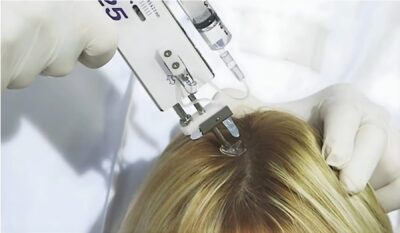
PRP is derived from a small sample of the patient’s own blood, which is processed to concentrate the platelets. It is often delivered via the U225 Meso Gun, a precision intradermal injection device that allows set volumes of the preparation to be administered at controlled depths across the treatment area. The U225 Meso Gun delivers a more controlled and consistent distribution than manual injection and supports the repeatable, standardised application that clinical studies associate with the best outcomes.
Studies have shown the growth factors in PRP can stimulate cellular repair, support follicle function and promote anagen growth phase re-entry in follicles that have entered a prolonged resting state.10 Resulting in improved hair density. A systematic review and meta-analysis of 43 randomised controlled trials published in 2025, involving 1,877 participants, found that activated PRP was effective in increasing hair density and reducing recurrence of hair loss compared with placebo.11
Hair Loss Consultation at The Health Suite
Telogen effluvium is treatable when the underlying driver is found and has been resolved or treated, although visible regrowth can take several months. Hair loss that has been attributed to stress, age or a vague hormonal cause without specific investigation may have a more identifiable and addressable cause that a targeted assessment would reveal.
At The Health Suite, our hair loss consultations include a clinical and scalp assessment, with targeted testing where indicated.
Where PRP treatment is appropriate, it is delivered via the U225 Meso Gun as part of the Hair First Strategy programme.
Advanced MCT-Grade Platelet-Rich Plasma (PRP) Therapy for Hair Loss
Struggling with pattern baldness or thinning hair? Access medical-grade PRP hair loss treatments in Leicester.

Non-Surgical Hair Restoration
Private Non-Surgical Hair Restoration in Leicester. Advanced clinical therapies to stop hair thinning, nourish roots, and stimulate new growth.