
Signs You May Need a Liver Fibrosis Scan: Early Warning Symptoms You Should Not Ignore
- Published:
- Last medically reviewed:
The liver is one of the most resilient organs in the human body, capable of sustaining significant damage before producing symptoms noticeable enough to prompt medical attention. This resilience is, paradoxically, one of the reasons liver disease has become such a significant public health problem in the UK. By the time most people become aware that something is wrong, the underlying condition has frequently been progressing silently for years.
-
Liver Disease: A Growing Cause of Premature Death
Liver disease is the third most common cause of premature death in the UK, and unlike most other leading causes of premature mortality, its rates have been rising rather than falling over recent decades.1 Non-alcoholic fatty liver disease, now more commonly referred to as metabolic dysfunction-associated steatotic liver disease (MASLD), affects an estimated 25% to 30% of UK adults, the majority of whom are entirely unaware of it.2
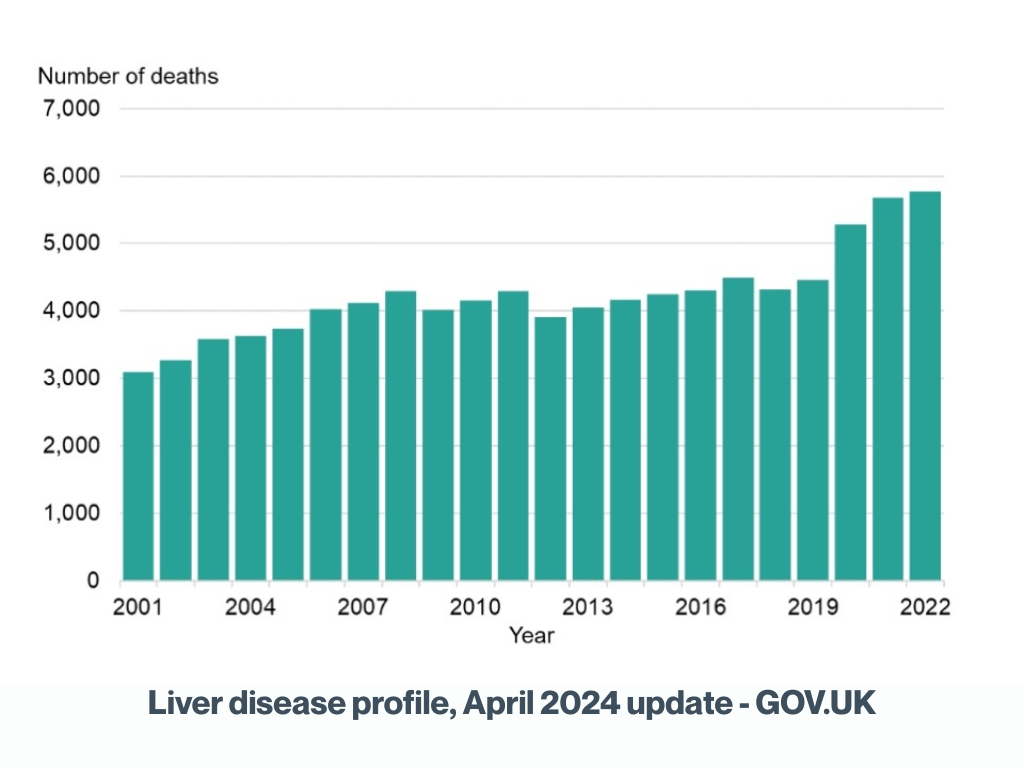
Alcohol-related liver disease, viral hepatitis, autoimmune liver conditions and other causes add further to the burden. The clinical challenge is that the liver has no pain receptors of its own, and early-stage liver disease, including the fibrosis that represents the critical turning point between manageable and serious disease, rarely announces itself clearly. Waiting for obvious symptoms before seeking assessment means, in many cases, waiting until the disease has progressed to a point at which intervention is considerably less effective.
Symptoms and risk factors that should prompt a liver assessment include:
1. Persistent Fatigue That Has No Obvious Explanation
Fatigue is among the most common and most frequently overlooked symptoms of liver disease. It is also among the least specific, occurring in a vast range of conditions, which is precisely why it tends to be dismissed or attributed to lifestyle factors rather than investigated. Liver-related fatigue arises because a compromised liver is less efficient at processing nutrients, regulating blood glucose and clearing metabolic waste products, all of which have direct effects on energy production and cognitive function.3
It tends to be persistent rather than episodic, present regardless of sleep quality, and accompanied by a general sense of malaise that distinguishes it from ordinary tiredness. In the context of other risk factors for liver disease, unexplained fatigue that has persisted for weeks or months without a clear alternative explanation should prompt liver assessment rather than continued reassurance.
2. Unexplained Weight Gain, Particularly Around the Abdomen
Central adiposity, the accumulation of fat around the abdomen rather than the hips and thighs, is both a risk factor for fatty liver disease and a potential sign that liver dysfunction is contributing to metabolic disruption. 4 The liver plays a central role in fat metabolism, and when its function is impaired, the normal regulation of fat storage and distribution can be affected.
Weight gain that is disproportionate to dietary intake, or that is concentrated in the abdominal region and accompanied by other metabolic symptoms, is a meaningful signal in the context of liver health. At the same time, fatty liver disease and central obesity share common drivers in insulin resistance and metabolic syndrome, making the two conditions frequently co-occurring and mutually reinforcing.
3. Elevated Liver Enzymes On Blood Tests
Raised ALT, AST or GGT on routine blood testing is one of the most common incidental findings in primary care, and one of the most frequently under-investigated. These enzymes are released into the bloodstream when liver cells are damaged or inflamed, and persistently elevated levels, even when modestly above the normal range, are a meaningful indicator of ongoing liver injury that warrants further investigation.5
Abnormal liver enzymes do not tell you what is causing the damage, or how advanced it is. They are a signal that something is happening within the liver, and a liver fibrosis scan combined with blood-based fibrosis scoring is the most informative next step for characterising what that signal represents. Many people with significant liver fibrosis have liver enzyme levels that are only mildly abnormal, highlighting the importance of imaging rather than blood tests alone.
4. Right-Sided Abdominal Discomfort Or Fullness
The liver sits in the upper right quadrant of the abdomen, beneath the ribcage, and while it does not generate pain directly, enlargement or inflammation of the liver can produce a sense of fullness, pressure or dull discomfort in this area that is often attributed to digestive causes.6
Patients frequently describe it as a heaviness or aching beneath the right ribs, sometimes extending to the right shoulder, that is not clearly related to meals or bowel function. This symptom in isolation is not diagnostic of liver disease, but in the context of risk factors including obesity, type 2 diabetes, high alcohol consumption or a history of abnormal liver blood tests, it is a reason to investigate liver health specifically rather than assuming a gastrointestinal cause.
Visible Changes Including Jaundice, Skin Changes And Swelling
Many symptoms of liver disease can be subtle and easily attributed to other causes. Yet there are signs that are more overt, indicating liver disease has progressed to a more advanced stage. Jaundice, the yellowing of the skin and whites of the eyes, occurs when bilirubin accumulates in the bloodstream because a damaged liver can no longer process it adequately.7
It is a sign of significant liver dysfunction and should always be assessed promptly. Itching without a visible rash, known as pruritus, can occur when bile salts accumulate in the skin as a result of impaired bile excretion, and is a recognised symptom of cholestatic liver disease. Likewise, spider angiomata, small spider-shaped blood vessel clusters visible on the skin of the upper body, and palmar erythema, a reddening of the palms, are both associated with advanced liver disease and the hormonal changes that accompany it.8
Abdominal swelling caused by fluid accumulation, known as ascites, and swelling of the legs and ankles caused by reduced albumin production are also signs of decompensated liver disease requiring urgent hepatological assessment.
Risk Factors That Warrant Proactive Scanning Even Without Symptoms
Beyond specific symptoms, there are well-established risk factors for liver fibrosis that justify proactive assessment even in people who feel entirely well. Type 2 diabetes, for example, is associated with a significantly elevated risk of advanced liver fibrosis, with studies finding that up to 75% of people with type 2 diabetes have some degree of hepatic steatosis.9
Obesity, particularly with a BMI above 30 or significant central adiposity, substantially increases both the risk of fatty liver disease and its progression to fibrosis. Metabolic syndrome, characterised by the combination of central obesity, hypertension, dyslipidaemia and insulin resistance, amplifies risk further.
A history of significant alcohol consumption, even if currently reduced or stopped, warrants liver assessment given the cumulative hepatic injury that alcohol produces over time. A family history of liver disease, including hereditary conditions such as haemochromatosis or alpha-1 antitrypsin deficiency, represents a further indication for proactive investigation.
Liver Fibrosis Scan at The Health Suite
If you recognise any of the symptoms or risk factors described above, a comprehensive liver assessment is the most clinically meaningful step you can take. At The Health Suite Leicester, our liver health assessment provides a fully integrated, consultant-quality evaluation in a single visit, combining ultrasound-based shear wave elastography with a full diagnostic liver ultrasound, same-day blood tests and a GP follow-up consultation once results are available.
Our GE shear wave elastography system provides quantitative measurement of liver stiffness to assess for fibrosis and stratify risk from mild fibrosis through to advanced fibrosis or cirrhosis. Simultaneous diagnostic ultrasound assesses liver structure, size, fat content and the presence of any focal lesions.
Blood tests taken on the day of your appointment are also used to calculate your FIB-4 score, integrating age, liver enzyme levels and platelet count into a validated risk stratification score that supports and contextualises the imaging findings.
This is not a standalone scan. It is a clinically integrated assessment designed to give you, and your GP, a clear and accurate picture of your liver health, with personalised guidance on what the findings mean and what next steps, if any, are indicated.
Assess Your Liver Health with Advanced Imaging
If you have risk factors such as fatty liver, raised liver enzymes, alcohol use, or metabolic concerns, a Liver Elastography (Fibrosis Scan) can provide valuable insight into your liver health without invasive procedures.
At The Health Suite Leicester, this ultrasound-based assessment measures liver stiffness to help detect fibrosis (scarring) and monitor liver conditions early.
Liver Fibrosis Scan (Ultrasound Elastography) FibroScan Alternative
Liver fibrosis scanning in Leicester. Ultrasound elastography, blood tests, and a private GP review combined in one package.