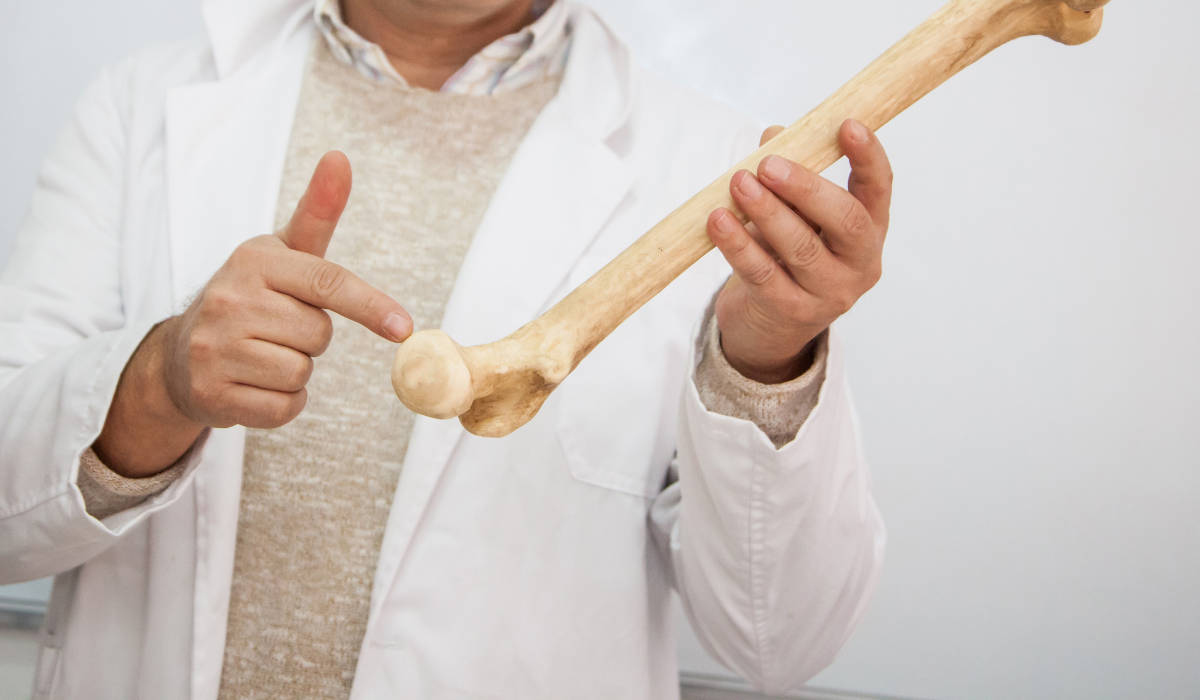
What is a DEXA scan and what does it show?
- Published:
- Last medically reviewed:
What is a DEXA scan and what does it show?
DEXA stands for dual-energy X-ray absorptiometry. It is a scan that passes two different X-ray energies through the body and measures how much of each is absorbed by the tissue in the way.
Different tissues absorb the two energies in different proportions. That difference is what allows the scanner to distinguish bone from fat from lean tissue, and to report each of them separately. It is the same underlying principle whether the scan is being used to assess bone strength or to measure body composition.
The dose involved is very low — considerably less than a chest X-ray, and comparable to a day or two of ordinary background radiation.
The two things a DEXA scan is used for
- Bone density. The scan measures the mineral content of the hip and lumbar spine and compares it against reference values. This is the test used to diagnose osteoporosis and osteopenia, and the measurement that informs whether treatment is needed.
- Body composition. A whole-body scan separates fat, lean tissue and bone across each region of the body — arms, legs, trunk — and reports the fat around the internal organs separately from fat under the skin.
The two scans use the same machine but are different examinations with different outputs. Most people booking privately want one or the other; some want both, which can be done in a single appointment.
What a bone density scan shows
- T-score. Your bone density compared with a healthy young adult. A score of −1.0 or above is normal, between −1.0 and −2.5 is osteopenia, and −2.5 or below meets the definition of osteoporosis [1].
- Z-score. Your bone density compared with others of your own age and sex. A low Z-score points towards a specific cause of bone loss rather than age-related decline, and usually prompts further investigation.
- Bone mineral density in absolute terms, measured in grams per square centimetre, at each site scanned.
- Trabecular bone score, where available. This assesses the internal structure of the bone rather than how much mineral it contains, and adds information that density alone does not capture [2].
The scan images can also reveal other findings, including vertebral fractures that have never been diagnosed. This is one of the reasons it matters whether a radiologist looks at the images or whether the report is generated automatically.
What a body composition scan shows
- Total fat mass and body fat percentage
- Regional fat distribution — arms, legs, trunk, and the android and gynoid patterns
- Visceral adipose tissue, the fat surrounding the internal organs, reported as a measured area
- Lean mass by region, including appendicular lean mass, the measure used to assess sarcopenia3
- Bone mineral content
- Left-to-right comparison, which is useful after injury or during rehabilitation
Because the measurement is direct rather than estimated, it is highly repeatable — around 1 to 2% for fat mass. That precision is what makes it useful for measuring genuine change over months rather than noise.
What happens during the scan
You lie on a padded table, fully clothed, while an arm passes slowly above you. There is no tunnel, no injection and no noise beyond a quiet hum. You are asked to stay still and, for some parts, to hold your breath briefly.
A bone density scan of hip and spine takes around 10 to 15 minutes. A whole-body composition scan takes a similar time. Both together fit into one appointment of around 30 minutes including the paperwork.
Metal interferes with the measurement, so clothing without zips, buttons or underwiring over the hips and lower back is best. No fasting is required. Let the clinic know if you have had a barium study or a scan with contrast in the previous week, as this can affect the result.
DEXA is not used during pregnancy.
Who has one
Bone density scanning is directed at people with risk factors for bone loss — after the menopause, on long-term steroids, after a fracture from a minor fall, with a family history, with conditions affecting absorption, or with low body weight 4.
Body composition scanning is used by people managing their weight, tracking training, monitoring muscle mass with age, or following body composition through medical treatment.
Getting a DEXA scan
At The Health Suite in Leicester we offer both scans, including trabecular bone score, reported by a consultant radiologist. No GP referral is required.
DEXA Bone Density Scan
Precise DEXA bone density scanning in Leicester. Measure fracture risk, T-scores, and Trabecular Bone Score (TBS) with radiologist reporting.