
Fit Notes Explained: What They Are, How They Work and When They Help
- Published:
- Last medically reviewed:
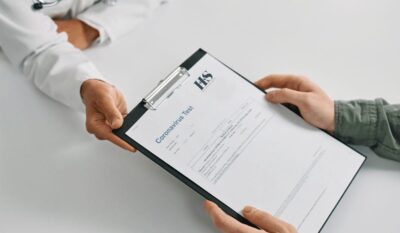
A fit note is one of the most commonly issued documents in UK healthcare, and one of the least well understood. Most people know it exists. Over 11 million electronic fit notes are issued by GP Practices in England each year, with more than 2.9 million issued in the final quarter of the 2025–26 financial year alone.1
In spite of this, there is a gap in the understanding of what it actually contains, what it means for employment, and how it can be used to support a return to work that is sustainable rather than simply rapid.
What Is a Fit Note?
The fit note, formally known as the Statement of Fitness for Work or MED3 form, was introduced in April 2010 to replace the previous sick note, which had been unchanged for forty years.2 The fundamental change was one of clinical framing: rather than simply confirming that a patient could not work, the fit note introduced the option of advising what a patient might be able to do, and under what conditions.
The fit note is issued by a healthcare professional following an assessment of the patient’s fitness for work. Since July 2022, the range of professionals authorised to issue fit notes has expanded beyond doctors to include registered nurses, occupational therapists, pharmacists and physiotherapists, a change made to reduce pressure on GP appointments and allow faster access to certification.3
The healthcare professional responsible for the relevant episode of care is generally best placed to issue the fit note, and the assessment can be conducted face-to-face, by telephone or video, or by considering a written report from another clinician.4 Employees who are absent for seven calendar days or fewer can self-certify and do not require a fit note.5 A fit note may be required from the eighth day of absence onwards if the employee needs to evidence eligibility for Statutory Sick Pay or to support a claim for health-related benefits through the Department for Work and Pensions.
What Are the Two Possible Outcomes?
The fit note offers two options, and the distinction between them is clinically and practically significant.
The first is not fit for work.
This means the healthcare professional has assessed that the patient’s health condition means they cannot work in any capacity during the period specified, and that no adjustment to their role would make a return appropriate at this stage.4
The second is may be fit for work subject to the following advice.
This means the healthcare professional believes the patient could return to work if certain conditions are met, and that a return in some capacity is preferable to continued full absence.
- The fit note can then specify one or more of the following:
- A phased return to work with reduced hours building gradually toward normal
- Amended duties that avoid tasks the patient cannot currently manage
- Adapted working conditions such as changes to environment, equipment or shift pattern
- Altered hours
- Or workplace adaptations.4
If the employer cannot accommodate the advice given on a may be fit for work note, the note is treated as though it stated the employee is not fit for work, and does not need to be reissued.6
The employer is not legally required to agree to a phased return or the suggested adjustments, but where a health condition meets the legal definition of a disability under the Equality Act 2010, the duty to make reasonable adjustments is a statutory obligation rather than a matter of discretion.7
What Is the Fit Note Used For?
Beyond its function as evidence for Statutory Sick Pay, the fit note serves several practical purposes that are most useful when both employer and employee engage with it actively rather than treating it as a formality. For the employee, it provides documented medical evidence of their condition and its functional impact, protects against disciplinary action for absence where a genuine health condition is present, and opens a structured conversation with the employer about what adjustments might make a return possible.4
For the employer, it provides information about the functional effects of the employee’s condition, what they can and cannot do, and what support the healthcare professional believes would help. The Department for Work and Pensions guidance for employers is explicit that the fit note is intended to prompt a collaborative discussion rather than simply to authorise absence, and that employers should use the may be fit for work outcome as a starting point for workplace planning rather than treating it as a medical prescription they are expected to follow to the letter.8
Why Is the ‘May Be Fit for Work’ Option Used So Rarely?
Research consistently finds that the may be fit for work option is used on a minority of fit notes, with the large majority recording not fit for work. In 2025–26, approximately 92.7% of electronic fit notes issued by GP practices in England recorded the patient as not fit for work.1
This may represent a missed opportunity in some cases, as appropriately planned return-to-work interventions and workplace adjustments can support people to return to work safely and sustainably. The government’s Keep Britain Working review found that while 96% of employees absent for four to six weeks successfully return to work, that figure falls to under 50% after a year of absence, underscoring how important early and active management of the return process is.9
Occupational health evidence consistently supports the view that gradual reintegration, including phased return and adjusted duties, reduces the risk of relapse and produces better long-term outcomes than either premature full return or prolonged full absence.10 The reasons the option is underused include time constraints in GP consultations, limited knowledge of the specific demands of individual jobs, and the difficulty of making work-specific recommendations without access to occupational health input.
This is where an occupational health assessment may add clinical value that a standard GP fit note consultation cannot easily replicate.
What Are the Most Common Conditions on Fit Notes?
Mental health and behavioural conditions are the single most common reason for fit note certification in England, consistently accounting for around a third of all notes where a diagnosis is recorded.11 In the 2024–25 period, mental health now accounts for 52% of all work-related illness, with 964,000 workers reporting stress, depression or anxiety caused or made worse by work.12
Mental health fit notes are also issued for longer periods on average than those for physical conditions, with more than one in five psychiatric fit notes issued for periods longer than twelve weeks.13 Musculoskeletal conditions represent the second most common category, followed by injuries and respiratory conditions.
For many of these presentations, the ‘may be fit for work’ option may be clinically appropriate, and an occupational health assessment can provide the specific, role-focused advice that supports a well-structured return.
When Does a Private Fit Note Help?
NHS GP appointments are not always available at short notice, and a significant number of people find themselves needing a fit note quickly, outside the window of an available NHS appointment, or for a condition managed by a specialist rather than a GP.
A private fitness-for-work assessment can provide timely access to a clinical consultation, with appropriate medical evidence issued where clinically justified following an assessment of fitness for work. In wholly private practice, this may be provided as a private medical certificate or report rather than the standard NHS Med 3. Where the document contains the required information and complies with the relevant rules, it can constitute medical evidence equivalent in effect to a fit note; patients should also check any specific requirements their employer has for accepting private medical evidence.4
An occupational health assessment can also provide more detailed, role-specific advice about how a health condition affects an individual’s ability to perform their particular job and what adjustments may assist a safe return to work. Occupational health assessment is specifically focused on the interaction between health and job demands, allowing more detailed consideration of workplace adjustments and helping employers implement a structured return-to-work plan.
Fit Note Assessments at The Health Suite
At The Health Suite, fitness-for-work and medical certificate assessments are available as private GP appointments and as occupational health-aligned assessments for individuals and employers. Where a fit note is clinically appropriate, it is issued on the day or following the assessment, with advice that reflects the functional impact of the condition and supports a constructive return-to-work conversation between employee and employer.
With private and OH-aligned, same-week appointments available, book a fit note assessment at The Health Suite:
Medical Reports and Certificates
Book private Medical Reports and Certificates at The Health Suite Leicester. Fast-access GP assessments for visas, driving, work, and sports.

Occupational Health Physical Examination
Clinician-led health surveillance and fitness-for-duty assessments for your workforce today.

Occupational Health
Private Occupational Health services in Leicester. Expert HSE compliance medicals, employee health surveillance, and GP-led return-to-work reporting.